Personalisation has a clear commercial case and a hard operational one. Customer data sits in separate systems, and in most channels the customer is anonymous.
A loyalty program closes that gap with three capabilities few other engagement strategies offer:
- Identity: Joining the program creates a persistent, consented identifier that links transactions and interactions across channels over time. Without it, online and offline data stay as two streams that never join.
- Voluntary data sharing: Members share personal data in return for rewards, recognition, and a more personal experience. The brand gains zero- and first-party data with consent attached, which becomes more valuable as privacy rules tighten.
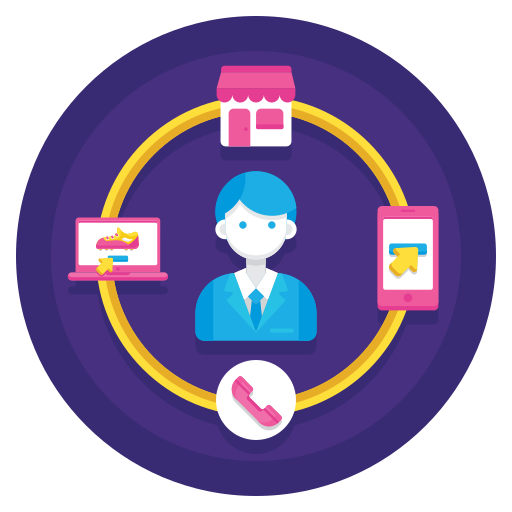
- Cross-channel recognition: Members identify themselves in store, in the app, online, or when calling a service centre. The brand can recognise them at every touchpoint and keep a single member view up to date.
Together, these form Loyalty & Reward Co’s Member Engagement Ecosystem™. Members join and build a profile. The brand collects data from registration, transactions, and interactions. That data feeds reporting and analytics used across the business. A member lifecycle strategy then deepens engagement and draws out more zero- and first-party data. Each step lays the groundwork for full omnichannel personalisation.
In the 2026 Loyalty360 survey of more than 160 brand marketers, 73 per cent named personalisation their top priority for the year. Only 12 per cent said they were fully capable and using it.
A further 36 per cent had the technology but used it in a limited or inconsistent way. Another 18 per cent had little or no technical capability at all.
This blog sets out a five-step pathway for brands to use to achieve omnichannel personalisation.
What is omnichannel personalisation?
Omnichannel personalisation gives each member a consistent, individually tailored experience in every channel they use. It runs off one unified view of the member showing who they are, what they value, and where they sit in the relationship.
It rests on connected data, decisioning, and delivery, operating in real time across all channels. A personalised subject line or homepage banner on its own falls short of it.
Many brands confuse omnichannel with multi-channel. A member who gets a promotional email on Tuesday and an unrelated push on Wednesday is receiving multichannel marketing. In an omnichannel program, Tuesday’s email response shapes Wednesday’s push. Thursday’s in-store visit then reflects what the member browsed online.
The five-step pathway
The steps are:
- Define objectives
- Segment members
- Integrate technology and data
- Build personalised communications, offers, and experiences
- Launch and evolve
Step 1: Define objectives
Objectives decide what data to collect, which channels to fund, which segments come first, and how to measure success. Without them, technology spend is hard to justify and results are hard to attribute.
Each objective maps to a lifecycle stage: acquisition, onboarding, growth, advocacy, retention, or winback.
The book adds a rule specific to personalisation. Pair every operational metric with a member-facing one. A spend-uplift objective tracks average order value and whether targeted members rate the recommendations relevant. A retention objective tracks churn and whether at-risk members think the program is worth staying for.
When the two measures diverge, there is an execution problem operational data would miss. Antavo’s 2026 data shows a 26 percentage point gap between operators who believe members feel valued and members who say they do.
Weight objectives towards onboarding, where personalisation has the most leverage. Programs that pour investment into long-tenured members risk losing the audience they can influence most.
Step 2: Segment members
Personalisation at scale starts with segmentation. No program can tailor every member’s experience at once. It first groups members into clusters, sets a strategy for each cluster, and then refines within each cluster towards the individual. The quality of the personalisation is therefore directly constrained by the quality of the segmentation.
Segmentation in a loyalty program operates across several layers:
- Strategic layers: lifecycle stage, demographic, psychographic, geographic, and generational models, set the foundation for who a member is and where they sit in their relationship with the brand.
- Tactical layers: behavioural segmentation and lifecycle-transition triggers, drive the specific actions a program takes in response to what a member does.
Two further segmentation layers are specific to personalisation and add value beyond the lifecycle and behavioural models. They determine not who to target or when, but how to framethe message once a member is targeted.
Construal-level segmentation
A member’s psychological state, specifically their construal level, determines the type of message they are most likely to respond to. Zhang and Liu-Thompkins (2024) found that a member’s tier status and proximity to the next tier threshold systematically change how they process information. Higher-tier members tend towards abstract construal, responding to
messages framed around brand values, aspirational identity, and the meaning of the relationship. Members close to a tier threshold shift towards concrete construal, responding to specific, actionable messages describing the exact investment required to reach the next level and the benefits that await.
In practice, the same campaign brief should produce different executions for different member groups. A message promoting the next tier that leads with experiential language and brand aspiration will resonate with a Gold member who still has some way to go to Platinum. The same message delivered to a Silver member twelve points from achieving Gold should instead lead with the specific action required and the concrete reward that follows.
Loyalty-meaning segmentation
The most nuanced layer of segmentation uses the member’s underlying motivation for loyalty as the basis for personalisation. Liu-Thompkins and Taheran’s Future of Loyalty research identified five distinct meanings consumers attach to the word loyalty (see below).
| Loyalty meaning | Share of sample (%) | What the member responds to |
|---|---|---|
| Time-loyal | 45 | Tenure recognition and milestone communications |
| Choice-loyal | 29 | Exclusive pricing, members-only access, and products unavailable elsewhere |
| Emotionally loyal | 13 | Shared values and personalised recognition |
| Price-premium loyal | 8 | Visible return that justifies paying more |
| Advocacy-loyal | 4 | Social recognition, community, and invitations to shape the brand |
Step 3: Integrate technology and data
Omnichannel personalisation needs three connected technology layers.
- The data layer pulls every source into a single member profile that updates continuously: point of sale, e-commerce, app, CRM, call centre, and kiosks. Identity resolution makes this work. It links a member’s activity across devices and channels. Without it, a member who browses online and buys in store shows up as two separate records.
- The decisioning layer uses AI and machine learning to read that profile and choose the next best action for each member.
- The delivery layer carries out those decisions in every channel in real time. The app this afternoon, the email tonight, and the checkout tomorrow all tell the same story.
Few brands have all three working together. Twilio Segment found 72 per cent of companies use a data platform as their unified data layer. Manhattan Associates assessed more than 400 specialty retailers for its 2026 Global Unified Commerce Benchmark. It found only 7 per cent connect digital and physical experiences in real time. For everyone else, part of the personalisation budget targets an incomplete picture of the member. The usual failure is declaring the project finished before the data is actually integrated.
Deeper integration also raises the personalisation paradox. A push notification that reflects what a member did in store an hour ago can feel helpful or invasive. Which one depends on how much trust the program has earned. Spending on transparency and member controls should keep pace with spending on integration.
Privacy law adds a second requirement. GDPR, the CCPA, and other national and state laws govern how member data is collected and used. Build consent management and data governance alongside the integration from day one.
Security is the third. A rich loyalty database is a target. In 2023, attackers copied the Caesars Rewards database, which holds data on more than 65 million members. Without data security, members won’t extend the trust that personalisation depends on.
Step 4: Build personalised communications, offers, and experiences
Each of the three runs on different data inputs, decisioning models, and delivery methods.
Communications are where Step 2 reaches the member. A calendar built on recent purchase, browsing, and demographics produces accurate messages. A calendar built on construal level and loyalty meaning produces messages that differ in register and content between members. That second standard changes behaviour.
Offers carry the clearest return, per the BCG figure above. Under cost-of-living pressure, a calibrated offer for a product the member already wants converts better than a blanket discount and uses less margin. Offers cannot fix a confusing redemption process, an unclear points balance, or a broken link. Those basics come first.
Experiences are the highest-order form and the most fragile. A well-timed experience with wrong member details, or a tone-deaf inference about someone’s life, does more damage than a generic one. Physical channels count here. Peck and Shu (2009) found that touching a product raises perceived ownership and willingness to pay. Displays, printed collateral, and staff interactions belong in the personalisation infrastructure. Reliable data and transactional personalisation should come before experiential work.
Step 5: Launch and evolve
A crawl-walk-run is recommended:
- Crawl: pick one or two high-volume journeys, such as onboarding and the first-redemption trigger. Make them consistently excellent. Build the test-and-learn habit and early commercial evidence.
- Walk: extend across three to five integrated channels. Automated triggers replace manual campaigns for common journeys. A/B testing runs systematically, and data gaps and technical debt get fixed before scaling.
- Run: real-time AI decisioning across all channels. Personalisation becomes event-driven, with every member interaction triggering a next-best-action assessment.
Test-and-learn runs through all three phases. Set a hypothesis, test against a holdout group, confirm statistical significance, roll out the winner, and repeat.
The barriers are interlocked. Antavo’s 2026 report found 36.3 per cent of operators cite data quality or fragmentation. Another 34.5 per cent cite limited integration, and 31.2 per cent lack analytics and data science skills. Poor data weakens model outputs, which discourages analytics investment, which leaves the data problem unfixed. The answer is to start narrow and use measured wins on one or two journeys to fund the next phase.
Unlock the full potential of your brand with our expert loyalty consulting services
Whether you’re looking to enhance customer engagement, boost retention, or create a world-class loyalty program, our team is here to help. Contact us today to start your journey towards building your own loyalty program strategy.