
When designing a loyalty program, there’s plenty to get excited about. Earn rates, attractive rewards, gamification and exclusive member experiences all tend to dominate the conversation.
Then, somewhere along the way, someone asks: When should the points expire?
It’s rarely the most exciting decision. In fact, expiry rules can become something of an afterthought, partly because the consequences often won’t materialise for several years.
Yet this seemingly minor design decision can have enormous implications for both members and program operators. Getting it wrong can become a costly problem.
The delicate balance between expiry and breakage
Expiry rules serve an important commercial purpose. Loyalty programs issue value to members which creates a financial liability, released only once that value is redeemed or expires.
The proportion of issued value that is never redeemed is known as breakage. While breakage can provide a financial benefit to operators, excessive breakage can also indicate poor member engagement and undermine the perceived value of a program.
As explored in Loyalty Programs: The Complete Guide (3rd edition), there are two primary approaches to expiry:
- Activity-based expiry: value expires when a member has not undertaken qualifying activity for a specified period.
- Fixed expiry: value expires a defined period after being earned, regardless of whether the member remains active.
Both approaches have advantages and disadvantages. Activity-based expiry can protect engaged members from losing accumulated value, but potentially leaves operators managing longer-term liabilities. Fixed expiry provides greater certainty around the lifespan of points, making financial forecasting more predictable, but introduces the possibility of highly engaged members losing value.
Neither approach is inherently wrong. What matters is understanding the long-term commercial consequences and how members are likely to respond.
AIR MILES: A US$250 million lesson
The most striking example of expiry rules backfiring comes from Canada’s AIR MILES program. In 2011, AIR MILES announced that miles would expire five years after being earned, with the first expiries scheduled for 1 January 2017 (a long time in the future).
As the deadline approached, members rushed to redeem their accumulated miles. Complaints intensified as customers struggled to find suitable rewards, media scrutiny increased and lawmakers began pursuing legislation to protect loyalty balances.
On 1 December 2016, just one month before the first expiries, AIR MILES abandoned the policy altogether and the consequences were significant. As detailed in the AIR MILES case study in Loyalty Programs: The Complete Guide (3rd edition, pp. 539–540), the operator’s parent company disclosed that reversing the policy would cost up to US$250 million in expected breakage benefits.
What was intended to reduce future liability instead generated substantial customer backlash, regulatory intervention and the loss of anticipated financial benefits. It’s an important reminder that expected breakage is only valuable if the expiry rules generating it remain commercially and reputationally sustainable.
Could Joe & The Juice and Revolut face similar challenges?
Two contemporary programs have adopted fixed expiry mechanics that raise interesting questions about how members might respond when their points eventually disappear.
Joe & The Juice operates a loyalty program where points expire 12 months after they are earned, regardless of subsequent purchase activity.
Members can see their expiry dates in the app and redeem points for eligible products. Nevertheless, a highly engaged customer could continue purchasing coffees and juices regularly while losing points earned more than a year earlier.
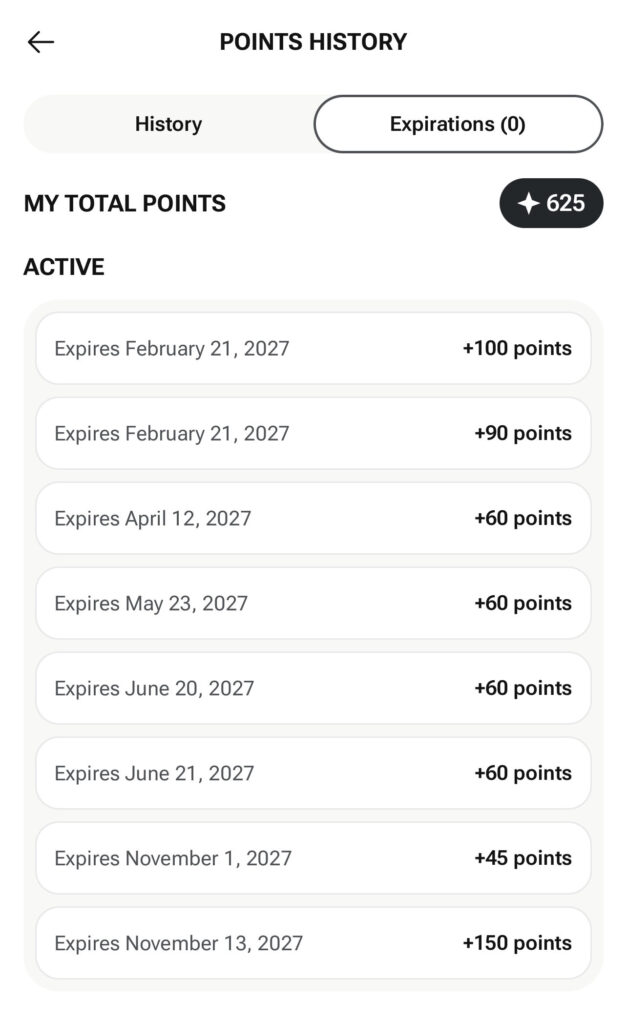
Figure 1. Screenshot from the Joe & The Juice app.
Revolut’s RevPoints has a longer expiry period of three years from the date points are earned and because of this longer term haven’t built in any visual expiry of the points for users at the time of writing.
However, RevPoints introduces an additional consideration. Members can acquire points through several mechanisms, including exchanging monetary value for points. Revolut’s terms also explicitly recognise purchased points, which are redeemed first. This potentially creates an even stronger perception of lost value when points expire, particularly for members who have exchanged their own money for them.
Both brands are transparent about their expiry rules, but transparency does not necessarily eliminate frustration when members lose something they believe they have earned.
Importantly, neither situation is directly comparable to AIR MILES. The Canadian program introduced an expiry policy that threatened previously accumulated balances, whereas Joe & The Juice and Revolut publish their expiry mechanics as part of their existing propositions. Their expiry periods, redemption options and member behaviours also differ considerably.
There is no reason to assume either program will experience the same backlash. However, both face an interesting long-term test: Will the expected financial benefits of expiry outweigh any negative impact on member satisfaction and loyalty? And if dissatisfaction eventually prompts an extension or removal of the rules, how much anticipated breakage might need to be reversed?
Designing for the future, not just the launch
Expiry rules should never be treated as a minor technicality buried in the terms and conditions.
They deserve the same strategic consideration as earn rates and redemption mechanics, supported by robust financial modelling, sensitivity analysis, an understanding of member behaviour and clear communications.
Program operators should understand not only how much value they expect to expire, but whose value is expiring, whether those members remain engaged, and what happens financially if the policy ultimately needs to change.
The best expiry policy isn’t necessarily the most generous or the most commercially attractive. It’s one that members can understand, operators can sustain, and both can live with when the expiry date arrives.
For further reading on expiry mechanics, breakage, liability management and the AIR MILES case study, see Chapter 20, Loyalty commercial design, in the 3rd edition of Loyalty Programs: The Complete Guide by Philip Shelper with contributions from the Loyalty & Reward Co team.