
Inside Australia’s loyalty industry: what the ACCC report revealed

28 Mayo 2026
Angeliki Tsanikidou
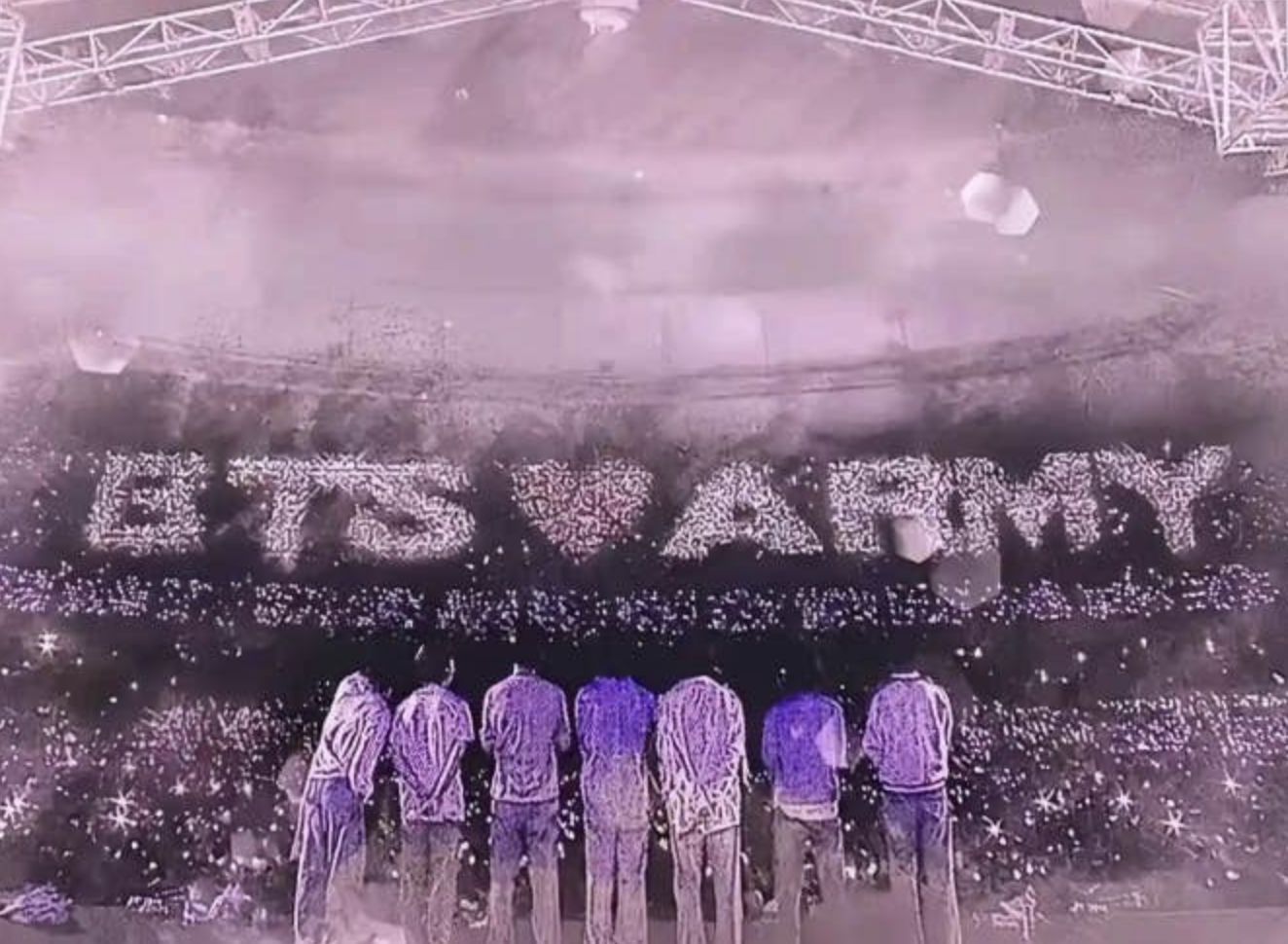
BTS live and ARMY loyalty

Transactional loyalty and emotional loyalty are not the same thing.

A customer might stay because the rewards are convenient. Because the friction of leaving feels mildly annoying. Because the points balance is too good to walk away from. But that is not exactly what one would call devotion. Devotion looks and feels different.

It looks like customers organising themselves on your behalf. Creating content voluntarily. Defending your brand publicly. Bringing other people in. Standing up for you in spaces you’re not. Returning daily, even when they are not actively buying anything.

Very few brands create that kind of loyalty. BTS did.

They did not achieve this through a traditional loyalty program, or discounts, or points mechanics but purely through relationship design.

The South Korean group built one of the most emotionally invested communities in the world. Their fan base, ARMY, operates with a level of coordination, participation and sustained engagement that most global brands would struggle to replicate.

The important question for loyalty professionals is not whether BTS is relevant to your sector, but what they understood about people and what we can learn from them.

BTS reveals what happens when devotion goes way beyond entertainment and when loyalty is built around identity, belonging, participation and generous reciprocity rather than transactions alone.

People do not stay loyal to programs

Human-centric loyalty begins with a very simple premise: people do not stay loyal to programs.

They stay loyal when positive feelings are involved and when relationships make them feel recognized, emotionally connected and part of something meaningful. Traditional loyalty structures tend to optimize for habit. Earn points. Redeem rewards. Repeat the cycle. Those systems can drive frequency and retention, but emotional loyalty operates differently.

Emotional loyalty survives service failures. It survives competitor offers and periods where the customer is not actively purchasing. In the case of BTS, it survives a 4-year-long hiatus!

That kind of loyalty is harder to build because it requires more than incentives and tricks. It requires trust, recognition, consistency and shared values. BTS understood this very early.

Almost every part of their ecosystem prioritises the relationship before the transaction.

Direct communication. Continuous interaction. Shared language. Narrative storytelling. Participation. Community rituals. BTS create voluminous content just for the fans. They like, repost and comment on their fans’ posts regularly. It makes sense to be passionately devoted to a global megastar that interacted with your 300-follower account.

As a result, fans are not simply consuming content but are actively participating inside a living relationship system and the results are extraordinary.

ARMY members translate content into multiple languages voluntarily. They organise global streaming campaigns. They coordinate charitable fundraising. They recruit new fans constantly. Entire communities self-organise around sustaining momentum and engagement. The BTS brand has broken the barriers of traditional brand loyalty expectations and transcended into a powerful realm of emotional loyalty operating at scale.

Identity is one of the strongest forms of loyalty

One of the most powerful things BTS created was a shared identity. They have achieved that by consistently avoiding acting “big”. Perhaps one of the reasons the loyalty feels so unusually strong is because BTS never fully allowed themselves to become untouchable and appear perfect. Even at extraordinary levels of fame, they continue to communicate like people rather than institutions. They are deeply humble. They speak about exhaustion, pressure, insecurity, and the emotional cost of visibility itself. Fans are not just observing talented people singing and dancing; they are witnessing vulnerability, contradiction, growth and humanity in real time.

That changes the nature of loyalty completely. People do not emotionally attach themselves to alien perfection nearly as deeply as they attach themselves to authenticity and relatability. As a result, ARMY does not behave like a customer segment but like a collective identity with its own language, emotional codes, rituals and social norms. It behaves like a family.

Research around ARMY communities consistently shows highly organised forms of participation. Fans voluntarily take on roles. Some translate content. Some teach streaming strategies. Some coordinate voting campaigns. Some onboard new fans. Some create educational content and archives.

What is fascinating is that much of this behavior happens without direct instruction from the brand. People organise themselves because participation itself has meaning. This is where many loyalty programs still fall short. They treat membership as enrolment, when belonging is not the same as enrolment.

A tier name alone does not create identity because identity forms when people feel emotionally recognised within a collective experience. Loyalty shifts from transactional to emotional when customers begin to feel that participating in a brand says something about who they are.

The ritual effect

Most brands communicate in bursts. A campaign launches. A product drops. An email goes out. The brand disappears again. With BTS the relationship is continuous. Livestreams. Behind-the-scenes content. Messages. Updates. Conversations. Interactive moments. Fan participation. The volume becomes organic in a way, and matters less than the rhythm.

People return daily because engagement becomes habitual and, over time, those habits become rituals. Rituals are of paramount importance to any loyalty strategy because they create anticipation and a need for continuity. In other words, they create the perfect ecosystem for return behavior. The customer then does not return merely to transact, and transaction becomes a small and worthy part in a vast emotional landscape. One of the reasons why BTS retained extraordinary engagement even during long periods without group releases is because the relationship itself has become the destination.

The real test of loyalty is absence

The strongest test of any loyalty system is dormancy. What happens when the product disappears for a while? In 2022, BTS announced a group hiatus while members completed South Korea’s mandatory military service. For most brands, a four-year gap in collective activity would have devastated retention. Instead, anticipation intensified. Fans stayed engaged through solo projects, community interaction, membership experiences, narrative breadcrumbs and a carefully structured comeback narrative.

As a result, by the time BTS announced their return, the emotional investment had deepened. The comeback became a global event, and the subsequent World Tour is sold out globally. That proves the point that relationship-led ecosystems behave differently and are pretty much unbeatable when properly established. It’s almost like they have a life of their own, they become organic; people breathe and live not the product, but the meaning attached to it.

Beyond the traditional tier ladder

The BTS ecosystem does not operate through one single loyalty structure. Instead, it functions more like a layered membership ecosystem. There are different forms of participation serving different emotional motivations like access, status, utility, closeness, recognition and community.

Some memberships unlock presale access. Some unlock exclusive content. Some monetise intimacy through direct messaging. Some function as status markers for long-term participation.

It operates less like a linear ladder and more like a relationship stack. That model is increasingly relevant for brand as not every customer is motivated by the same thing. Some want convenience. Some want recognition. Some want exclusivity. Some want connection. Some simply want to feel part of something.

A single points-and-tier structure cannot always accommodate the emotional complexity of loyalty. The brands creating the strongest ecosystems are often the ones building multiple pathways into deeper participation. They look at the customer more as an individual and less as a metric.

Emotional loyalty depends on authenticity

One reason BTS resonates so deeply is because the emotional storytelling feels consistent. Their albums and content repeatedly return to themes around identity, imperfection, vulnerability, growth, mental health, pressure, connection and self-worth. Now, more than ever, fans identify with this narrative and see themselves inside it. Now, more than ever, people value and need emotional depth and authenticity.

As AI-generated content becomes increasingly widespread, authenticity becomes the competitive advantage. Customers can sense when communication has emotional truth behind it and when it has been engineered for engagement.

That, of course, does not mean every brand needs emotional storytelling on the scale of BTS. But it does mean that loyalty communication cannot feel empty, generic or purely extractive. People invest emotionally in brands when they believe there is a real point of view underneath the messaging.

Community-led amplification

One of the most remarkable aspects of ARMY is how much value creation happens voluntarily. Fans create edits, guides, translations, explainers, archives, onboarding threads and educational content continuously. Entire participation systems emerge organically. What is fascinating from a loyalty perspective is that people are not contributing because they are being paid. They contribute because contribution itself strengthens the feeling of belonging.

This is where many traditional loyalty models still underestimate human behavior. People want to participate. They want to belong. They want recognition. They want visibility. They want their involvement to matter. The strongest communities do not treat their people as passive recipients. Instead, they give them roles. This principle applies across industries, familial and societal structures alike.

In loyalty it can take the form of referral programs, community ambassadors, member-generated content, mentorship, reviews, events and co-creation.

The mechanics themselves matter less than the underlying psychological principle of belonging. Belonging deepens both contribution and commitment.

The ethical line

There is also an important ethical conversation inside all of this. Emotional loyalty is powerful but can also become manipulative very quickly. This is where human-centric loyalty requires responsibility. The goal should not be to engineer dependency and addictive traits but to create value and reward participation without exploiting emotional attachment.

That distinction matters increasingly as brands become more sophisticated in behavioral design, because customers are not engagement metrics. They are people.

What brands can learn from BTS

The real lesson from BTS is not that brands should imitate fandom culture but that loyalty becomes more resilient when people feel emotionally connected to something larger than the transaction and even the product itself.

That can look different across industries but the underlying principles are surprisingly transferable.

  • Design for identity, not just incentives.
  • Create ongoing engagement rather than episodic campaigns.
  • Build rituals people anticipate.
  • Give customers meaningful ways to participate.
  • Recognise contribution visibly.
  • Create emotional continuity between transactions.
  • Develop ecosystems rather than isolated loyalty mechanics.

Most importantly: understand that relationships sustain loyalty.

The takeaway

BTS built an ecosystem where loyalty became the natural outcome of participation, belonging, emotional investment and reciprocity. They did not ask their fans to be loyal; they earned their long-term devotion.

It seems then that the future of loyalty will not belong exclusively to the brands with the richest rewards currency or the most complicated tier structures but to those that understand one fundamentally human truth: people stay where they feel emotionally fulfilled and recognized.

The most effective loyalty strategies are relationship systems and relationships require investment from both sides.

Referencias

  1. Choi, S. et al. (2025). “Brand community identification and fan loyalty on Weverse: The case of BTS ARMY.” Social Media + Society, 11(1). https://journals.sagepub.com/doi/10.1177/20563051251326689
  2. Harvard Business School, Working Knowledge (2020). “Building an Army of Fans: Marketing Lessons from K-Pop Sensation BTS.” https://www.library.hbs.edu/working-knowledge/building-an-army-of-fans-marketing-lessons-from-kpop-sensation-bts
  3. Weverse (2024). Weverse Annual Trend Report: Fan engagement metrics including 370 million fan posts, 96.36 million fan DM messages, and 5,787 live broadcasts. https://en.weverse.co/news
  4. Weverse Shop. BTS ARMY Membership: Official product listing and membership benefits. https://shop.weverse.io/en/shop/USD/artists/2/sales/41599
  5. Weverse (2024). Digital Membership preliminary notice: Monthly subscription benefits including ad removal, offline downloads, premium playback, and exclusive badges. https://weverse.io/notice/23906
  6. Weverse. Weverse DM: User guide and service documentation for paid artist-to-fan messaging. https://weverse.io/notice/13188
  7. Reuters (2024). “What is Weverse, the super app joined by Ariana Grande?” https://www.reuters.com/technology/what-is-weverse-super-app-joined-by-ariana-grande-2024-06-14/
  8. UNICEF (2020). “BTS and Big Hit renew commitment to LOVE MYSELF campaign in support of UNICEF to end violence.” https://www.unicef.org/press-releases/bts-and-big-hit-renew-commitment-love-myself-campaign-support-unicef-ending-violence
  9. NPR (2025). “K-pop group BTS set to reunite as two more members complete military service.” https://www.npr.org/2025/06/10/nx-s1-5429075/bts-reunion-south-korea-military-service
  10. Billboard (2026). “BTS Earns 7th No. 1 Album on Billboard 200 With ‘ARIRANG.’” https://www.billboard.com/music/chart-beat/bts-arirang-no1-billboard-200-albums-chart-1236209566/
  11. NBC News (2026). “BTS reunites after military hiatus with historic Seoul comeback performance.” https://www.nbcnews.com/pop-culture/pop-culture-news/bts-reunites-seoul-comeback-performance-rcna264557
  12. Variety (2026). “BTS’ ‘Arirang’ Scores Biggest Sales Week for a Group in Over a Decade.” https://variety.com/2026/music/news/bts-arirang-biggest-sales-week-for-group-in-over-a-decade-1236702284/
  13. Time (2026). “What ‘BTS: The Return’ Reveals About the Biggest Boy Band’s New Era.” https://time.com/article/2026/03/27/bts-the-return-comeback-live-netflix/
  14. Park, S. and Lim, T. (2024). “Platform fandom: Corporate fan management and participatory culture on Weverse.” Telematics and Informatics, 93. https://www.sciencedirect.com/science/article/abs/pii/S0736585324000479
  15. Abdillah, R. et al. (2022). “The role of fan community in building brand loyalty: A study of BTS ARMY.” Atlantis Press. https://www.atlantis-press.com/article/125991973.pdf
  16. Reuters (2020). “BTS fans: Inside the world’s most powerful fandom.” https://www.reuters.com/graphics/GLOBAL-RACE/BTS-FANS/nmopajgmxva/

17. Wikipedia (2026). “Arirang World Tour.” 85 dates across 34 cities and 23 countries, April 2026 to March 2027. https://en.wikipedia.org/wiki/Arirang_World_Tour
ACCC logo

Drawn from the report Loyalty & Reward Co produced for the Australian Competition and Consumer Commission, June 2019.

Almost 80 per cent of Australians belong to at least one loyalty program. That figure, from Mastercard research,1 shows how deeply loyalty programs are woven into Australian consumer life. It does not tell you how much value members actually receive, how the largest programs earn their profits, or what the design choices behind the points mean for competition. Those questions are harder to answer, and until 2019 no one had answered them in public.

In 2019, the Australian Competition and Consumer Commission (ACCC) commissioned Loyalty & Reward Co to produce the first comprehensive, publicly available report on the Australian loyalty industry. The report examined the major programs with more than one million active members, most of them coalition programs, and set out how they are designed, how they are monetised, how they use member data, and what effect they have on competition and on consumers. You can read the full report on the ACCC website. The findings remain a useful reference for anyone designing or operating a program today.

This article summarises what the report found, and what each finding means for program operators.

A market that reaches into almost every industry

Loyalty programs have operated in Australia for several decades and now appear across almost every consumer industry. Estimates of how many programs the average Australian belongs to range from four (Adam Posner, For Love or Money 2018)2 to 6.1 (Mastercard).1 The report concentrated on the four largest coalition programs, Qantas Frequent Flyer, Woolworths Rewards, Velocity Frequent Flyer, and flybuys, because their scale and partner networks give them influence over a large share of Australian spending. A coalition program is one run by a central operator, where a network of partners rewards members with a common currency such as points.

The modern coalition program traces back to 1980, when American Airlines launched AAdvantage, the first frequent flyer program built on a reward currency of miles. Qantas Frequent Flyer followed in 1987 using points. Over the following decades, hotels, banks, supermarkets, and retailers built or joined coalition networks of their own.

Much of the recent history is a contest between two competing partnerships. In 2009, Woolworths partnered with Qantas Frequent Flyer, which grew the supermarket’s member base and gave Qantas a large population of members who rarely flew. Coles took full control of flybuys in 2011 and relaunched it, using cheaper points and supplier-funded bonus offers to compete. When Woolworths relaunched as Woolworths Rewards in October 2015 and replaced Qantas Points with a new currency earned only on selected products, members responded with sustained criticism, and the supermarket reversed much of the change within a year. By 2016, the industry had settled into two camps, Woolworths Rewards with Qantas Frequent Flyer, and flybuys with Velocity.

For operators: a currency change removes something members already value, and members tend to feel that loss more sharply than the gain meant to replace it. The Woolworths experience shows how quickly members react when a redesign reduces perceived value.

The psychology built into program design

The report set out the behavioural research that underpins program design. Several findings are worth knowing.

Operant conditioning (Skinner, 1948)3 holds that behaviour which is reinforced tends to be repeated. Bonus points for a specific action encourage members to repeat it. A related insight is that not all points are equal: the large airline, bank, supermarket, and hotel currencies are desirable enough to change where members choose to shop.

Social identity theory (Tajfel, 1978;4 Bhattacharya and Sen, 2003)5 holds that people fold the brands they identify with into their sense of self. Status tiers apply this directly. A Platinum frequent flyer receives lounge access, priority boarding, and upgrades, and that recognition can build an emotional connection to the airline. Status also raises switching costs, which can keep a member spending even when a competitor charges less for the same product.

The endowed progress effect (Nunes and Drèze, 2006)6 was demonstrated in a car wash study. Members given a card with two of ten stamps already filled redeemed at 34 per cent, against 19 per cent for members given a blank eight-stamp card, even though both groups needed eight stamps. Artificial early progress increased persistence toward the goal.

The goal-gradient effect (Hull, 1934;7 Kivetz, Urminsky, and Zheng, 2006)8 holds that effort increases as a goal comes closer. Members have been observed to accelerate their spending as they approach a status threshold.

Size heuristics describe how one hundred points can feel more rewarding than the one dollar of value it represents. Points let a program present value at a low cost to itself.

Surprise and delight can lift satisfaction well beyond what met expectations achieve. Berman (2005)9 reported that a delighted Mercedes-Benz customer had an 86 per cent likelihood of buying again, against 29 per cent for a merely satisfied one.

For operators: these mechanics work, and that is why they carry a duty of care. Design that manufactures progress or leans heavily on status can drive engagement, and it can also erode trust if members later feel the value was overstated.

How the largest programs earn their profit

A small number of coalition programs are highly profitable. Qantas Loyalty reported revenue of $1,546 million and earnings before interest and tax of $372 million in 2018.10

The report set out the standard coalition model with a worked example. A member spends $1,000 and earns 1,000 points. The program invoices the retailer at around 1.5 cents per point, so the retailer pays $15. When the member later redeems, the program values each point closer to one cent, or $10 for the 1,000 points. The program keeps the difference, roughly $5, a margin of about 33 per cent on that transaction. Across the hundreds of billions of points a large program can sell each year, those half-cents accumulate.

Two further mechanics matter. The first is breakage, the industry term for points that expire unused. Programs set expiry rules, for example 18 months of inactivity for Qantas Frequent Flyer, 24 months for Velocity, and 12 months for flybuys, and higher breakage translates directly into higher profitability. This is why some programs employ actuaries to model it. The second is deferred revenue. A program sets aside enough to cover future redemptions, and a holding of several billion dollars is not unusual for a large Australian coalition program, earning interest in the meantime.

Redemption value also varies by reward. A point redeemed on a flight might be worth one cent, on a gift card half a cent, and on a toaster around 0.25 to 0.35 cents. Pricing steers members toward redemptions that keep cash inside the business.

For operators: breakage and value-steering improve margins, and they sit in tension with member value. A program that optimises breakage too aggressively risks the disengagement that produces breakage in the first place.

The data behind the points

A loyalty program is one of the most effective ways to build a marketing database, because it links transactions to an identified individual over time. The report traced how far that data capability now extends.

Woolworths bought a half-share in analytics firm Quantium in 2013, gaining the ability to turn data from around 8 million loyalty cards into personalised offers. Data exchanges such as Data Republic, backed by Qantas Loyalty, Westpac, NAB, and ANZ, connect a broad network of organisations for secure data sharing. Data brokers can match a single member against tens or hundreds of external datasets, and one broker cited in the report, Rokt, described using billions of user records to personalise offers in real time.

For operators: members increasingly expect transparency and control over their data, a point the report emphasised. A program that collects widely without explaining clearly risks the trust that makes personalisation acceptable in the first place.

The competition question

The report examined whether loyalty programs affect competition, and the evidence points in more than one direction.

Consumer behaviour shows the effect is real. A 2018 Canstar Blue survey found that 21 per cent of shoppers who switched supermarkets did so to earn reward points, and 54 per cent of those who did all their shopping at one supermarket did so because of points.11 International research reaches similar conclusions. Lederman (2003)12 linked frequent flyer enhancements to gains in airline market share, with larger effects at hub airports. Cairns and Galbraith (1990)13 argued that programs raise switching costs and act as a sunk cost that a new entrant must match to compete. McCaughey and Behrens (2011)14 found frequent flyer members in the Netherlands willing to pay a premium of up to 6 per cent. Reichheld (1996)15 found that programs can reduce a member’s sensitivity to competing prices.

The concern is sharpest for smaller companies and new entrants. In a market of dominant duopolies, when the leading players both run large, engaged programs, the competitive tension between them can be neutralised while the barrier facing a new entrant without a comparable program rises. Norway took this seriously enough to ban the earning of points on domestic routes for a period, lifting the ban only in 2013 once domestic competition was judged robust.16

The evidence is not one-sided. Caminal and Claici argued that loyalty pricing can enhance competition by steering business between firms and lowering average transaction prices.17 Aldi, meanwhile, has campaigned directly against points-based programs, arguing that members who chase points routinely spend more, which suggests competitors view those programs as effective.

For operators: a program is a genuine competitive asset, and that same strength invites scrutiny where it raises switching costs or dampens price competition. Designing for real member value, rather than lock-in alone, is the more durable position.

Are members getting what they are promised?

The report closed on the question that matters most to members: the value they actually receive.

Value varies widely. Members of some programs receive as little as half a cent for every dollar spent, while others return 10 per cent or more. Some programs have also reduced value quietly over time. A $100 Barbeques Galore gift card that cost 13,500 points on the Velocity store in 2009 later cost 18,000 points, a 33 per cent increase. A $100 Myer gift card on the Qantas Store rose from 13,500 to 17,770 points, a 31 per cent increase, for a product whose value had not changed. Those increases outpaced the roughly 9.5 per cent inflation over the same five years, and members were not notified.

Some advertising also risks over-promising. The report noted a Qantas credit card campaign using the line “Latte, Latte, Latte, London”. Taken literally, a member would need to buy 20,000 to 40,000 cups of coffee to earn a flight to London, which at one or two cups a day could take up to 55 years. No reasonable consumer would read it literally, and that is the point: broad promotional claims can imply that value is more accessible than it is.

For operators: transparency around expiry, devaluation, and realistic earn rates protects the trust a program depends on. Members forgive a modest return far more readily than a value promise that does not hold up.

What the report means today

Australia’s loyalty industry is sophisticated, profitable, and built on well-understood behavioural science. The ACCC report showed that the same features which make programs effective, the psychology, the data, the coalition scale, and the points economics, are also the features that deserve the most care. A program earns durable loyalty when its design, its data practices, and its promises all hold up to a member reading them closely.

Loyalty & Reward Co produced this report as the loyalty consulting experts, and have since delivered more than 160 loyalty projects for leading brands worldwide. For the full detail, figures, and sources, read the complete report on the ACCC website.

Referencias

Primary source: Shelper, P., Lyons, S., & Savransky, M. (2019). Australian Loyalty Schemes: A Loyalty & Reward Co report for the ACCC. Loyalty & Reward Co. Available at: accc.gov.au

The numbered sources below are cited in the article above. Full footnotes for every industry, media, and program source referenced throughout the report are provided in the ACCC report itself.

  1. Mastercard (2018). Achieving Advocacy and Influence in a Changing Loyalty Landscape.
  2. Posner, A. (2018). For Love or Money 2018, edition 6.
  3. Skinner, B. F. (1948). “Superstition in the pigeon”, Journal of Experimental Psychology, Vol. 38, pp. 168-172.
  4. Tajfel, H., & Turner, J. C. (1978). “An integrative theory of intergroup conflict”, in The Social Psychology of Intergroup Relations, pp. 33-47.
  5. Bhattacharya, C. B., & Sen, S. (2003). “Consumer-company identification: a framework for understanding consumers’ relationships with companies”, Journal of Marketing, Vol. 67, pp. 76-88.
  6. Nunes, J., & Drèze, X. (2006). “The endowed progress effect: how artificial advancement increases effort”, Journal of Consumer Research, Vol. 32, No. 4, pp. 504-512.
  7. Hull, C. L. (1934). “The rat’s speed of locomotion gradient in the approach to food”, Journal of Comparative Psychology, Vol. 17, pp. 393-422.
  8. Kivetz, R., Urminsky, O., & Zheng, Y. (2006). “The goal-gradient hypothesis resurrected: purchase acceleration, illusionary goal progress, and customer retention”, Journal of Marketing Research, Vol. 43, pp. 39-58.
  9. Berman, B. (2005). “How to delight your customers”, California Management Review, Vol. 61, No. 1, pp. 129-151.
  10. Qantas (2018). Qantas Annual Report 2018.
  11. Canstar Blue (2018). Consumer survey on supermarket switching and reward points, as cited in the ACCC report.
  12. Lederman, M. (2003). Do enhancements to loyalty programs affect demand? The impact of international frequent flyer partnerships on domestic airline demand, mimeo, MIT.
  13. Cairns, R., & Galbraith, J. (1990). “Artificial compatibility, barriers to entry, and frequent-flyer programs”, Canadian Journal of Economics, Vol. 23, pp. 807-816.
  14. McCaughey, N., & Behrens, C. (2011). Paying for status? The effect of frequent flyer program member status on airfare choice, Monash University Department of Economics.
  15. Reichheld, F. (1996). The Loyalty Effect: The Hidden Force Behind Growth, Profits and Lasting Value, Harvard Business School Press.
  16. OECD (2014). Airline competition: note by Norway, Directorate for Financial and Enterprise Affairs, Competition Committee.
  17. Caminal, R., & Claici, A. (2007). “Are loyalty-rewarding pricing schemes anti-competitive?”, International Journal of Industrial Organization, Vol. 25, pp. 657-674.
<a href="https://loyaltyrewardco.com/author/angeliki/" target="_self">Angeliki Tsanikidou</a>

Angeliki Tsanikidou

Angeliki is the Marketing Manager at Loyalty & Reward Co. Her background spans content, communications, and digital strategy, underpinned by earlier experience in higher education where she lectured in performance and creative writing. She brings a strong focus on clear, human-centred storytelling and has supported organisations across social care, community services, and small businesses to strengthen their presence through thoughtful and consistent marketing. At Loyalty & Reward Co, Angeliki leads the company-wide marketing strategy, ensuring a cohesive and impactful presence across the website, LinkedIn, blogs, newsletters, and marketing collateral. She works closely with the consulting team to amplify project success, elevate thought leadership, and deliver meaningful reporting, while building scalable systems and processes to support sustained growth.

Lea las últimas opiniones de nuestros expertos

The Ultimate Guide to adidas adiClub

Since rebranding from the Creators Club in early 2022, adidas' adiClub has grown into one of the most recognised and awarded loyalty programs in global sportswear....

HeyMax First “fly now, earn later” review

Most loyalty programs are built on deferred gratification. Members spend over a period of time, watch a balance accumulate, and aim for a desired, future reward....

Hable con nosotros

¿Necesita un mejor programa de lealtad? ¿Quiere aprovechar nuestra experiencia? ¡Hable con nosotros!