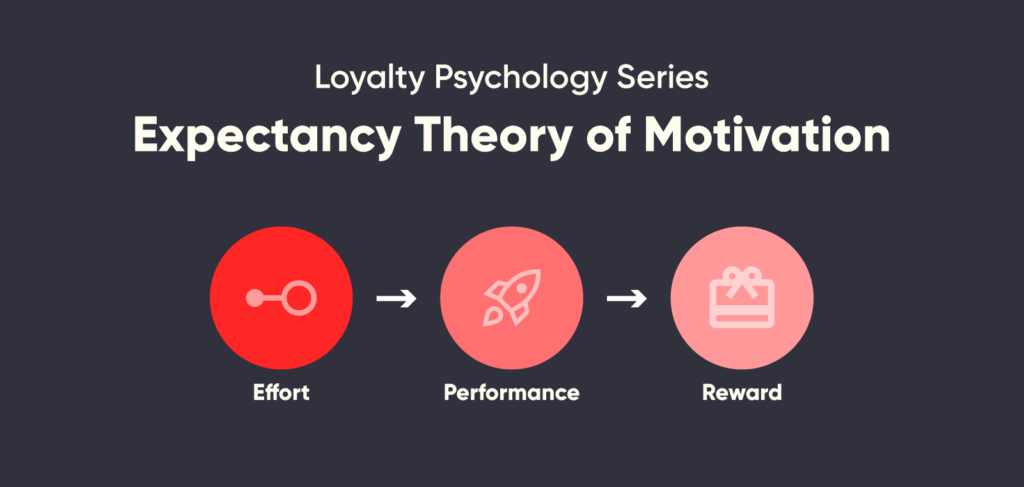
As loyalty consultants, we use loyalty psychology to strengthen loyalty program strategy and influence customer behaviour. Expectancy theory of motivation (Vroom, 1964)[i] is one useful example. It proposes that people act when they believe their effort will lead to a desired outcome. This gives brands a practical way to understand what motivates members to engage. It can also improve loyalty program strategy.
The theory states that people feel motivated when they believe effort will improve performance. They must also believe strong performance will lead to a desirable reward. This makes the effort feel worthwhile.
Vroom outlined three core variables in his theory: expectancy, instrumentality and valence.
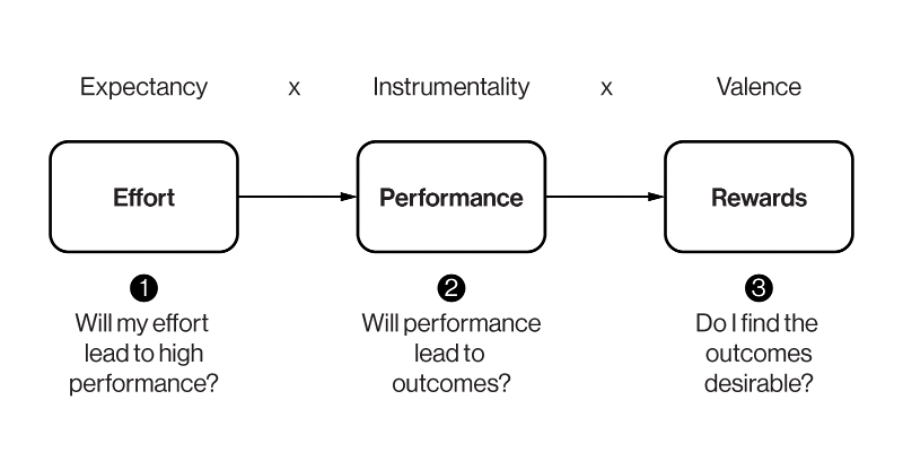
Figure 6: Three components of expectancy theory by V. H. Vroom, 1964. Reprinted from iEduNote [ii] with permission.
Expectancy involves the belief that increased effort can improve performance. Instrumentality involves the belief that performance will lead to a suitable reward. Valence is the value a person places on the expected outcome.
Expectancy theory of motivation in loyalty programs
A member may engage when they believe their effort will move them closer to a reward. They must also value that reward.
For loyalty program strategy, expectancy theory helps brands understand the member’s point of view. The three core areas can clarify which features matter most. They can also expose features that add complexity without adding motivation. Expectancy theory can also support loyalty program audits. It helps operators find where a program blocks motivation or fails to motivate enough.
Factores de motivación de Sharma y Verma
Sharma and Verma (2014)[iii] examined how motivation theory can influence a consumer’s intention to enrol. They identified several factors relevant to loyalty program design:
- Lo cerca que está el objetivo de unirse, que está positivamente relacionado con la intención de inscribirse en un programa de recompensas.
- Cuánto trabajo será necesario para alcanzar el objetivo, lo que está negativamente relacionado con la intención de matricularse.
- Cuánto valora el afiliado la recompensa, que está positivamente relacionada con la intención de afiliarse.
- Resistencia a los intentos de controlar el comportamiento o limitar la libertad de elección, que se relaciona negativamente con la intención de matricularse.
Sharma and Verma argued that loyalty programs need to balance all four factors. Their research found reward value had the strongest positive effect. However, perceived effort had the strongest negative effect.
Expectancy theory examples in loyalty programs
Expectancy theory of motivation can help brands influence member behaviour. The examples below show where it worked well, and where it missed the mark.
Delta Air Lines SkyMiles

In 2004, Delta Air Lines revamped its SkyMiles program. The airline had identified that some rewards did not support profitable behaviour. It adjusted goal proximity for discount economy passengers. These members received one quarter of the mileage reward given to higher-paying members. This change helped Delta stop rewarding behaviour that worked against profitability. Instead, it rewarded members who increased revenue and profit.
Citibank

Citibank launched a credit card that allowed members to earn American Airlines AAdvantage miles. To boost enrolments, Citibank offered 10,000 bonus miles for opening a new account. This gave the reward high valence and made the required effort feel low. However, the offer risked attracting deal-seekers rather than loyal customers. The example shows how a high-value reward can drive acquisition without building measurable loyalty.
¿Quiere mejorar su estrategia de programas de fidelización?
Nuestros consultores de fidelización tienen una amplia experiencia en ayudar a las marcas globales a dar los pasos críticos para diseñar programas de fidelización eficaces, así como apoyar la evolución continua para satisfacer las expectativas cambiantes de las empresas y los consumidores. Póngase en contacto con nosotros para obtener más información sobre nuestros servicios integrales de fidelización y hable con nuestros consultores de fidelización para entender cómo puede maximizar la estrategia del programa de fidelización de su marca.
[i] Vroom, V.H., 1964, "Work and motivation", Nueva York: Wiley.
[ii] iEdunote, 'Expectancy Theory of Motivation', https://www.iedunote.com/expentancey-theory, consultado el 16 de julio de 2020.
[iii] Sharma, D. & Verma, V., 2014, "Psychological and economic considerations of rewards programs", Journal of Retailing and Consumer Services, Vol 21, Iss 6, pp924-932.