Lululemon is one of the most studied brands in global retail, and for good reason. The Vancouver based activewear company has grown from a single yoga store in 1998 into a business generating $11.1 billion in annual revenue for its fiscal year ended February 2026, surpassing $10 billion for the first time in fiscal 2024 [1][2]. It has achieved this without the promotional discounting that most apparel retailers rely on, without wholesale distribution through third party retailers, and without a points based loyalty currency.
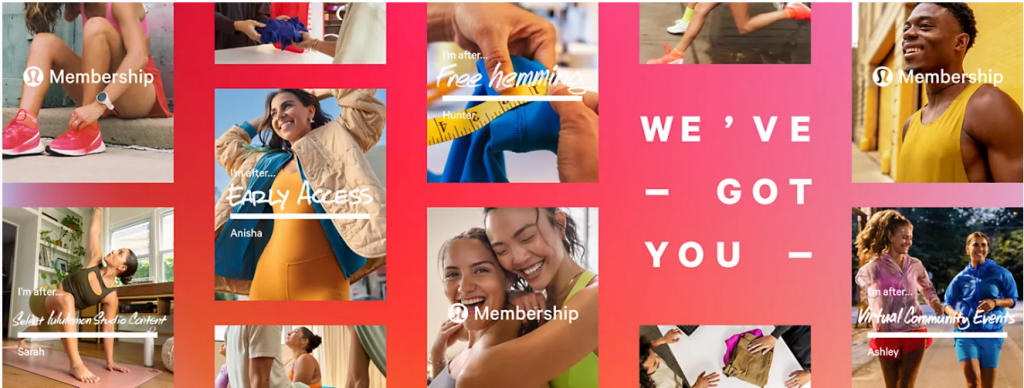
Instead, lululemon has built its growth on brand community, premium positioning, and a membership program that now counts approximately 30 million members [3]. The program, which runs under the name lululemon Membership, was significantly redesigned in 2024 into its current three tier spend based structure. It is free to join, deliberately avoids discounts and points, and delivers its value through access, experiences, and curated wellness partnerships, a model as unusual in the loyalty industry as lululemon itself is in apparel..
This article examines the commercial evidence behind lululemon’s program, explains exactly how the three tier Collective structure works, and draws out the design principles that make it both distinctive and instructive for loyalty professionals across sectors.
Impact on lululemon’s Business Performance
Revenue Growth and the $10 Billion Milestone
Lululemon’s financial trajectory over the past decade is a case study in what sustained brand loyalty compounding looks like commercially. The company surpassed $10 billion in annual revenue for the first time in its fiscal year 2024 (ended February 2025), reporting $10.6 billion, up 10% year over year [1]. Full year fiscal 2025 (ended February 2026) delivered $11.1 billion, up a further 5% [2].
Key financial metrics for full year fiscal 2025 include:
- Net revenue: $11.1 billion (up 5% year over year; up 6% excluding the impact of the 53rd week in fiscal 2024) [2]
- International net revenue growing strongly: China Mainland revenue grew at or above the high end of the 20-25% guidance range, with Rest of World up 19% in constant currency in Q3 2025 [4]
- Americas: facing a more challenging near term environment, with the business focused on returning to full price sales and product newness in 2026
The company maintained gross margins above 57% throughout this period (an exceptional level for an apparel retailer), reflecting the brand’s sustained premium positioning and its deliberate refusal to compete on price [1][2]. This financial discipline is not incidental to the membership program. It is constitutionally connected to it i.e., a loyalty program that rewards members with discounts would erode the very brand equity that commands those margins.
Membership Growth: From Test to 30 Million Members
Lululemon disclosed 24 million members in its Q3 fiscal 2024 earnings call (December 2024), with CEO Calvin McDonald describing the program as growing strongly and benefits “resonating well” with the membership base [5]. By Q2 fiscal 2025 (September 2025), that figure had grown to approximately 30 million members, with McDonald citing ongoing growth across all age demographics in the US and solid guest retention [3].
That is an increase of 6 million members in roughly nine months (a 25% expansion), achieved without paid advertising or incentivized sign-ups, simply through the program being integrated into the buying experience at lululemon stores, on the website, and through the app.
Lululemon does not report membership attributed revenue as a separate financial line item. However, management has consistently framed membership as a driver of the three outcomes that directly flow into revenue i.e., guest retention, repeat purchase frequency, and incremental spend per member. CFO Meghan Frank has stated the goal is to “build our community, increase engagement and drive incremental spend” [6]. CEO McDonald cited membership as a contributor to Black Friday performance, noting that offering early product access to members drove “a significant number of app downloads and new sign-ups” and contributed to the biggest ever ecommerce volume day in the company’s history [4].
Guest Retention: The Underlying Commercial Logic
The commercial logic behind lululemon’s membership program is anchored in the brand’s exceptionally high retention rates among its most valuable customers. lululemon has reported a 92% retention rate among its top 20% of guests by spend, a figure that is unusually high even by the standards of the most loyalty intensive sectors [7]. These are the customers spending $1,000 or more annually, who correspond to the Collective Pinnacle tier in the current program structure.
The membership program is designed to formalize, reward, and deepen this existing loyalty behavior, rather than to create loyalty from scratch. For lululemon’s core guests, the program is less about incentivizing them to return (they were already returning at extraordinary rates) and more about giving them a richer brand relationship: exclusive access, personalized services, partner wellness benefits, and community experiences that reinforce their identity as part of the lululemon community.
The International Growth Platform
The membership program currently serves US and Canadian residents [8], making it a North America focused offering even as lululemon’s international business (particularly China Mainland and the broader Rest of World segment) has become an increasingly important revenue driver. International represented a meaningful and growing share of revenue in fiscal 2025, with China Mainland delivering high twenty percent growth and the Rest of World segment up strongly [2][4]. As the program expands internationally, the membership infrastructure already in place represents a significant growth asset.
Understanding the lululemon Membership Program
The Core Philosophy: Access Over Discounts
The most important thing to understand about lululemon Membership is what it deliberately is not. It has no points currency. It does not offer percentage off discounts on purchases. It does not have a birthday reward, a cashback mechanism, or a spend and earn points table. In an industry where most loyalty programs are built around some version of “spend $X, earn $Y in discounts,” lululemon has constructed a program that treats its loyal customers as a community rather than a transaction ledger.
This is a strategic choice, not an oversight. CEO McDonald has been explicit about the brand’s full price philosophy: “We do not drive our client growth through discounts or promotions, and we have no intentions to do so” [6]. A points for discounts loyalty program would directly contradict this. The membership program instead rewards loyalty with access, exclusivity, and connection, benefits that add value to the guest experience without eroding the brand’s price architecture.
The program is available in the US and Canada, is free to join for anyone with a name and email address, and can be created on lululemon.com, the iOS app, or in store. The lululemon App provides the richest membership experience, including spend tracking, benefit activation, and early access notifications [8].
The Three Tiers: Collective, Collective Plus, Collective Pinnacle
Lululemon Membership operates three tiers, all built on annual spend thresholds measured from January 1st to December 31st each calendar year. Once a member reaches a new level’s threshold, they upgrade immediately and retain that status for the remainder of the current year and all of the following year. Spend includes merchandise purchases at lululemon stores in the US and Canada and on the website and app (net of discounts and returns); gift cards, third party marketplace purchases, taxes, and shipping do not count [8].
Collective: Free to Join
The entry tier is open to all and provides a meaningful package of benefits from day one:
- Partner Perks: exclusive offers from a curated set of wellness brands including Oura (health insights wearable), Erewhon (premium health food), AG1 (daily nutrition supplement), La La Land (coffee), Function (health testing), Peloton (fitness classes), and American Express
- Early Access to Product Drops: first access to new collections and limited releases before the general public
- Exchange or Credit on Sale Items: the ability to exchange or receive credit on items purchased at sale price, a benefit that addresses a common pain point with final sale policies
- Select Peloton Classes: complimentary access to world class fitness instruction through Peloton’s platform
- Member Only Experiences: exclusive events and activations available only to lululemon members
- Receipt Free Returns: the ability to return or exchange without needing a physical receipt
- Free Hemming: complimentary in store alterations at lululemon stores (Canada only)
Collective Plus: Unlocks at $500 Annual Spend
Members who spend $500 or more in a calendar year (at US and Canadian retail prices) unlock all Collective benefits plus:
- Exclusive Access to Products: access to items not available to the general public
- Personal Shopper: a dedicated personal shopping service, launching in early 2026, designed to help members find and select items that fit their style and needs
Collective Pinnacle: Unlocks at $1,000 Annual Spend
Members who reach $1,000 in annual spend unlock all Collective and Collective Plus benefits plus:
- First Access to Restocks: priority notification and access when popular items return to stock (coming soon)
- Complimentary Customization: the ability to personalise gear with a name, number, or a personal mantra, currently available in the US
Tier Benefits Summary
| Benefit | Collective (Free) | Collective Plus ($500+) | Collective Pinnacle ($1,000+) |
| Partner Perks (Oura, AG1, Peloton, Amex, etc.) | Yes | Yes | Yes |
| Early Access to Product Drops | Yes | Yes | Yes |
| Exchange or Credit on Sale Items | Yes | Yes | Yes |
| Select Peloton Classes | Yes | Yes | Yes |
| Member Only Experiences | Yes | Yes | Yes |
| Receipt Free Returns | Yes | Yes | Yes |
| Free Hemming (Canada) | Yes | Yes | Yes |
| Exclusive Access to Products | — | Yes | Yes |
| Personal Shopper (early 2026) | — | Yes | Yes |
| First Access to Restocks | — | — | Coming soon |
| Complimentary Customization (US) | — | — | Yes |
The Partner Perks Ecosystem
The Partner Perks initiative, launched in August 2024, is one of the more distinctive features of the current membership design. Rather than building a closed loop earn and burn system, lululemon has assembled a network of like minded wellness brands that share the brand’s positioning around movement, nutrition, recovery, and overall wellbeing. The current partner set (Oura, Erewhon, AG1, La La Land, Function, Peloton, and American Express) spans every dimension of a health conscious, premium lifestyle [8].
This is not incidental. Lululemon’s brand vision has always been about the active, mindful life that its products enable, not just the products themselves. By extending the membership into the broader wellness ecosystem through brand partnerships, lululemon gives members a reason to interact with the program and experience the brand’s values on days when they are not buying activewear. The partner brands are ones that lululemon’s core guest is already likely to use or aspire to use, making the partnership perks feel curated rather than transactional.
The Evolution From Mirror/Studio to the Current Model
The current three tier collective structure represents a significant redesign from where the program was in 2022-2023. At that time, lululemon operated a two tier model tied to its Mirror connected fitness hardware i.e., a free Essentials tier and a paid Studio tier at $39 per month that provided access to lululemon’s at home fitness content ecosystem. The Studio program was predicated on lululemon’s $500 million acquisition of Mirror in 2020, which assumed that apparel customers would invest $1,000-2,000 in connected home fitness hardware.
That assumption proved incorrect. Mirror adoption was limited, and by 2024 lululemon had exited Mirror hardware sales and pivoted to a five year Peloton partnership that delivers fitness content access through the membership program without requiring any hardware purchase [8]. The current free, tiered, spend based structure launched in 2024 is the outcome of that evolution, a lighter, more accessible model that uses Peloton’s platform rather than proprietary hardware. The Peloton integration means members now receive world class fitness instruction as a membership benefit, without the friction and cost of a hardware commitment.
Key Insights for Loyalty Program Operators
A No Discount Loyalty Program Protects Margin and Brand
Lululemon’s membership program is a rare and important example of a major retail brand building loyalty entirely without discounting. In most retail sectors, the dominant loyalty design is some version of spend and earn points that redeem as cash equivalent discounts. The commercial risk of this model is that it trains customers to expect discounts, erodes margin, and ultimately builds loyalty to the offer rather than the brand.
Lululemon’s approach demonstrates that when brand equity is sufficiently strong, and when members genuinely value access and experience, discounts are not necessary. The program generates retention and engagement through early product access, exclusive events, partner perks, and personalized services, none of which compromise the brand’s full price integrity. For loyalty operators in premium categories, this is a foundational design principle: the reward mechanism should reinforce brand positioning, not undermine it.
Annual Spend Thresholds Create Directional Commercial Incentives
The $500 and $1,000 annual spend thresholds for Collective Plus and Collective Pinnacle serve a different purpose to the aspirational tier design seen in hotel or airline programs. For lululemon, the thresholds are not primarily about inspiring members to spend more to reach a tier, though they do create that incentive for members approaching a threshold. They are primarily about directing recognition toward the brand’s most valuable customers, that is, the guests who are already spending $1,000 or more per year are the ones with 92% retention rates and the highest lifetime value. Giving them Complimentary Customization and First Access to Restocks is an efficient use of loyalty investment because those members are already the most commercially valuable.
This is a meaningful design insight in that tier thresholds do not always need to be aspirational stretch goals. Sometimes they are more valuable as recognition tools that ensure high value customers feel seen and appreciated, and that the program investment is concentrated where it will have the most commercial impact.
Black Friday Early Access as a Member Acquisition Engine
The decision to offer early Black Friday product access exclusively to members (a week earlier than the general public) demonstrates how membership benefits can serve double duty as acquisition mechanics. When lululemon offered members early access in its Q3 fiscal 2025 holiday period, it drove a significant number of new program sign-ups alongside the traffic and revenue effects of the early launch [4]. New members who joined to access the Black Friday drop became part of the 30 million member base with data, engagement history, and an established relationship with the brand.
This is a smart activation of the early access benefit. Rather than treating early access as a passive retention perk, lululemon used it as an active acquisition moment, creating urgency for non members to join before the drop. For loyalty operators, the lesson is that scarcity based benefits (limited windows, exclusive access, restocks) are among the most powerful acquisition tools available within a membership framework.
The Peloton Partnership: Building an Ecosystem Around the Guest, Not the Product
The pivot from Mirror to a Peloton content partnership is a case study in how to recover elegantly from a loyalty program failure. The Mirror tied Studio program attempted to make lululemon’s loyalty program contingent on a specific hardware purchase, a misalignment between loyalty design (building habitual engagement) and product economics (one time hardware sale). The Peloton partnership delivers the same fitness content access as a benefit within the membership, without requiring any capital expenditure from the member.
More broadly, the partner ecosystem (Oura for health tracking, AG1 for daily nutrition, Erewhon for premium groceries, Function for health testing) maps directly onto the lifestyle that lululemon’s core guest is living. This is the “lifestyle ecosystem” design principle applied to loyalty i.e., the program should be present throughout the member’s daily life, not just at the point of purchase. When a guest opens their Oura app to check their sleep score and sees the lululemon member benefit, or picks up their AG1 and remembers it came through their membership, the brand relationship deepens without any additional marketing spend.
Conclusión
Lululemon Membership is a loyalty program designed for a brand that has spent 25 years building something rare in retail, a community of customers who genuinely believe in what the brand stands for. The commercial outcomes of that brand investment are visible in the numbers e.g., $11.1 billion in annual revenue, 30 million members, 92% retention among top spending guests, and gross margins above 57% that reflect a brand that has never needed to compete on price [1][2][3][7].
The program’s design choices (free to join, no points, no discounts, three spend based tiers, access and experience as the reward mechanism, a curated wellness partner ecosystem) are all logically consistent with the brand’s premium positioning and community philosophy. The benefits verified directly on the lululemon Membership page reinforce this e.g., early product drops, partner perks from brands like Oura, AG1, and Peloton, member only experiences, exchange and credit on sale items, receipt free returns, and complimentary customization at the Pinnacle tier [8].
For loyalty professionals, the program raises an important question. What is the right reward mechanism for your brand? If your loyalty program is built on discounts, you are competing on price even in the moments when customers are choosing to come back. lululemon’s answer (community, access, and wellness) has helped build a brand where the top 20% of guests return at a 92% rate without needing to be incentivized with offers.
Looking to Build a Loyalty Program That Works?
Whether you are designing a perks based program, rethinking your tier structure, or building the commercial case for moving away from a points and discounts model, the team at Loyalty & Reward Co brings deep expertise across retail, apparel, and every other sector. Get in touch to start the conversation.
Explore other examples of winning loyalty programs here.
Referencias
[1] lululemon Full Year Fiscal 2024 Results (SEC 8-K, March 2025): $10.6 billion revenue, up 10% YoY; surpassed $10 billion for the first time. https://www.sec.gov/Archives/edgar/data/0001397187/000139718725000012/lulu-20250202xex991.htm
[2] lululemon Full Year Fiscal 2025 Results (press release, March 2026): $11.1 billion revenue, up 5% YoY; full year highlights.
https://corporate.lululemon.com/media/press-releases/2026/03-17-2026-200620717
[3] lululemon Q2 Fiscal 2025 Earnings Call Transcript: approximately 30 million members; membership driving guest retention and engagement across all age demographics. https://www.investing.com/news/transcripts/earnings-call-transcript-lululemon-athletica-q2-2025-beats-eps-forecast-stock-drops-93CH-4226090
[4] lululemon Q3 Fiscal 2025 Earnings Call Transcript: Black Friday early member access driving app downloads and membership sign-ups; international segment momentum. https://www.fool.com/earnings/call-transcripts/2025/12/12/lululemon-lulu-q3-2025-earnings-call-transcript/
[5] lululemon Q3 Fiscal 2024 Earnings Call Transcript: 24 million members; membership benefits “resonating well”; guest retention strong. https://www.fool.com/earnings/call-transcripts/2024/12/05/lululemon-athletica-lulu-q3-2024-earnings-call-tra/
[6] The Current / lululemon earnings commentary: CFO Meghan Frank on membership goals: “build community, increase engagement and drive incremental spend”; CEO McDonald on full-price philosophy. https://thecurrent.media/lululemon-membership
[7] MBI Deep Dives analysis: 92% retention rate among lululemon’s top 20% of guests by spend, cited from lululemon management disclosures. https://www.mbi-deepdives.com/lulu/
[8] lululemon Membership: official program page. All tier structures, spend thresholds, benefit lists, partner brands, qualification rules, and program mechanics verified directly. https://shop.lululemon.com/membership
[9] lululemon Q4 Fiscal 2025 Earnings Call Transcript: full year 2025 review; guest acquisition, retention and engagement metrics; 2026 outlook. https://www.fool.com/earnings/call-transcripts/2026/03/18/lululemon-lulu-q4-2025-earnings-call-transcript/