
Why the same loyalty mechanic carries different meanings across markets
Status is one of the most powerful mechanics in loyalty program design. The promise of Gold, Platinum, or Diamond can drive aspiration, increase spend, and create switching costs that competitors struggle to match.
But status does not mean the same thing everywhere.
A tier that feels aspirational in London may feel too overt in Tokyo. A badge that motivates engagement in China may need to be supported by luxury access, concierge treatment, or visible VIP recognition. A premium tier that works in South Korea may need to feel genuinely scarce, selective, and physically experienced. A tier ladder that performs well in the United States may feel too distant in Thailand, where members may respond more strongly to immediate, practical value.
This is where many global loyalty program underperform. They assume the same structure can travel from market to market, but although he mechanics may be familiar, the meaning is not.
The issue is not that Asian consumers do not care about status. In many Asian markets, status matters enormously. The more important question is how status should be expressed.
Should it be public or private? Should it be shown through badges, lounges, events, savings, or personal service? Should status loss be treated as a standard program rule, or as a moment that risks embarrassment and disengagement?
These questions matter because status tiers are not just program architecture. They are cultural signals.
Most tier programs share the same structural building blocks: qualification rules, spend thresholds, benefit ladders, tier names, requalification periods, and demotion rules. But those same building blocks can create very different member experiences depending on four dimensions:
| Dimension | Key Question |
| Status expression | Is status meant to be visible, discreet, social, or private? |
| Status earning | Are members motivated by progression, exclusivity, utility, or recognition? |
| Benefit value | Do members value badges, service, lounges, savings, access, or experiences? |
| Status loss | Does demotion feel routine, frustrating, embarrassing, or relationship damaging? |
Across Asia, these differences can be quite nuanced.
| Market | What Status Embodies | Winning Tier Strategy |
| Japan | Exceptional service | Quiet recognition and personalized hospitality |
| China | Social recognition | Visible achievement, badges, and shareable progression |
| South Korea | Tangible prestige | Scarce, physical, and socially validated VIP experiences |
| Thailand | Practical value | Utilitarian benefits with premium recognition |
Culture alone does not determine status tier design. Industry, business model, category, brand positioning, member economics, technology, and competitive dynamics all matter. But market context changes which designs are most likely to succeed.
It can change whether:
- members want their status to be seen or quietly understood
- whether progression feels motivating or exhausting
- whether exclusivity should be more visible, more selective, more practical, more service led, or more physically experienced
- And how carefully brands need to manage the loss of status
Japan: Service is Status
Japan’s loyalty market is one of the most mature in the world. Its “point economy,” often referred to as poikatsu, is deeply embedded in daily life, with platforms such as Rakuten operating across e commerce, travel, fintech, and mobile services.
Status tiers are common in Japan, but they often play a different role from Western models. Rather than functioning primarily as a public badge of achievement, tiers are more likely to act as a service segmentation tool. They help brands identify high value customers and deliver more personalized, anticipatory care.
This reflects the cultural principle of omotenashi: wholehearted hospitality, attention to detail, and proactive service delivered without the need for overt display.
In Western tier models, status often motivates through visibility. Members earn, display, and use their status. In Japan, status is more often experienced quietly. It is recognised by the brand, not necessarily broadcast to other customers.
Case study: Harrods Rewards vs Isetan Mitsukoshi’s Customer Program
Both are iconic department store groups with spend based tiered loyalty systems. But how those tiers are treated illustrates the cultural divergence clearly.
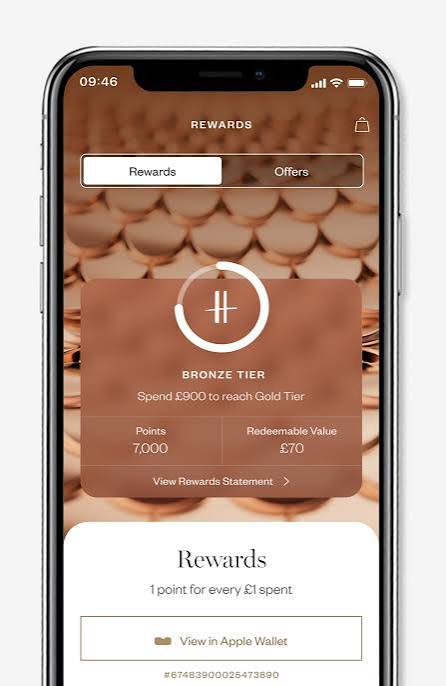
Harrods: At every tier, Harrods benefits are designed to be quantified, displayed, and physically experienced. Points multipliers escalate visibly from 1x to 2x to 3x with each tier, a numerical marker of status that members see with every transaction. Gold and above can book two personal 10% discount days per year, an active ritual of claiming your tier. Bronze members and above receive a complimentary tea or coffee daily, a small but recurring, visible reminder of membership. At the top, Black and Platinum members unlock Penthouse private shopping, a named, aspirational space. Even giftwrapping in Harrods branded packaging turns a purchase into a visible signal after you leave the store. Harrods status is something you display and take home (Harrods Rewards, 2025).
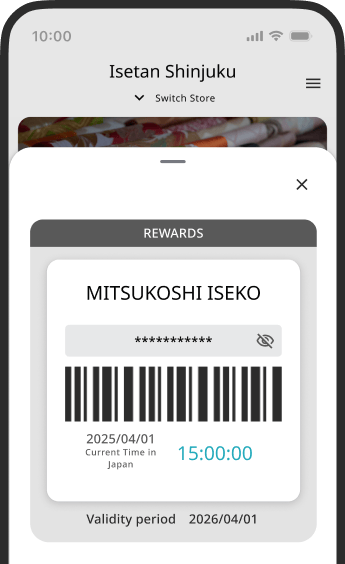
Isetan Mitsukoshi: Conversely, Isetan benefits are designed to be experienced privately and relationally. Point return rates increase with tier and card type (up to 8-10% for premium MICARD holders), but this happens behind the scenes through the MICARD data layer rather than through visible multipliers. There are no bookable discount days or publicly quantifiable perks that broadcast your tier. Instead, higher tiers unlock personalized styling, dedicated concierge, and anticipatory service, all delivered in person, in private, through a relationship. At the Premier Diamond level, members receive bespoke hospitality, but another customer on the same floor would never know. The MICARD is the silent identifier whilst the service embodies the status (Isetan, 2025).
| Harrods (UK) | Isetan Mitsukoshi (Japan) | |
| Status expression | Visible, quantifiable, and branded | Discreet, personal, and service led |
| Purpose | Aspiration and immediate gratification | Precise relationship management and high touch care |
| Reward style | Points multipliers, discount days, named spaces with clear status signaling | Concierge, styling, private service, anticipatory hospitality with limited access to gamification mechanics. |
Both programs offer dedicated high touch services at the top. But Harrods frames these as exclusive perks to be aspired to, while Isetan Mitsukoshi integrates them into deeper, ongoing relational care.
Design implication: In Japan, status tiers (particularly at the luxury level) are often strongest when they do not ask members to perform their status publicly. The tier should help the brand recognize the customer and improve the experience. Status exists to deepen service, not advertise success.
China: Status as a Social Currency
China presents the exact opposite dynamic. Here, status is powerful when it can be recognized, understood, and socially validated.
The concept of mianzi, or face, means visible markers of achievement can serve an important social purpose. Luxury goods, premium memberships, VIP badges, concierge treatment, priority access, and elevated tier status can all signal success, reliability, and standing within a network.
This does not mean Chinese consumers only respond to digital badges or public gamification. Physical VIP experiences, luxury events, lounges, private clienteling, hotel privileges, and exclusive retail access can all be highly effective in China. The critical point is not the format of the benefit. It is whether the status is socially legible. In other words, members need to understand what the status represents, and others need to be able to recognize its meaning. A digital badge, a luxury event invitation, a visible VIP label, a concierge interaction, or a private access benefit can all work if they clearly communicate elevated standing.
Research on face consciousness found that Chinese consumers emphasise conspicuous status markers significantly more than Western consumers, preferring socially visible products over private ones (Zhang & Wang, 2019). A separate study on Chinese airline loyalty program members found that status demotion caused feelings of frustration and social discomfort grounded in the concept of “losing face,” which in turn led members to switch service providers (Banik, Gao & Rabbanee, 2019). Status tiers in China are not just experienced privately. They are designed to be seen, and taking them away carries real consequences.
Case Study: Alibaba’s 88VIP
Alibaba’s 88VIP provides a strong example of status designed as socially legible recognition. With more than 50 million members, the program links membership to spending power and explicitly frames 88VIP as “尊贵身份” (prestigious/honored identity) in its marketing.
The status is visible across the ecosystem. Members carry a distinctive 88VIP badge next to their username on Taobao and Tmall. Sellers can see the member’s status in chat and order systems, often responding with faster service, priority handling, or small gifts. Exclusive discounts and red packets are clearly labelled “88VIP Exclusive,” making the benefit not only usable but recognizable.
This is important. The benefit is not confined to the transaction. Members can screenshot their savings and share them on WeChat Moments or Xiaohongshu. Status becomes part of the social experience, not just the loyalty experience.
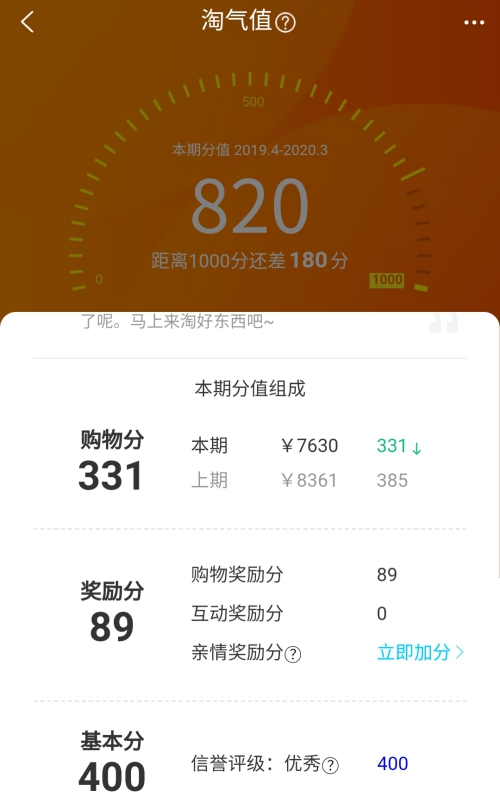
Alibaba extended this architecture further with the launch of its “Grand Membership System” in August 2025. Every Taobao user became a Super Member and was allocated into one of six gamified levels, from Bronze to Black Diamond.
Platinum members and above could activate 88VIP for RMB88, while Black Diamond members unlocked more than 14 benefits, including dedicated concierge support and hotel status with brands such as Marriott and Hilton (Alibaba Group, 2025). The system also introduced a transparent “Taobi” score, allowing members to see exactly how their status is calculated and what they need to do to progress. Each upgrade becomes a visible milestone. Each badge becomes a social marker. Members below a Taobi score of 1,000 are classified as 88 Members, while those above 1,000 become 88 Super Members and can access discounts on membership (36Kr, 2025).
Alibaba is not the only example of this pattern. Similar dynamics appear across Chinese luxury retail, airline loyalty, hotel, private banking, and super app ecosystems. In each case, status gains value when it can be understood and recognized by others.
Design implication: In China, brands should make status visible, legible, and socially meaningful. This can happen through digital badges, tier labels, progress scores, exclusive offers, luxury access, concierge treatment, VIP events, or premium physical spaces. The mechanic matters less than the signal i.e., members should understand what the status represents, and others should be able to recognize it too. Just as importantly, brands need to design demotion carefully. In a market where status is closely linked to face, taking recognition away can damage the relationship as much as granting it can strengthen one.
Thailand: Utility Before Prestige
Thailand requires a different approach again. Status matters, but it has to earn its place through practical value.
Thai consumers are highly responsive to convenience, savings, and tangible benefits. Intellify’s Thailand Consumer Trends Outlook identifies “value driven pragmatism” as a leading consumer trend, with 78% of Thai consumers prioritizing ease and convenience in purchasing decisions (Intellify, 2025). Convenience stores are also forecast to be the country’s fastest growing retail format, reflecting a shopping culture built around frequent, everyday transactions rather than occasional aspirational spending (Intellify, 2025).
The Marriott Bonvoy Loyalty Trends Report places Thailand in the “Value Optimizer” category, where consumers prioritize convenience, savings, and tangible perks over aspirational status (Marriott Bonvoy, 2026). In this context, a distant tier ladder can feel less motivating than a benefit members can use immediately.
This does not mean status is irrelevant. It means prestige alone is not always enough. For Thai consumers, status needs to be clear, practical, and commercially useful.
Case study: The 1 (Central Group)
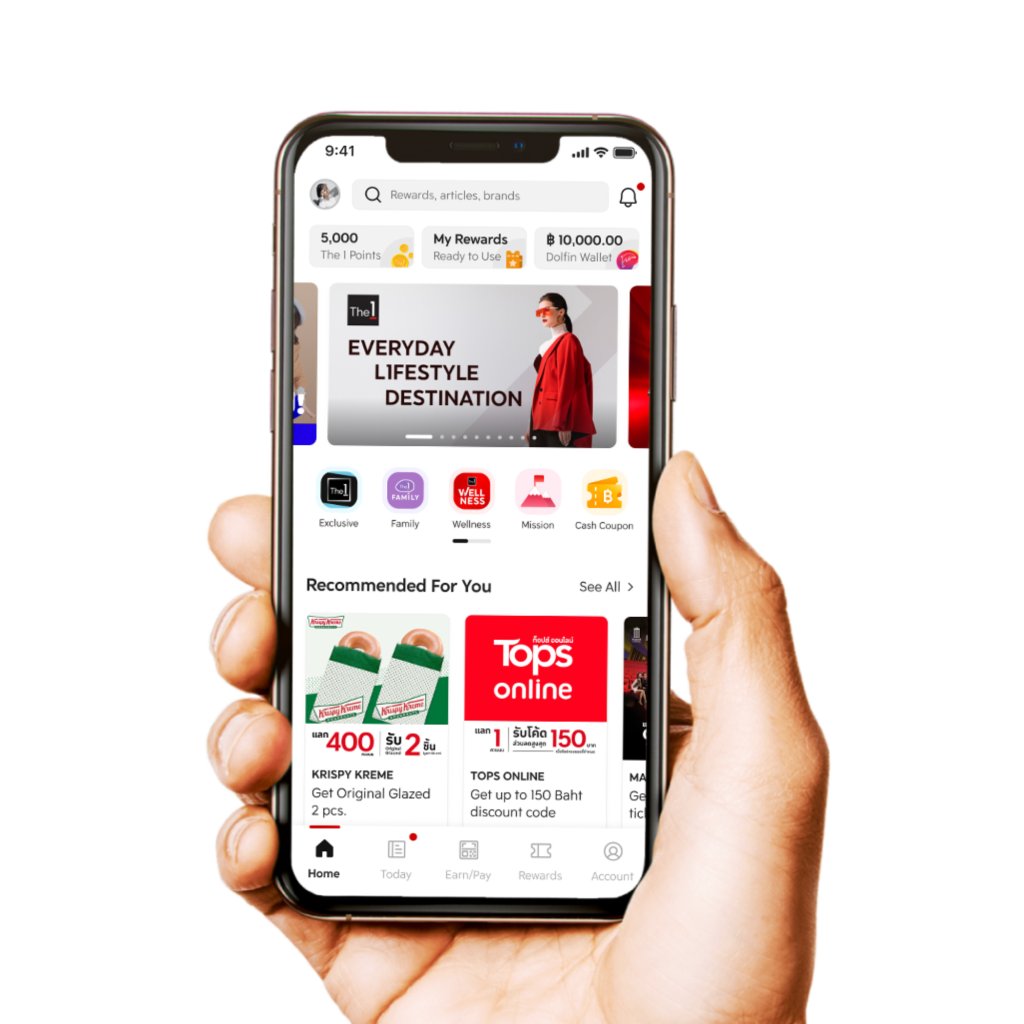
The 1, operated by Central Group, is Thailand’s dominant loyalty platform. With more than 22 million members and partnerships across more than 1,000 brands, it reaches roughly a quarter of the population. Members earn and redeem points across Central’s ecosystem, including supermarkets, department stores, electronics retailers, and convenience stores.
Despite its scale, The 1 does not operate a complex multi tier ladder. The program has a broad base tier and one “Exclusive” segment for members spending 250,000 baht (approx. US$7,000), per year.
This is very different from the Western loyalty playbook. There is no ‘Bronze to Platinum’ progression path. No mid tier ladder designed to nudge members upward through incremental thresholds. Instead, the model is simple; everyday value for the mass market, and a narrow premium layer for the highest spenders (Central Retail, 2025).
Case study: GrabRewards to GrabCoins.
Grab’s loyalty evolution reinforces the same point. GrabRewards originally operated a four tier model qualified through a points system that refreshed every six months. In November 2025, Grab rebranded its loyalty currency as GrabCoins and moved away from the four tier structure, replacing it with a unified earning system positioned around more tangible and immediate ways to save (Marketing Interactive, 2025).
Rather than maintaining a long progression ladder, Grab introduced GrabVIP; a single quarterly bonus tier for users spending more than THB 30,000 (approx. US$860), within three months. Members unlock priority delivery, enhanced support, and partner privileges with brands such as Emirates, ONESIAM, Centara Hotels, and King Power (Grab Thailand, 2025). Grab had the multi tier model, tested it across Southeast Asia, and actively chose to strip it back in favor of immediate value for the majority and a single, transparent, attainable bonus tier for its most active users.
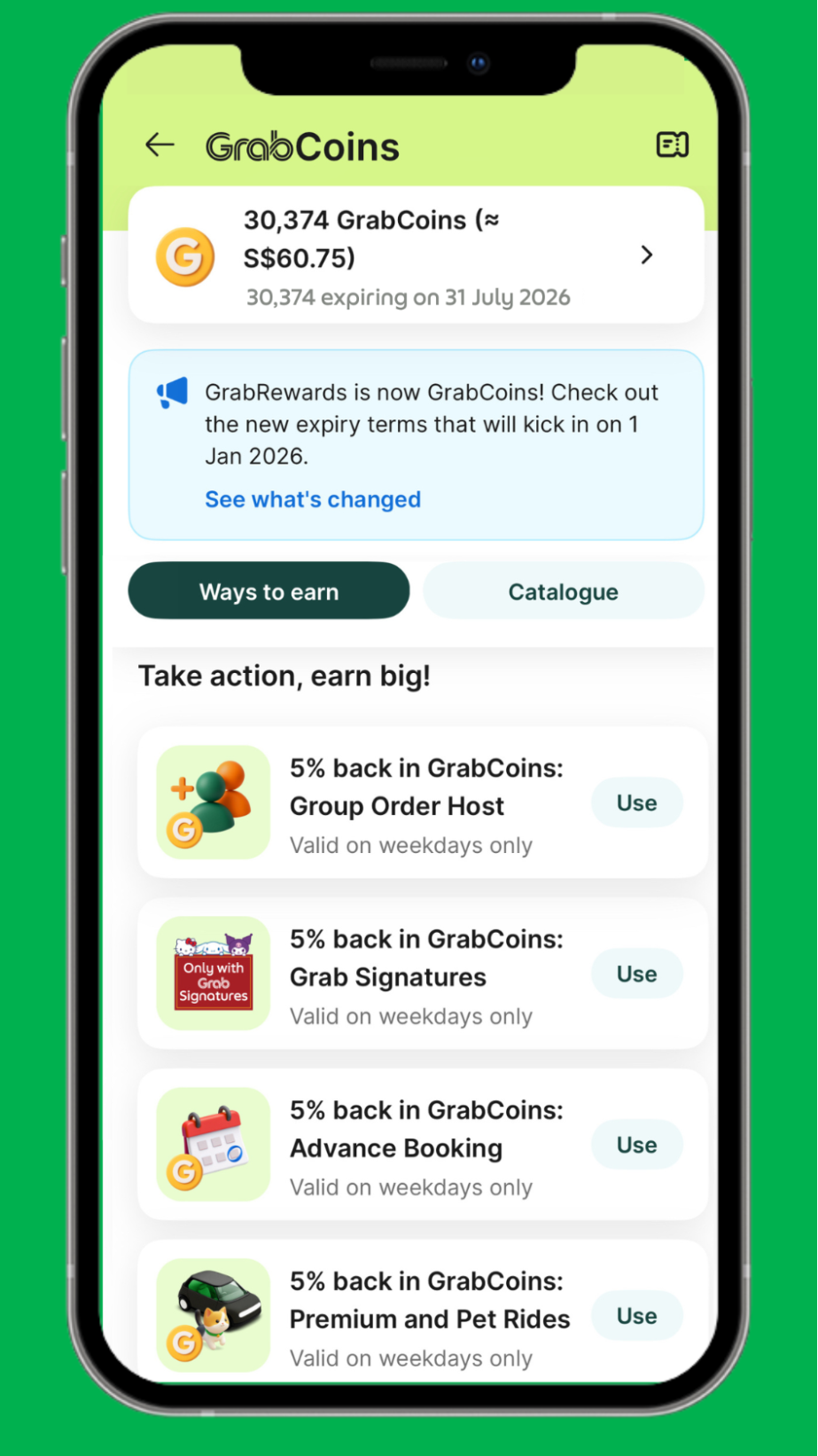
Design implication: Both of Thailand’s largest loyalty ecosystems have converged on a similar structure i.e., broad, utility driven access for the mass market, and a single premium segment for top spenders. In Thailand, status should not always be designed as a long, abstract climb. It can be simple, transparent, and grounded in practical value. Brands may want to invest first in a strong base proposition, then use premium recognition selectively for high value members. Utility earns trust first, status earns attention second.
South Korea: Status You Can Touch
South Korea is a market where status tiers can be highly powerful, but only when the status feels genuinely selective and materially experienced.
Like China, South Korea has a strong cultural sensitivity to social standing. The Korean concept of chaemyeon, or social face, has been widely studied in relation to luxury consumption and conspicuous spending. More recent research suggests social face sensitivity continues to influence visible consumption behavior among younger consumers, including Generation Z (You, 2026).
Example: Hyundai’s Club YP, an exclusive VIP lounge for high spending individuals under 45, requiring ₩30 million ( approx. US$21,700) per year (Korea Times, 2025)
But South Korea is not simply another version of China. In both markets, visible status can be powerful, and in both markets, premium physical experiences can play an important role. The difference is emphasis.
In China, status can be especially powerful when it is socially legible i.e., easy to recognize, easy to signal, and easy to share across digital, retail, service, and social environments.
In South Korea, status gains particular power when it is scarce, selective, and materially experienced. A VIP card, lounge, private salon, private event, exclusive department store tier, or luxury hotel invitation is not just a benefit. It is proof that the member belongs in a more selective space.
This is commercially significant. At South Korea’s three largest department store chains, VIP customer spending now represents 43% to 51% of total sales, up from 31% to 38% in 2020 (Korea Times, 2025; IGDS, 2025). In response, leading retailers have not diluted exclusivity. They have raised thresholds.
For example, Shinsegae (department store) increased its Diamond tier threshold to ₩70 million (approx. US$48,000) in 2024. Yet Shinsegae’s VIP customer base still grew by 3.7% that same year (IGDS, 2025).
In many markets, raising qualification thresholds risks discouraging members. In South Korea, higher thresholds can strengthen the signal. Scarcity validates the status.
Case Study: Shinsegae
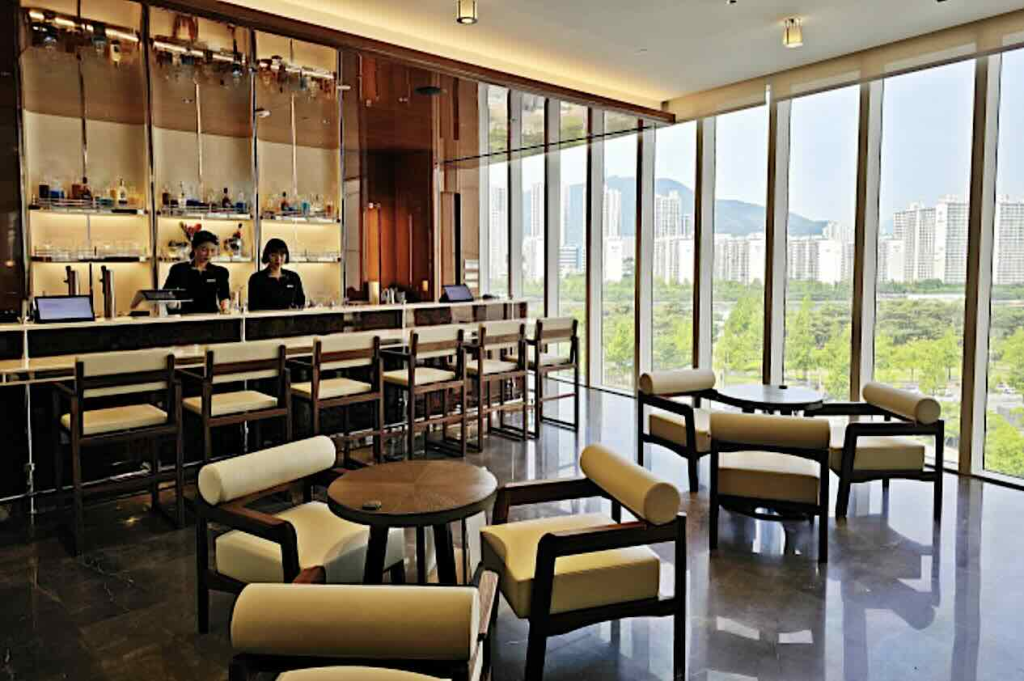
Shinsegae offers one of the clearest examples of status as scarce, experiential exclusivity. Its top 999 spenders qualify for a specialized VVIP tier every six months, unlocking private app curation zones, rare product access, and Michelin starred dining events. The retailer’s Gangnam branch became the first department store in South Korea to surpass ₩3 trillion, or approximately US$2 billion, in annual sales, with VIP lounge services cited as a key driver (IGDS, 2025). VIP status carries enough social capital that some consumers have attempted to acquire it indirectly through fraudulent receipt trading, buying or exchanging receipts on secondhand platforms to help meet qualification thresholds (IGDS, 2025). That behavior is not a side note. It shows how valuable the status itself has become.
Case Study: The Shilla Seoul
The Shilla Seoul demonstrates the same principle in hospitality. The hotel hosts annual private parties for 400 selected VIPs, featuring celebrity music performances. It also delivers premium plants to members’ homes and offers reserved arts and gastronomy classes through a program called “The Highest Class” (Korea Times, 2025).
These benefits are not merely functional. They are sensory, social, and memorable. Members do not just hold status. They enter spaces, attend events, receive objects, and experience proof of their exclusivity.
Design implication: In South Korea, status should be scarce enough to matter and tangible enough to be felt. Lounges, events, rare access, private services, highly selective tiers, and difficult to obtain recognition can be more motivating than broad based progression. The lesson is counterintuitive but important, making status harder to reach can often makes it more desirable.
Five Principles for Culturally Adaptive Tier Design
Status tiers can be one of the most powerful mechanics in loyalty program design. But the strongest programs are rarely those that simply replicate a global tier ladder. They are the ones that adapt the expression of status to the market.
Five principles stand out.
1. Separate the tier model from the tier expression.
The underlying structure of a tier program can remain relatively consistent e.g., qualification rules, thresholds, benefits, requalification periods, and downgrade logic. But how status is expressed should be localized. In Japan, tiers can operate as a quiet service framework. In China, they can become socially legible recognition across digital, physical, and service environments. In South Korea, they can unlock scarce, tangible exclusivity. In Thailand, they may need to deliver practical value before prestige has meaning.
The mechanics may be global. The experience should not be.
2. Calibrate thresholds to market context.
There is no universal “right” threshold.
In some markets, higher thresholds can make status more desirable because scarcity strengthens the signal. South Korea shows how exclusivity can drive engagement when members believe the tier is genuinely selective.
In other markets, thresholds need to feel achievable and commercially useful. Thailand shows why distant progression can lose power when members are more motivated by everyday savings, convenience, and immediate value.
China requires a slightly different lens again. Thresholds should not only create aspiration; they should also make status understandable. Members need to know what level they occupy, what that level represents, and what actions will move them upward.
Thresholds should reflect purchasing power, category economics, member distribution, and cultural attitudes toward exclusivity. They should also reflect what the tier is designed to do e.g., broaden engagement, reward high value, create aspiration, drive frequency, or protect share of wallet.
3. Match the benefit type to the cultural driver.
A strong tier benefit is not just more expensive. It is more relevant.
In Japan, the strongest benefits may be discreet, relational, and service led. In China, benefits may need to be visible, recognizable, and socially meaningful. In South Korea, status needs to be felt through selective lounges, events, rare access, and high touch experiences. In Thailand, benefits should be practical, transparent, and easy to use.
This is where many tier programs fail. They copy benefit types without understanding what those benefits symbolize. A badge, lounge, concierge service, discount, private sale, exclusive event, or VIP invitation can carry very different meaning depending on the market.
Brands should design benefits around the emotional role status plays locally, not just around the cost of the reward.
4. Design for how status is lost, not just how it is earned.
Most program focus heavily on acquisition, progression, and upgrade moments. But downgrade moments can matter just as much.
In markets where status is closely tied to face, recognition, or social validation, demotion can feel personal. It can create frustration, embarrassment, or a sense that the relationship has been mishandled.
This makes downgrade design critical. Grace periods, soft landings, early warning communications, requalification nudges, and carefully worded expiry messages are not just operational details. They are part of the emotional contract between the brand and the member.
A program that celebrates status loudly but removes it carelessly risks damaging the very loyalty it was designed to build.
5. Don’t assume tiers are the answer everywhere.
A tier ladder is a tool, not a strategy.
In some markets and categories, multi tier structures create powerful aspiration. In others, they add complexity without meaningful behavioral impact. Grab’s move away from a four tier structure in Thailand is a useful reminder that simpler mechanics can sometimes create stronger engagement.
The question should never be, “What tier structure should we launch?”
It should be, “What form of recognition will most effectively change behaviour in this market?”
Sometimes the answer will be a classic tier ladder. Sometimes it will be a single VIP segment. Sometimes it will be personalization, missions, subscriptions, status credits, partner privileges, surprise and delight, or a strong base proposition with no formal tiers at all.
The best loyalty program do not use tiers because they are familiar. They use them because they serve a clear behavioral and commercial purpose.
Conclusión
For global brands, the challenge is not whether status tiers work across Asia. They often do. The challenge is knowing what kind of status each market is willing to value.
A standard tier mechanic can create very different member experiences depending on how it is expressed. In one market, status may need to disappear into service. In another, it may need to be recognized by others. Elsewhere, it may need to be rare enough to feel earned, or practical enough to justify attention in the first place.
This is why tier design cannot be reduced to naming conventions, spend thresholds, or benefit ladders. Those are the mechanics. The strategy sits underneath i.e., what behavior the program is trying to change, what emotion the tier is meant to create, and what form of recognition feels credible in that market.
The strongest loyalty program do not simply ask, “What should Gold receive?” They ask better questions. What should recognition feel like here? Should status be seen, felt, protected, softened, earned slowly, granted selectively, or made immediately useful? And if the member loses it, what does that loss mean?
That final question is often overlooked. Status is not neutral once given. It becomes part of the customer relationship. Managed well, it can deepen attachment, sharpen preference, and create a reason to consolidate spend. Managed carelessly, it can create disappointment, embarrassment, or disengagement.
This is what makes culturally adaptive tier design so valuable. It forces brands to move beyond imported loyalty templates and design around local meaning. The tier structure may be global, but the experience of status should feel native.
Status tiers are not just ladders for customers to climb. They are signals of how a brand chooses to recognize value. And across Asia or any market, recognition only works when it is delivered in a form customers actually want to receive.
Are your status tiers driving real loyalty or just adding complexity?
Our loyalty program audit helps brands assess whether their tier structure is best practice, commercially effective, and aligned to how customers actually want to be recognized.
From qualification thresholds and benefit design to member engagement, demotion rules, and market fit, our experts identify the gaps and opportunities that can make your program stronger.
Learn more about our auditing service here and contact us today to learn more.
Referencias
- Alibaba Group. (2025). Alibaba upgrades Taobao lifestyle experience with new cross-platform membership system.
Link: https://www.alizila.com/taobao-new-cross-platform-loyalty-program/ - Banik, S., Gao, Y., & Rabbanee, F. K. (2019). Status demotion in hierarchical loyalty programs and its effects on switching: Identifying mediators and moderators in the Chinese context. Journal of Business Research, 96, 125–134.
Link: https://www.sciencedirect.com/science/article/abs/pii/S0148296318305629 - Central Group. (2025). The 1: Thailand’s digital lifestyle and loyalty platform.
Link: https://www.centralretail.com - Grab. (2025). GrabRewards is now GrabCoins. Here’s what’s new.
Link: https://www.grab.com/mm/en/grabcoins/ - Grab. (2025). GrabVIP program adds exclusive partner privileges.
Link: https://www.grab.com/inside-grab/stories/grabvip-programme-adds-exclusive-partner-privileges/ - Harrods. (2025). Harrods Rewards.
Link: https://www.harrods.com/en-gb/c/harrods-rewards - IGDS. (2025). Department stores tighten VIP criteria.
Link: https://www.igds.org/igds-members/article/department-stores-tighten-vip-criteria/ - Intellify. (2025). Thailand market research platform / consumer trends database.
Link: https://www.intellifyglobal.com/thailand-consumer-trends-2025/
Link: https://www.intellifyglobal.com/thailand-retail-industry-outlook/ - Isetan Mitsukoshi / MICARD. (2025). MICARD benefits and points program information.
Link: https://www2.micard.co.jp/guide/goriyou/benefit_plus.html - Korea Bizwire. (2025). Department stores tighten VIP criteria amid rising consumer polarization.
Link: http://koreabizwire.com/department-stores-tighten-vip-criteria-amid-rising-consumer-polarization/304821?ckattempt=1 - Korea Times. (2025). Department stores turn to VIPs to navigate economic slowdown.
Link: https://www.koreatimes.co.kr/business/companies/20250908/department-stores-turn-to-vips-to-navigate-economic-slowdown - Marketing Interactive. (2025). Grab rebrands GrabRewards program across Southeast Asia.
Link: https://www.marketing-interactive.com/grab-rebrands-grabrewards-programme-across-sea - Marriott Bonvoy. (2026). Loyalty Trends Report 2026 / APEC loyalty trends coverage.
Link: https://www.ttgasia.com/2026/05/21/marriott-bonvoy-report-highlights-shifting-hotel-loyalty-trends-across-asia-pacific/ - The 1. (2025). The 1 Exclusive privileges and qualification criteria.
Link: https://www.the1.co.th/en/the1Exclusive/privileges - The Story Thailand. (2025). Grab announces 2025 business direction, including GrabVIP.
Link: https://www.grab.com/th/en/press/others/bizupdate2025/ - Zhang, X., & Wang, W. (2019). Face consciousness and conspicuous luxury consumption in China. Journal of Contemporary Marketing Science.
Link: https://www.researchgate.net/publication/333738021 - Jeong, K.-H., & You, J. (2026). A study on the differences in social-face sensitivity and conspicuous consumption tendency based on sports consumers’ impulse buying tendency: Focusing on Generation Z. Frontiers in Psychology.
Link: https://pmc.ncbi.nlm.nih.gov/articles/PMC13062213/