Most loyalty programs are built on predictability. Earn ten stamps, get a free coffee. Reach 500 points, unlock a $10 voucher. Fly 50,000 miles, retain Gold status for another year. The logic is intuitive: members know what they are working toward, and the transparent path to reward keeps them engaged.
The problem is that predictability, while reassuring, does not always lead to sustained engagement. Behavioural science has known this for nearly 90 years.
What B.F. Skinner discovered in 1938
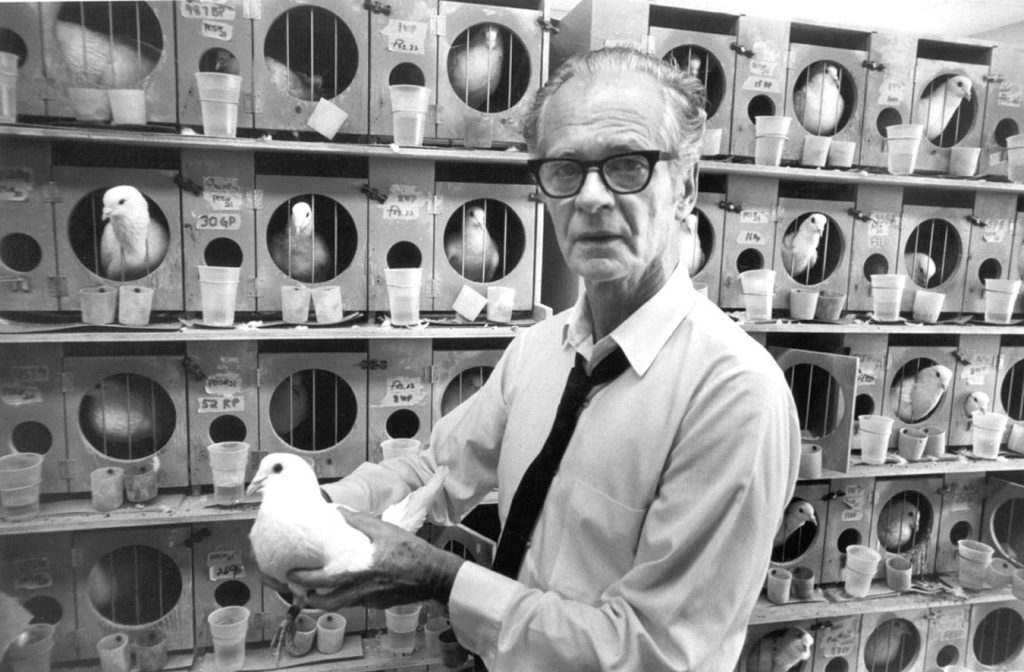
In his landmark work The Behaviour of Organisms, psychologist B.F. Skinner documented something that would later become fundamental to the design of casinos, video games, and social media platforms. Testing four different patterns of reinforcement on animal subjects, he found a clear hierarchy of effectiveness.
Fixed interval schedules, where a reward arrives at a set time regardless of behaviour, produced the lowest and least consistent response rates. Fixed ratio schedules, where a reward arrives after a set number of responses, produced moderate engagement but with a characteristic coast-and-sprint pattern of low effort in the middle of a cycle, rapid acceleration as the reward approached.
Variable ratio schedules, where a reward arrives after an unpredictable number of responses, produced something categorically different. Response rates were the highest of any schedule. Crucially, they were also the most sustained and the most resistant to extinction. When reinforcement was removed entirely, subjects on variable ratio schedules kept responding far longer than those on any other schedule, because they could not distinguish between “no reward yet” and “reward removed.”
The reason is psychological. When the timing of a reward is unpredictable, every interaction becomes potentially the one that triggers a win. Attention stays high and effort remains consistent. The brain does not get the chance to calculate that the reward is still far away and coast accordingly.
This is the mechanism that drives slot machine behaviour and keeps users scrolling social media feeds indefinitely. And it is the mechanism that loyalty program designers have significantly underutilised.
The neuroscience and psychology behind the effect
Skinner’s findings have been reinforced by decades of subsequent research across multiple disciplines.
Pagnoni et al. (2002) used neuroimaging to show that unexpected rewards produce a significantly stronger response in the nucleus accumbens, the brain’s primary pleasure centre, than anticipated ones. The brain does not just like surprises; it is wired to respond to them more intensely than predictable positive events.
Mellers et al. (1997) established decision affect theory, demonstrating that the emotional impact of a reward is shaped not just by its value but by whether it was expected. In their experiments, a surprise reward of $5 was rated as more enjoyable than an expected reward of $9. The unpredictability of the smaller reward made it feel better than the larger certain one.
Shen, Hsee and Talloen (2019) brought this into a directly loyalty-relevant context. Across four experiments, including a field study with a running club, they confirmed that uncertain incentives drive more repeat behaviour than certain equivalents, even when the certain incentive has a higher expected financial value. Participants who received unpredictable points per lap ran more laps than those who received guaranteed higher points. The uncertainty itself was motivating.
Two important boundary conditions from Shen et al. are worth noting for program designers. First, the uncertainty must resolve immediately at the point of interaction, not days later. Second, the effect is strongest for repeat behaviour, meaning retention and ongoing engagement, rather than first-time acquisition. New members need clarity and certainty. Existing members benefit from unpredictability.
The research on customer delight adds another layer. Oliver, Rust and Varki (1997) established that delight, defined as surprise combined with joy, creates a desire for future recurrences through repetition of consumption. Delighted customers do not just return, but they want to recreate the experience that made them feel that way. Berman (2005) quantified this in commercial terms using Mercedes-Benz customer data, where dissatisfied customers had a 10% repurchase likelihood, satisfied customers 29%, and delighted customers 86%.
The loyalty program design implication
None of this means abandoning the predictable earn structure that gives members a sense of progress and fairness. The goal gradient research (Kivetz, Urminsky and Zheng, 2006) confirms that members accelerate toward visible goals, and that mechanic is worth preserving.
The optimal architecture layers variable ratio elements on top of a reliable fixed base. Members always earn at a known rate (the fixed foundation of trust and predictability), but some transactions trigger bonus rewards that cannot be anticipated. The fixed earn provides the sense of progress, while the variable element provides the ongoing stimulus that keeps members curious about what this interaction might deliver.
This is not a fringe design principle. Several of the world’s most commercially successful loyalty programs have embedded it at scale.
Five loyalty programs using randomness to drive engagement
1. Chipotle Rewards (USA
Chipotle’s loyalty program has made variable ratio mechanics a centrepiece of its engagement strategy. The “Extras” feature delivers randomised bonus rewards to members, including surprise free menu items, points multipliers, and instant-win moments that appear without warning in the app. Members cannot predict which visit will trigger an Extra, which sustains the habit of checking the app at every transaction.
Chipotle has also deployed “Boosted” mechanics that randomly elevate the earn rate on specific items for short windows. The effect is dual; members who discover a boost mid-visit feel a disproportionate sense of reward (consistent with Mellers et al., 1997), and those who miss one are motivated to return to catch the next unpredictable opportunity. Chipotle reported member engagement and visit frequency increases attributable specifically to these variable reward mechanics.
2. Lidl Plus (Europe)
Lidl has built variable ratio reinforcement directly into the transaction moment for its Lidl Plus app, deployed across more than 30 countries in Europe. Every time a member scans their app at the checkout, the app triggers a digital scratchcard reveal, with prizes ranging from percentage discounts on specific product categories to outright cash coupons worth up to £10 off the next shop. The prize outcome is unknown until the reveal animation plays, creating a genuine anticipatory moment at the point of payment.
Lidl formalised this into a “Spin to Win” campaign in early 2025, giving every qualifying shopper one spin per day with a one-in-ten chance of winning a £10 coupon. Crucially, the prize is not fixed. Members spin to discover a variable outcome rather than earning a predictable reward. The Grocer reported that Lidl saw a significant increase in Lidl Plus app users over the course of 2024 following the introduction of the spin-to-win format in early that year, with the mechanic attributed directly to driving repeat app engagement. For a discount grocer competing on price, the addition of a variable reward layer transforms an otherwise transactional interaction into a moment members actively look forward to.
3. GrabRewards (Southeast Asia)
Grab, the dominant super-app across Southeast Asia with operations spanning ride-hailing, food delivery, grocery, and digital payments, made a deliberate structural shift to variable ratio reinforcement in its GrabRewards loyalty program. Where GrabPay in-store and online transactions previously earned a predictable fixed rate of points, Grab replaced this with “Mystery Rewards” of a variable number of coins allocated randomly on each qualifying transaction, with the potential to win up to 10,000 GrabCoins on any given payment.
The mechanic is a textbook variable ratio schedule. Members making a GrabPay transaction do not know whether they will receive a modest bonus or a substantial one. The randomness is preserved by design, and Grab requires members to claim their mystery reward within 14 days of receiving it, adding a brief urgency window that encourages app re-engagement. Limited grand prize draws, with individual prizes of 25,000 points allocated randomly among eligible transactions, add a second layer of unpredictability at higher stakes. The program reaches tens of millions of membersa across South-East Asia for whom Grab is a daily transactional platform. The variable reward mechanic sustains habitual engagement at exactly the frequency Skinner’s research would predict.
4. Sephora Beauty Insider
Sephora’s Beauty Insider program uses randomness as a premium-feel differentiator rather than a transactional driver. The program’s Birthday Reward offers members a free gift during their birthday month, but the specific gift changes without announcement, meaning members do not know what they will receive until they claim it. This transforms a standard birthday benefit into an annual moment of genuine surprise.
Beyond birthdays, Sephora deploys “Surprise Rewards” to Beauty Insider members through the app and email, with no advance disclosure of the offer content. Members learn they have received a surprise reward and must open the notification to discover what it is. This design exploits the neurological response documented by Pagnoni et al. (2002), where the anticipatory click to reveal the reward is itself pleasurable, separate from the value of the reward disclosed.
The program also runs limited, randomly allocated “Beauty Insider Experiences,” exclusive events and product access distributed to members without a transparent selection process, which sustains the aspiration that any engagement might lead to something exceptional.
5. Marriott Bonvoy
Marriott Bonvoy has embedded variable ratio mechanics into its properties through randomised upgrade delivery and unpredictable “Your24” room access windows. Elite members know that a complimentary room upgrade is a benefit of their status, but the specific upgrade (from a standard room to a suite, or from a suite to a premium suite) is not predictable at booking. This preserves the element of surprise at check-in even for members who arrive expecting something better than base.
The Bonvoy app also delivers unpredictable “Bonus Points” offers to members at irregular intervals, distinct from the program’s published promotional calendar. Because members cannot anticipate these offers, they maintain habitual engagement with the app to avoid missing a bonus window. This is a direct application of the variable interval schedule Skinner identified, whereby a reward that could arrive at any time sustains ongoing vigilance better than a reward with a known delivery date.
Practical principles for program designers
The research and the case study evidence converge on a set of design principles that are straightforward to apply.
- Layer, do not replace. Variable ratio mechanics work alongside a reliable fixed earn structure, not instead of it. Members need the predictable foundation to trust the program. The variable layer provides the stimulus that keeps engagement high between fixed reward moments.
- Resolve uncertainty immediately. Shen et al. (2019) found that delayed resolution significantly weakens the effect. In-app animations that reveal a multiplier or bonus reward at the point of transaction are more effective than emails confirming a bonus three days later.
- Keep rewards genuinely unpredictable. If members detect a pattern (every third Tuesday, every tenth visit), the mechanism stops working. Vary the trigger, the frequency, and the reward type. The moment predictability creeps in, the variable ratio effect collapses back into a fixed ratio one.
- Keep average reward frequency high enough. Skinner also documented extinction: if rewards are too rare, members stop believing they will occur. The variable element needs to appear frequently enough that members maintain the expectation that any given interaction might trigger one.
- Design for delight, not just points. Mellers et al. (1997) and Oliver et al. (1997) both show that the emotional quality of surprise rewards is disproportionate to their monetary value. A personalised free item, an unexpected upgrade, or a fun reveal mechanic can deliver more emotional impact than a larger, anticipated points bonus. The goal is delight, which the research shows drives repurchase at rates that mere satisfaction never will.
The competitive opportunity
The paradox of the loyalty industry is that most programs are designed around certainty at exactly the point where uncertainty would be more effective. Operators default to transparency because it feels fair, and fairness is important. But there is a meaningful difference between a program that is opaque or ungenerous and a program that is reliably generous while incorporating moments of unpredictable reward.
The programs that have invested in this architecture (Chipotle, Lidl, Grab, Sephora, Marriott) consistently outperform category benchmarks on the engagement metrics that matter: visit frequency, app interaction rates, and repurchase likelihood. The behavioural science behind the effect has been established since 1938. The commercial case has been made repeatedly in the decades since.
The question for most program operators is not whether variable ratio reinforcement works. Skinner answered that. The question is whether your program is using it.
Loyalty & Reward Co is the world’s only global pure play loyalty consultancy with offices in New York, London, Tokyo, Sydney and Melbourne. If you would like to explore how variable reward mechanics could be incorporated into your loyalty program design, then let’s talk.
Resources
Academic research
Skinner, B.F. (1938). The Behaviour of Organisms: An Experimental Analysis. Appleton-Century-Crofts. The foundational text establishing operant conditioning and the hierarchy of reinforcement schedules. Variable ratio reinforcement is identified as producing the highest and most extinction-resistant response rates. https://www.google.com/books/edition/The_behavior_of_organisms/HO9CAAAAIAAJ
Shen, L., Hsee, C.K. and Talloen, J.H. (2019). The Fun and Function of Uncertainty: Uncertain Incentives Reinforce Repetition Decisions. Journal of Consumer Research, 46(1), pp. 69–81. Four experiments, including a running club field study, confirming that uncertain incentives drive more repeat behaviour than certain equivalents at equal or higher expected value. https://doi.org/10.1093/jcr/ucy071
Mellers, B.A., Schwartz, A., Ho, K. and Ritov, I. (1997). Decision Affect Theory: Emotional Reactions to the Outcomes of Risky Options. Psychological Science, 8(6), pp. 423–429. Establishes that unexpected outcomes produce greater emotional impact than expected ones regardless of absolute value. A surprise $5 reward was rated more enjoyable than an expected $9 reward. https://doi.org/10.1111/j.1467-9280.1997.tb00455.x
Oliver, R.L., Rust, R.T. and Varki, S. (1997). Customer Delight: Foundations, Findings, and Managerial Insight. Journal of Retailing, 73(3), pp. 311–336. Establishes customer delight as a distinct emotional state beyond satisfaction, driven by positive surprise, that creates desire for future recurrences of consumption. https://doi.org/10.1016/S0022-4359(97)90021-X
Berman, B. (2005). How to Delight Your Customers. California Management Review, 48(1), pp. 129–151. Commercial quantification of the delight premium, including Mercedes-Benz data showing 86% repurchase likelihood for delighted customers versus 29% for satisfied and 10% for dissatisfied. https://doi.org/10.2307/41166331
Pagnoni, G., Zink, C.F., Montague, P.R. and Berns, G.S. (2002). Activity in Human Ventral Striatum Locked to Errors of Reward Prediction. Nature Neuroscience, 5(2), pp. 97–98. Neuroimaging study demonstrating that unexpected rewards produce a significantly stronger response in the nucleus accumbens than anticipated rewards, providing neuroscientific grounding for the variable reward effect. https://doi.org/10.1038/nn802
Kivetz, R., Urminsky, O. and Zheng, Y. (2006). The Goal-Gradient Hypothesis Resurrected: Purchase Acceleration, Illusionary Goal Progress, and Customer Retention. Journal of Marketing Research, 43(1), pp. 39–58. Establishes the goal gradient effect in loyalty programs: members accelerate purchases as they approach a reward threshold. The research basis for layering variable ratio mechanics over a fixed earn structure. https://doi.org/10.1509/jmkr.43.1.39
Loyalty programs featured
Chipotle Rewards https://www.chipotle.com/rewards
Lidl Plus https://www.lidl.co.uk/c/lidl-plus/s10023095
GrabRewards https://www.grab.com/sg/grabcoins/
Sephora Beauty Insider https://www.sephora.com/beauty/loyaltyprogram
Marriott Bonvoy https://www.marriottbonvoy.com
Further reading
Shelper, P. (2023). Loyalty Programs: The Complete Guide (2nd ed.). Loyalty & Reward Co. The definitive industry reference on loyalty program design, strategy, and psychology. Covers operant conditioning, reinforcement schedules, and the full landscape of behavioural science applied to loyalty. https://loyaltyrewardco.com/loyalty-programs-the-complete-guide/