The economic shockwave is here
In early 2022, recession seemed imminent, but the world muddled through. Inflation was painful but manageable. Interest rates rose sharply but did not break the system. Consumer spending slowed but held.
That was then. The situation confronting us now is materially different.
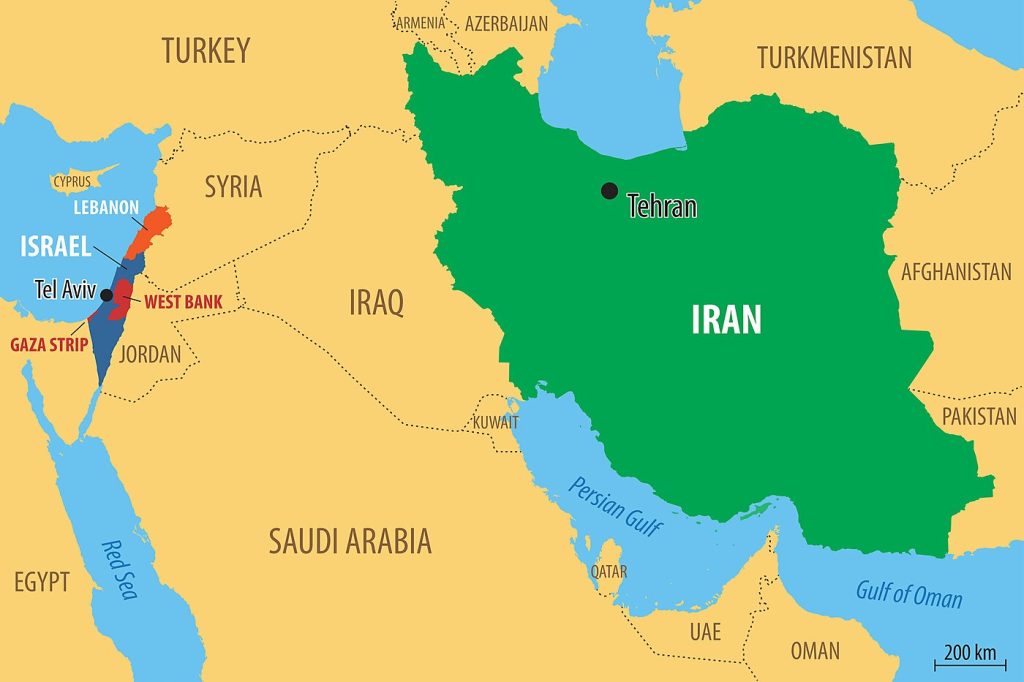
Since the US and Israel launched Operation Epic Fury against Iran on 28 February 2026, the global economy has been hit by what the International Energy Agency has described as the greatest global energy security challenge in history. Iran’s retaliatory strikes across the Gulf region, combined with the effective closure of the Strait of Hormuz, have removed roughly one fifth of the world’s oil supply from the market. Brent crude has surged past $120 per barrel. Jet fuel prices have more than doubled, jumping from between $85 and $90 per barrel before the conflict to between $150 and $200.
Economists have increased projected inflation rates for 2026 as a result. JPMorgan estimates US inflation could climb to 3 per cent or higher in the coming months, which in Australia the Reserve Bank has predicted 5% inflation is imminent. Morgan Stanley warns of elevated oil prices, hotter inflation and greater market uncertainty if the conflict continues. The World Economic Forum has warned this is not only a regional crisis but a structural shock to the world economy, delivered at a moment of geoeconomic fragility. Economists have pointed to the crises of 1973, 1978 and 2008, noting that every significant spike in oil prices has been followed in some form by a global recession.
This is not a hypothetical. It is happening now. And for companies that depend on consumer spending, the time to act is not after the recession arrives. It is right now.
Gulf carriers are already using loyalty to protect their most valuable members
Three of the world’s leading Gulf carriers have already moved swiftly to protect their frequent flyer programs in response to the disruption.
Etihad Guest, effective 18 March 2026, reduced tier qualification thresholds by 25 per cent across all membership levels, with the reduced thresholds applying until 31 March 2027.
Emirates Skywards has extended tier reviews for Silver, Gold and Platinum members with a review date on or before 31 May 2026, pushing those reviews to 30 June 2026, while simultaneously pausing the expiry of Skywards Miles due to lapse between March and May 2026.
Qatar Airways Privilege Club has confirmed a three month tier extension for all members whose status was due for renewal during the disruption window, with updates applied automatically to accounts.
Each carrier has taken a slightly different technical approach. Etihad has lowered the bar. Emirates has frozen the clock. Qatar has extended the runway. Despite this, the intent for all three is to retain elite member loyalty at a moment when the operational disruption is entirely outside members’ control.
The strategic significance extends well beyond crisis management. The speed and scale of these responses demonstrate how central loyalty infrastructure has become a critical competitive positioning of full service carriers. Elite tiers are an essential mechanism through which airlines retain their highest value, highest frequency travellers. Protecting that relationship during periods of involuntary disruption is commercially rational.
Expect other companies to follow
What Etihad, Emirates and Qatar Airways have done is a hint of what is to come. In the months ahead, as the economic impacts of this conflict ripple across industries, Loyalty & Reward Co expect to see major companies across aviation, retail, hospitality, financial services and beyond using their loyalty programs in similar ways to support both their members and their own commercial positions.
The logic is straightforward. When consumers are forced to reduce spending, particularly discretionary spending, it is preferrable if they direct the money they have to your company. What will influence them to choose your brand? Having access to stored value, such as account credits or saved points, or instant discounts that make their cash go further will definitely entice. Having a captive audience of registered members to communicate bonus offers to will also encourage their spend.
Airlines dealing with airfare hikes of 10 to 15 per cent and the very real prospect of demand destruction will need to think carefully about how loyalty can soften the blow for their most valuable customers. Qantas, SAS, Air New Zealand, Cathay Pacific, Thai Airways and others have all announced fare increases or fuel surcharges. The risk is that rising prices push travellers to reduce frequency or switch carriers. Loyalty programs that proactively protect member status, offer bonus points on bookings during the disruption period, or provide redemption flexibility will stand a better chance of retaining valuable members.
For grocery retailers, the dynamics are equally urgent. Higher oil prices feed directly into food processing and transportation costs, pushing up prices at the supermarket. As household budgets tighten, members with points balances, personalised offers and instant savings through loyalty programs will have a strong reason to consolidate their spending with one retailer rather than shop around. This is exactly the kind of environment where a well designed, well executed loyalty program earns its investment many times over.
To retain more valuable members, such as those in higher tiers, the importance of the loyalty program’s health is even more critical. In many industries, a small percentage of higher tier members can account for a sizeable percentage of total company revenue. One Loyalty & Reward Co client relies on 10 per cent of their member base to account for over 70 per cent of their revenue, so keeping those customers happy and coming back is very important. Ring fencing those members with benefits that ensure they remain loyal could be the best recession proofing strategy many companies have.
Airlines may need to draw down on loyalty program equity to survive
There is a darker dimension to this crisis that must be acknowledged. For airlines heavily impacted by fuel cost spikes, the financial pressure could become existential. We have seen this before.
During COVID-19, when passenger levels declined by 90 per cent and airlines faced an unprecedented cash crisis, the major US carriers turned to their loyalty programs as financial lifelines. In 2020, for the first time in history, US carriers collateralised the future cash flows of their loyalty programs to raise billions in loans. United raised $6.8 billion backed by MileagePlus. Delta borrowed $9 billion using SkyMiles as collateral. American Airlines secured a record $10 billion backed by AAdvantage’s intellectual property and cash flows. A Stifel analyst described the loyalty program as “the only reason” American Airlines was not in bankruptcy.
The valuations were staggering. MileagePlus was worth around $22 billion, while United itself was valued at $10.6 billion. AAdvantage was valued at between $18 and $30 billion, while American Airlines was worth less than $7 billion.
The current crisis clearly has a different shape to COVID-19. Demand has not collapsed to zero, and the demand impacts have not been immediate. But the economics of operating flights have been violently disrupted. Jet fuel, which typically accounts for a fifth to a quarter of airline operating expenses, has more than doubled in cost. Most US airlines no longer hedge their fuel, leaving them fully exposed to price volatility. Analysts at Deutsche Bank have warned that, absent near term relief, airlines around the world could be forced to ground thousands of aircraft while some of the industry’s financially weakest carriers could halt operations.
If this conflict drags on and the Strait of Hormuz remains effectively closed, Loyalty & Reward Co believe we will see airlines once again looking to draw down on the equity within their loyalty programs to survive. The COVID-19 playbook demonstrated that loyalty programs are not just customer retention tools. They are financial assets of enormous value that can be leveraged in moments of existential crisis. Airlines that invested in building strong, data rich loyalty ecosystems with deep banking and credit card partnerships will be better positioned. Those that neglected their programs will find they have fewer options.
What companies should do right now
As with any crisis, the time to act is now:
Optimise your program design. Too many loyalty programs are poorly designed and fail the basic value equation test. How much does a member need to spend to earn $10 of value within six months? If your members cannot realistically reach that threshold, your program is not going to influence behaviour when it matters most.
Invest in lifecycle management. Deliver relevant, personalised offers and communications based on where each member is in their journey. Onboard new members effectively. Drive deeper engagement with established members. Intervene early when members show signs of disengagement with automated retention campaigns.
Use your data. The loyalty programs winning in this market are the ones using data to incrementally evolve. Build insight rich reporting and analytics. Disseminate the output to relevant stakeholders across the business to support strategic decision making.
Protect your highest value members. Take a page from Etihad, Emirates and Qatar Airways. If your customers are being impacted by circumstances outside their control, adjust your program. Extend tier status. Pause expiry dates. Lower qualification thresholds. These actions cost relatively little but send a powerful signal that you stand with your members.
Get your technology right. A good loyalty program needs a good technology platform. If your platform cannot support the rapid changes and personalised responses this environment demands, now is the time to replace it.
Avoid pulling the discount lever. Many companies demonstrate a panic reaction to an economic crisis and immediately implement deep discounting. This can do more damage that good, as discounting is margin eroding and may train members to continue to expect it once the crisis has passed. If discounting is required, make it targeted and apply it intelligently.
Watch your AI. In 2020, when the first Covid-19 lockdown occurred, the shift in consuder demand to toilet paper, hand sanitisier and masks was so rapid that AI personalisation engines could not handle it. Many melted down and had to be taken offline. Monitor your AI engine and ensure a plan is in place if a similar event occurs.
Conclusión
The economic fallout from the Iran war is already being felt across energy markets, supply chains, transportation and consumer spending. The parallels to previous oil crises are alarming, and the risk of a global recession is material.
Companies that have invested in their loyalty programs will be better positioned to retain customers, protect revenue and, in the case of airlines, potentially access the financial equity stored within their programs. Companies that have neglected their loyalty programs will find themselves exposed.
The Gulf carriers have shown the way. The question for every other company is whether you will be ready?
Contact Loyalty & Reward Co to see how we can help you prepare.
Sources
- Loyalty & Reward Co, “A global recession is coming. Is your loyalty program ready?”
- Etihad Airways Official Announcement, 18 March 2026
- Emirates Skywards
- Qatar Airways Privilege Club
- Wikipedia, “Economic impact of the 2026 Iran war”
- World Economic Forum, “The global price tag of war in the Middle East”
- Al Jazeera, “How badly has the Iran war hit the global economy?”
- Al Jazeera, “Why the oil and gas price shock from the Iran war won’t just fade away”
- Al Jazeera, “Global airlines hike ticket prices as Iran war sends costs soaring”
- Al Jazeera, “Iran war threatens prolonged impact on energy markets”
- CNBC, “Iran war-hit oil prices will soon rise if Hormuz stays shut”
- CNBC, “Flights are already getting more expensive after a jet fuel spike”
- Morgan Stanley, “Iran Conflict: Oil Price Impacts and Inflation”
- PBS News, “The Iran war and surging oil prices are affecting consumers”
- Center for American Progress, “The War in Iran Will Raise Fuel Prices and Costs Throughout the Economy”
- Euronews, “Airlines increase airfares and cut thousands of flights”
- OilPrice.com, “Jet Fuel Prices Soar as War in Iran Ripples Through Global Aviation”
- Harvard Business Review, “How Loyalty Programs Are Saving Airlines”
- OAG, “The Future of Airline Loyalty Programs”
- PYMNTS, “US Airlines Use Loyalty Programs As Debt Collateral”
- Simple Flying, “Why Did The Big 3 US Airlines Secure Financing With Their Frequent Flyer Programs?”
- Aviation Week, “How COVID Changed Airline Loyalty Programs”