The Ultimate Guide to the Raising Cane’s Caniac Club
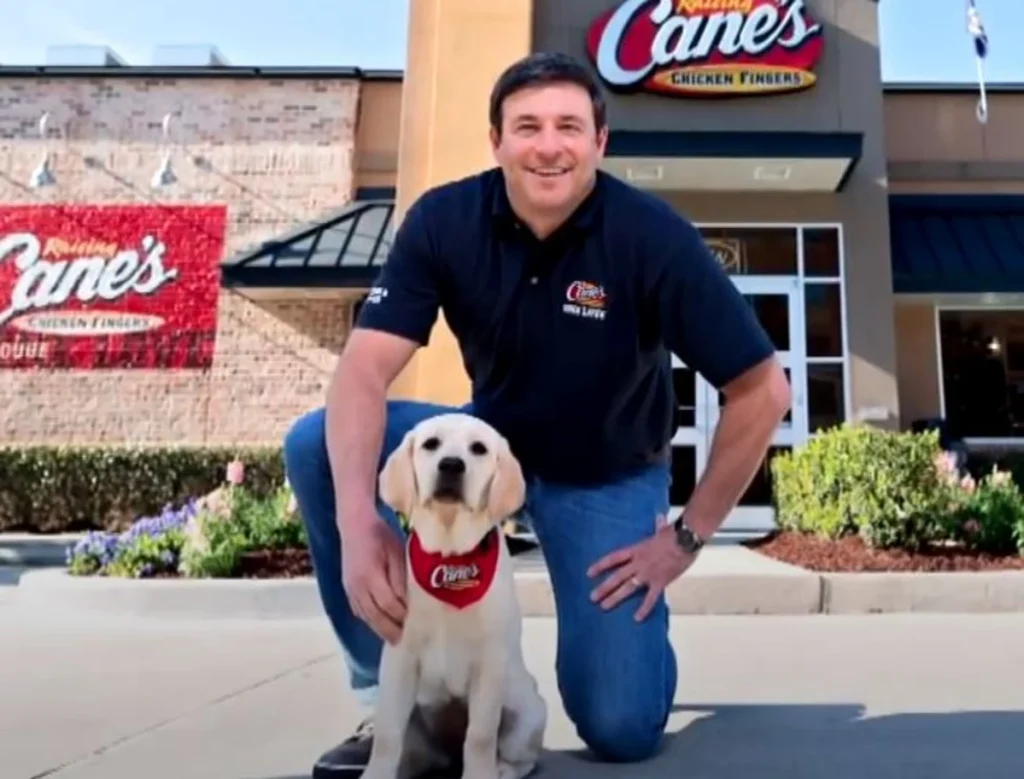
From a single chicken finger restaurant near the North Gate of Louisiana State University in 1996 to nearly 1,000 locations across 42 states, Raising Cane’s Chicken Fingers has built one of the most remarkable growth stories in American fast food. Founded by Todd Graves and Craig Silvey, the chain was named after Graves’s yellow Labrador Retriever and built on a singular conviction: that doing one thing extraordinarily well beats doing many things adequately. That one thing is chicken fingers. The menu has barely changed in nearly three decades, and that focus has turned out to be a commercial superpower.
By 2024, Raising Cane’s recorded revenue of $5.1 billion, up roughly 34% on the prior year.[1] Average unit volume hit $6.6 million per location by year-end, with adjusted EBITDA nearing $1 billion.[1] The chain added more than 137 locations in 2024 alone and plans to open a further 100 US restaurants in 2026 alongside its first entries into the United Kingdom and Mexico.[2] Founder Todd Graves has publicly set his sights on $10 billion in sales by 2030.[2] As fast food growth stories go, this one is still very much in motion.
At the centre of the brand’s customer engagement strategy is the Caniac Club, a free membership program that is the only genuine route to exclusive rewards, seasonal deals, and insider access at Raising Cane’s. No points. No tiers. No spend thresholds. What it offers instead is a community-first, event-driven program with the kind of irreverent enthusiasm that Raising Cane’s brings to everything it does.
We’ve been watching this program for a while. Back in 2021, our team at Loyalty & Reward Co published an early review of the Caniac Club, and a fair bit has changed since then. More on that below.
What’s Changed Since Our 2021 Review
When we first covered the Caniac Club in 2021, the headline offer was a free Box Combo just for signing up. That welcome reward was the program’s biggest drawcard and drove strong sign-up numbers for several years.
That offer was removed in August 2024, which is a logical move for a program with a sizeable and growing member base.[3] Redirecting acquisition investment toward retention rewards is standard practice as loyalty programs mature, and the program’s event-driven calendar gives existing members plenty of reasons to stay engaged. New members joining today access those same benefits from day one, even without an immediate food reward at signup.
Beyond the welcome offer, the program has evolved in a few meaningful ways. The app integration has improved, with QR code scanning now a viable alternative to carrying the physical card. Lucky Swipes, a visit-based swipestake that runs periodically, represents a more sophisticated engagement mechanic than anything the program offered in 2021, layering escalating rewards onto card-swipe behaviour. And the breadth of sweepstakes and community events tied to grand openings has grown substantially as the brand has accelerated its expansion.
The fundamental design tension our 2021 review identified, though, hasn’t been resolved. The program still doesn’t reward visit frequency or cumulative spend. Raising Cane’s themselves acknowledged this in 2021 and indicated they were exploring ways to improve it.[4] Five years later, that improvement is still pending.
How the Caniac Club Works
The Caniac Club is a free, card-based customer appreciation program available at participating Raising Cane’s locations in the US. Unlike points programs that reward spend with redeemable currency, this is a benefits membership. Members receive a physical card, register it online to activate their account, and rewards are loaded directly onto the card for use in-store or via the app.[5]
The program runs on occasion-driven and event-driven offers rather than visit frequency or spending accumulation. Members are rewarded through birthday surprises, membership anniversaries, seasonal campaigns, national food holiday celebrations, sweepstakes, and community events, not simply for visiting more often.
The basics at a glance:
- Free to join at participating US restaurants
- Collect a physical card in-store and register at raisingcanes.com/caniac-club or caniacclub.com
- Registration needs your name, address, birthdate, and the card number on the back
- Connect your Caniac Club account to the Raising Cane’s app by ensuring both use the same email address
- Rewards load automatically and are redeemed by swiping the card, scanning the app QR code, or applying at checkout when ordering online
- No points, no tiers, no visit counters
- Rewards aren’t valid on delivery orders through third-party platforms
- Not all locations participate, so worth checking before making a special trip
Getting Started
Getting a card starts in person. Visit a participating Raising Cane’s and ask a Crewmember for a Caniac Club card. Cards are physical and available while supplies last. Not every location stocks them.
Registering takes a few minutes at raisingcanes.com/caniac-club. You’ll need your full name, home address, date of birth, and the card number printed on the back of the physical card. Verify your email after registering because if you skip this step, rewards won’t reach you.
Connecting to the app requires one thing above everything else: the email address on your Caniac Club account must exactly match the email on your Raising Cane’s app account. Even a minor discrepancy will prevent the accounts from syncing. Once they match, go to My Account in the app and follow the instructions to link the card.
The welcome offer: the free Box Combo sign-up reward that made the Caniac Club famous was removed in August 2024. The program’s value now sits in the ongoing member calendar rather than the enrollment moment, which for an established brand with Raising Cane’s level of recognition is exactly where it should be.
What Members Receive
Birthday surprises. Each year, during a member’s birthday period, a special reward is loaded to the account. The specific offer varies by year and market. Check your registered email and the app during your birthday month to confirm what’s been added and when it expires.
Member anniversary rewards. On the anniversary of your original sign-up date, Raising Cane’s loads a recognition reward. Historically this has been a Buy One Get One Box Combo, giving you a second Box Combo free with the purchase of one at participating restaurants.
Seasonal BOGO promotions. Mother’s Day and Father’s Day have been the most consistent occasions for BOGO Box Combo rewards loaded directly to member accounts. These are typically in-store only.
National food holiday offers. The Caniac Club has delivered free crinkle-cut fries on National French Fry Day and a free 22oz lemonade on National Lemonade Day, auto-loaded to eligible accounts. Members need to be registered with a verified email by a stated cut-off date to qualify.
Exclusive news and early access. Members receive brand communications covering new openings, limited-time events, merchandise drops, and news before the wider public. For a brand that generates queues around the block at new restaurant openings, this has genuine value for committed fans.
Merchandise discounts. Members access discounts on Raising Cane’s branded apparel and accessories via the online store.
Sweepstakes and special promotions. This is where the program gets genuinely interesting.
Sweepstakes and Events
Lucky Swipes Swipestakes. A periodic visit-based engagement event where members earn escalating rewards based on the number of card swipes accumulated. In the 2026 edition (February to March 2026), the reward structure ran from a free digital wallpaper pack at one swipe up to one entry into a Free Cane’s for a Year sweepstakes at five swipes, with a mystery hat and merchandise credit in between. One swipe per card per day, valid at participating restaurants only.[6]
Lucky 20 Grand Opening Sweepstakes. At selected new restaurant openings, 20 winners each receive a Free Cane’s for a Year reward card, drawn from participants outside the restaurant prior to opening.[7] Free Cane’s for a Year means three free Box Combos per month for 12 months, totalling up to 36 free meals. Unused monthly meals don’t roll over and cards are non-transferable.
First 100 Promotions. The first 100 customers to purchase a combo meal at a new restaurant grand opening receive a branded hat or beanie and a Be Our Guest card good for one free Box Combo on a future visit. A First 50 version runs at selected reopenings and regional events.
Teacher and community appreciation events. Raising Cane’s runs regular events recognising teachers, nurses, military personnel, and other community contributors, including free swag for the first 50 teachers at participating locations.
Venue and partner swipestakes. The program has partnered with entertainment venues and sports franchises for exclusive member promotions, including the 2025 Fiddler’s Green Amphitheatre Swipestakes offering concert tickets and music experiences. Active promotions are listed at raisingcanes.com/promotions.
How to Redeem Rewards
Three ways to redeem, all valid for dine-in, drive-thru, and carryout.
Swipe the physical card at the register and the Crewmember processes the redemption against the loaded offer.
Use the QR code in the app to scan at the counter without needing the physical card.
Apply at checkout when ordering through the app or online, provided the Caniac Club account email matches the ordering account email.
Key conditions: rewards aren’t valid on delivery orders through DoorDash, Uber Eats, or Grubhub. One offer per visit and promotions can’t be combined. All rewards carry expiry dates communicated via email and the app. Valid at participating restaurants only.[5]
Tips to Get the Most from Membership
Register immediately and verify your email. The entire reward delivery mechanism runs through your registered email. Pick up the card, register it the same day, and verify your email before leaving the Caniac Club website.
Match your emails. If your Caniac Club account and app account use different addresses, offers won’t sync. Check before linking accounts and update if needed via caniacclub.com.
Enter your birthdate accurately. Birthday rewards are calendar-triggered. An incorrect birthdate means missing the annual offer entirely.
Swipe on every visit, even when no reward is visible. During active Swipestakes like Lucky Swipes, each in-store visit counts toward escalating rewards. Members who only engage when a reward is clearly advertised miss the accumulated benefit of participation events.
Check the promotions page monthly. The full list of active and upcoming promotions lives at raisingcanes.com/promotions. This is the definitive source for sweepstakes rules and limited-time member offers.
Act fast on time-limited rewards. Birthday offers, BOGO Box Combos, and food holiday rewards typically expire within days to weeks of being issued. Treat them like a perishable, not a backup plan.
Follow local social media for First 100 and Lucky 20 announcements. Grand opening promotions are announced through local channels and regional social accounts. In a growing market, the Free Cane’s for a Year prize represents exceptional value for anyone who arrives early.
Ignore third-party coupon sites. Raising Cane’s doesn’t issue promo codes or coupon discounts. Any website claiming otherwise is offering an expired or fabricated code. The Caniac Club is the only genuine route to member discounts and free food at Raising Cane’s.
Common Issues and Solutions
Card not accepted in-store. Either the location doesn’t participate in the program, or the card hasn’t been successfully registered with a verified email. Confirm both before raising a complaint.
Offers not appearing in the app after registration. Allow up to 48 hours after linking accounts. If they still don’t appear, check that the Caniac Club and app accounts use an identical email address, as even a minor discrepancy blocks synchronisation.
Birthday or anniversary reward not received. Check the spam folder. Confirm the birthdate in your account is accurate. If you’ve changed email addresses since registering, ensure the new address is verified. Contact Raising Cane’s customer care if the issue persists.
Lost or damaged physical card. Visit any participating location for a replacement card, then log in at caniacclub.com to link it to your existing account. Unredeemed offers transfer across.
Reward expired before redemption. Expired rewards can’t be reinstated. Act on email notifications the same week they arrive, not the same month.
App login doesn’t show Caniac Club offers. The Caniac Club account and the ordering account are separate systems that must be actively linked. Logging into the app alone isn’t enough, so follow the in-app instructions to connect the card number.
The Psychology of the Caniac Club
The Caniac Club is a useful case study in loyalty program design specifically because it makes deliberate choices that differ meaningfully from the mainstream points accumulation model.
The gift model over the earned reward model. The program’s benefits, including birthday surprises, anniversary BOGOs, and holiday freebies, are structured as gifts rather than earned outcomes. Research by Morais, Dorsch and Backman (2004) found that customers who perceived a provider investing in them reciprocated with similar investment, and that investments of love, status, information, and time generated stronger loyalty than monetary rewards alone.[8] When Raising Cane’s loads a free lemonade onto a member’s account on National Lemonade Day without requiring any action, the gesture reads as generosity rather than transaction. The psychological response is reciprocity: a felt impulse to return the favour with continued visits and goodwill. As Regan (1971) demonstrated, people who receive an unexpected gift feel compelled to reciprocate even when they don’t feel a particular personal connection to the giver.[9]
The identity value of being a Caniac. Commitment theory holds that genuine loyalty requires attitudinal commitment, meaning emotional attachment to a brand, rather than purely behavioural commitment driven by accumulated switching costs. Raising Cane’s has built a culture where being a Caniac is an identity marker. Fans queue for hours at new openings, follow the brand’s social channels for Lucky 20 announcements, and actively seek out the physical card as a membership credential. Research by Beatty and Kahle (1988) found that brand commitment develops as a precursor to repeat purchasing, derived from felt concern or ego involvement with the brand.[10] Research by Söderlund (2019) found that simply labelling customers as “member” rather than “customer” was sufficient to boost feelings of belonging and satisfaction.[11] The Caniac Club does considerably more than label.
Scarcity and the event-driven calendar. The Lucky 20, First 100, and limited-time sweepstake mechanics apply the scarcity effect, the established psychological phenomenon that items more difficult to acquire are valued more highly.[12] A Free Cane’s for a Year prize isn’t just a food benefit; it’s a rare, sought-after status that creates genuine excitement around grand opening events. This also reflects what researchers describe as a variable ratio reinforcement pattern, the reinforcement schedule that produces the highest resistance to extinction because the member cannot predict which visit will yield a reward.[13]
The design gap that still exists. An honest analysis of the Caniac Club must acknowledge its most significant tension. The program doesn’t reward purchase frequency or spend. Members who visit three times a week receive no more cumulative benefit than members who visit once a month, provided both check in for holiday promotions and keep their contact details current. Raising Cane’s has acknowledged this themselves, noting the program doesn’t currently offer promotions based on past visits or accumulated purchases and indicating ongoing exploration of improvements.[4] App store reviews and consumer forums consistently echo the same feedback: the reward cadence is infrequent and the card-swipe mechanic doesn’t feel connected to any visible progression.
For a brand with $5.1 billion in revenue, near-$1 billion EBITDA, and a genuinely passionate customer base, the opportunity to layer a more systematic engagement mechanic over the existing community-first model is significant. The QSR sector’s evidence is clear that visit-frequency and spend-linked programs consistently outperform benefits-only models in measurable customer lifetime value terms.
How Does It Rate Against Our Essential Eight Principles?
As a global loyalty consulting firm, Loyalty & Reward Co evaluates programs against our Essential Eight principles, the elements that appear in all best-practice loyalty programs. Here’s how the Caniac Club rates.
Simple? Admirably so, structurally. Pick up a card, register it, and rewards arrive via email. No tiers, no points balance, no redemption catalogue. The main friction is managing the physical card alongside the app and ensuring both accounts share the same email, a step that shouldn’t be necessary in a modern program design.
Valuable? Event-dependent. Members who catch Lucky Swipes and participate in Lucky 20 can extract real value. For the typical member who registers and waits for something to happen, the value cadence is thinner, though the program’s ongoing calendar of events, sweepstakes, and anniversary rewards is where it concentrates its investment, which is the right place for a program at this stage of maturity.
Stimulating? The Lucky Swipes mechanics and grand opening events create genuine excitement that most QSR programs don’t match. What’s missing is the steady between-events stimulation that a points progress mechanic provides. No visible progress, no next milestone, no escalating motivation. The highs are real; the troughs are long.
Emotional? Raising Cane’s is one of the most emotionally engaging brands in the QSR space, and the Caniac Club channels that energy through events and community. Birthday surprises, anniversary BOGOs, and the collective experience of grand openings create moments of genuine brand joy. The quiet periods between rewards leave the emotional connection unmaintained.
Complementary? The app integration works and reduces the need to carry the physical card. The dual-account email-matching requirement is unnecessary friction. There’s no connection to third-party loyalty ecosystems, delivery partners, or financial rewards products, a gap that will matter more as the brand enters international markets from 2026.
Accessible? Physical card distribution through stores is a barrier that most modern programs have eliminated. Members must visit in person before they can register online. Not all locations participate. For a brand adding 100-plus locations per year, ensuring consistent program availability across its estate is an operational necessity not yet fully achieved.
Differentiating? The event-driven, community-first design is genuinely unusual in the QSR space. Lucky 20 and First 100 promotions generate the kind of news and social content that conventional points programs can’t. The absence of a spend-linked earn component, though, means the program can’t differentiate on the dimension that most influences purchase behaviour: visit frequency.
Cost-effective? Structurally efficient. Without a points liability ledger, there’s no exposure to large unredeemed balances. Sweepstakes costs are controlled by limited prize numbers rather than proportional to the member base. The trade-off is limited ability to systematically increase visit frequency or per-visit spend across the entire member base, which at $6.6 million average unit volume would deliver significant incremental revenue even with modest lift.
Evolving? In some respects, yes. The Lucky Swipes mechanic is more sophisticated than anything the program offered five years ago. App redemption has meaningfully improved. The removal of the sign-up Box Combo in 2024 reflects a natural maturation in how the program allocates its value, shifting away from acquisition incentives and toward sustained member engagement. The core design gap, the absence of any visit-frequency mechanic, remains unaddressed.
Conclusión
The Raising Cane’s Caniac Club is a program that reflects the brand it belongs to. Raising Cane’s built a $5.1 billion business by doing one thing exceptionally well and resisting every temptation to complicate it. The Caniac Club applies the same philosophy. No points to track, no tiers to navigate, no convoluted earn-and-burn mechanics. What there is instead is a community of self-identified Caniacs who receive brand gifts, access exclusive events, and participate in sweepstakes that no amount of third-party coupon hunting can replicate.
The program’s strengths are real. The event-driven model creates genuine moments of brand excitement. Lucky 20 and First 100 promotions generate the kind of enthusiasm that conventional QSR loyalty programs rarely achieve. The Caniac identity gives the program emotional resonance well beyond its functional reward value. And for a brand with a product as genuinely loved as Cane’s chicken fingers, the loyalty foundation it sits on is extraordinarily strong.
The limitations are equally clear. Without a visit-frequency or spend-linked mechanic, the program can’t systematically influence the purchase behaviours it would commercially benefit from most. The irregular reward cadence leaves the connection between engagement and outcome invisible to most members on most days. The physical card requirement, at a time when most loyalty programs operate entirely through mobile apps, remains an enrollment barrier the brand’s rapid expansion will only amplify.
When we reviewed the Caniac Club in 2021, we noted that Raising Cane’s was exploring ways to improve it. That exploration is still ongoing. The shift away from a sign-up Box Combo toward a retention-focused member calendar is a sign of a program growing up, but the next evolution, building mechanics that systematically reward the behaviours that drive commercial outcomes, is still waiting to happen. For a brand at this scale, with this level of customer affinity, the opportunity is hard to ignore.
For more information, visit the Caniac Club page at raisingcanes.com, or download the Raising Cane’s app from the Apple App Store or Google Play.
Referencias
[1] Bloomberg. (2025, April 9). Raising Cane’s Founder Todd Graves Now Worth $11.5 Billion as Sales Surge. https://www.bloomberg.com/news/articles/2025-04-09/raising-cane-s-founder-has-11-5-billion-fortune-as-sales-surge
[2] The Advocate. (2025, December 31). Here’s what Todd Graves had to say about Raising Cane’s expansion, headquarters. https://www.theadvocate.com/baton_rouge/news/business/todd-graves-talks-brand-expansion/article_f477b0ac-fd43-499e-a3b1-76005eb1fde7.html
[3] Chowhound. (2025, October 28). Is Raising Cane’s Caniac Club Worth Joining? Here’s What You Get As A Member. https://www.chowhound.com/2008568/raising-canes-caniac-club-benefits/
[4] Loyalty & Reward Co. (2021). Caniac Club: Benefits of Joining Raising Cane’s. https://loyaltyrewardco.com/raising-canes/
[5] Raising Cane’s. (2025). Caniac Club Terms and Conditions. https://www.raisingcanes.com/caniac-club-rules/
[6] Raising Cane’s. (2026). Lucky Swipes Swipestakes. https://www.raisingcanes.com/luckyswipes/
[7] Raising Cane’s. (2025). Lucky 20 Promotion. https://www.raisingcanes.com/lucky20promotion/
[8] Morais, D.B., Dorsch, M.J. and Backman, S.J. (2004). Can tourism providers buy their customers’ loyalty? Journal of Travel Research, 42(3), 313-322. https://doi.org/10.1177/0047287503258831
[9] Regan, D.T. (1971). Effects of a favor and liking on compliance. Journal of Experimental Social Psychology, 7(6), 627-639. https://doi.org/10.1016/0022-1031(71)90025-4
[10] Beatty, S.E. and Kahle, L.R. (1988). Alternative hierarchies of the attitude-behavior relationship: the impact of brand commitment and habit. Journal of the Academy of Marketing Science, 16(2), 1-10. https://doi.org/10.1007/BF02723310
[11] Söderlund, M. (2019). The proactive employee on the floor of the store and the impact on customer satisfaction. Journal of Retailing and Consumer Services, 51, 48-55. https://doi.org/10.1016/j.jretconser.2019.05.025
[12] Worchel, S., Lee, J. and Adewole, A. (1975). Effects of supply and demand on ratings of object value. Journal of Personality and Social Psychology, 32(5), 906-914. https://doi.org/10.1037/0022-3514.32.5.906
[13] Skinner, B.F. (1938). The Behavior of Organisms: An Experimental Analysis. Appleton-Century-Crofts.