To build an entire brand around Generation Z and then hand them a paper stamp card is somewhat ironic.
I do believe that, on occasion, stamp cards can be a great way to build customer retention. Yet for PAPAW Bubble Tea, a brand that has mastered the Gen Z aesthetic with an appealing interior, visually satisfying drinks, and a strong social media presence, they have built a gateway to digitalisation… but fail to utilise it.
Their loyalty experience begins to differ when the only thing keeping new customers as returning customers is a paper card.
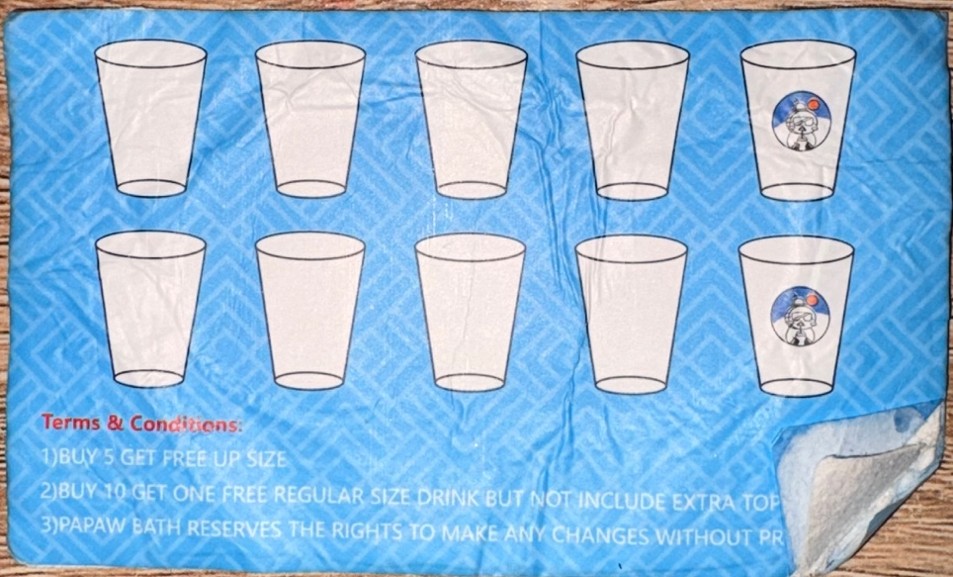
I’ve had a PAPAW stamp card since the start of this year, nestled in the crevices of my wallet. Every time I pull it out, there is an act of caution as if I’m handling a centuries-old manuscript. The corners are peeling, the stamps are fading, and every time I hand it over the counter, it feels as though I’m presenting an ancient relic. This feels far from experiencing a modern loyalty programme.
Most of Gen Z use Apple Pay now and don’t bother carrying a wallet, myself included. So I barely have the stamp card on me if I want to treat myself to a bubble tea spontaneously. And from a Gen Z perspective, the whole ordeal feels completely disconnected from their brand.
The stamp card itself isn’t really the problem. It’s what it highlights. Our generation doesn’t necessarily hate loyalty cards, we hate friction. The stamp card opens possibilities for forgetting it, losing it, damaging it, and so forth.
Most young consumers manage their lives completely digitally, through digital wallets, QR codes and apps with streak-based engagement systems. It feels strangely outdated to use paper stamp cards for a brand that otherwise feels digitally fluent, especially in a field where bubble tea culture is so social and community-driven.
The rewards set on the stamp card are not fairly rewarding, but I would argue that our generation is not scrounging around for free drinks, but rather seeking experience. Gen Z increasingly expects loyalty to feel interactive rather than transactional, and to eventually get a free drink after buying ten does not create attachment. Compared to brands that also target a younger audience, like Duolingo, which has built an app on the psychology of streaks, progress, rewards, personalisation and, above all, habit loops, PAPAW seems to fall flat. The company already has the aesthetic foundation for this ecosystem, why not hone in on it?
Imagine you could collect digital badges for trying different drinks on their menu, or unlock app-exclusive flavours, or reward ‘that’ customer who finds comfort in ordering the same exact drink three times a week. The loyalty potential here is huge, if only PAPAW would tap into it. Instead, we’re digging through the bottom of our bags for a crumpled stamp card that’s probably collecting dust in the wrong coat pocket.
By Alexa Samuel – Loyalty & Reward Co UK Intern