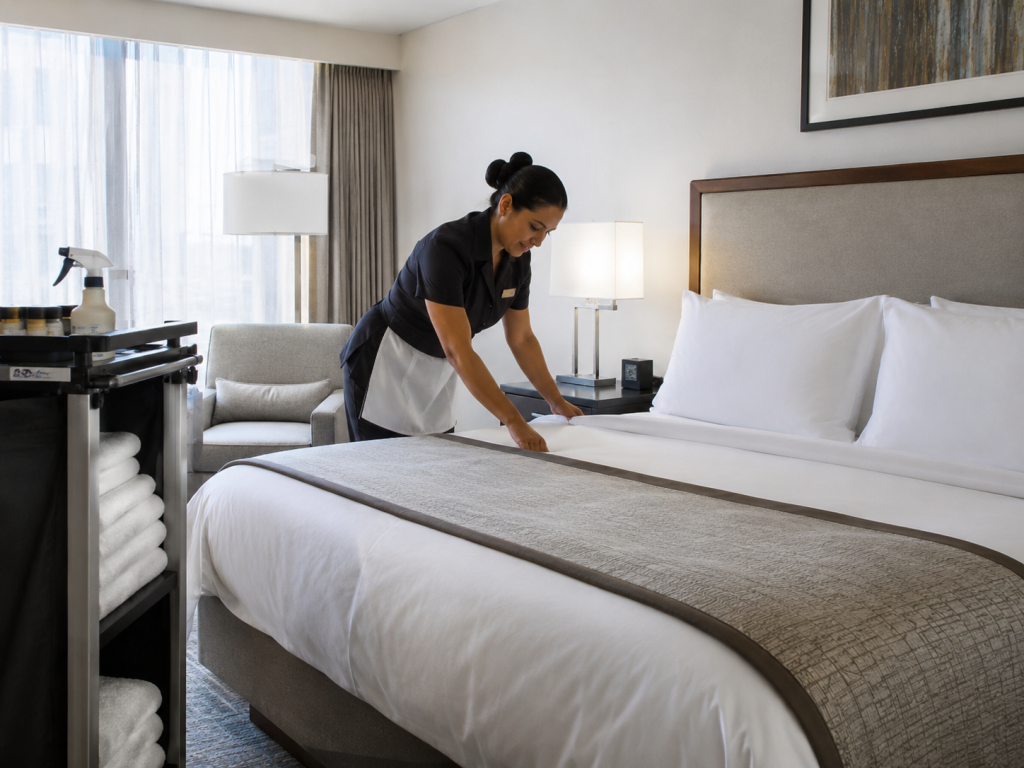
Being privileged to travel constantly around the world, I stay in a lot of hotels. One thing is very clear; hotels do not want to clean your room during your stay.
According to the hotels themselves, daily room cleaning is one of the most environmentally damaging activities a human can engage in, and it must be stopped at all costs.
Budget hotels tend to be blunt about it. More premium hotels have invested in creative incentivisation strategies to persuade guests to proactively skip cleaning. The results are a mixed bag of clever design, good intentions, and some genuinely underwhelming execution.
Here are three recent examples that illustrate the spectrum.
Extended Stay America Suites San Ramon: just say no
At Extended Stay America Suites San Ramon, the strategy is simple. The hotel refuses to clean your room every day. No program, no incentive, no framing. Just no service. This approach does at least have the virtue of honesty, but it offers guests nothing in return for their sacrifice and does little to build goodwill or loyalty.
Crowne Plaza Budapest: a tree for your trouble
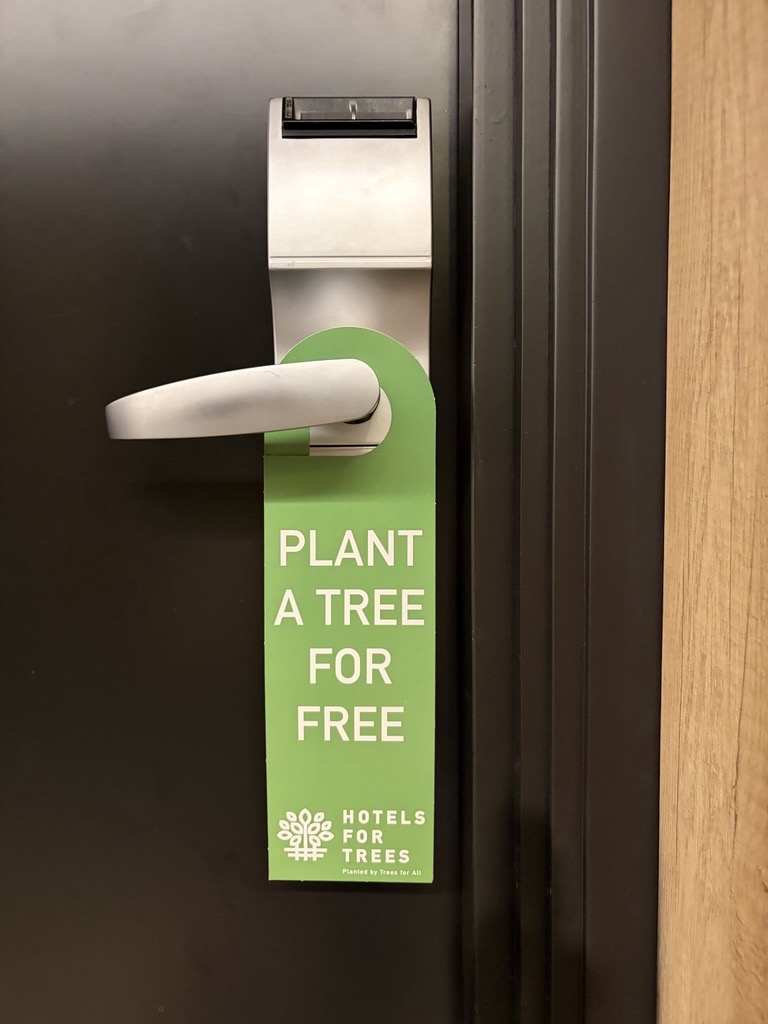
Stepping it up significantly is the Crowne Plaza Budapest, Hungary. The hotel is a member of the Hotels for Trees Foundation, a non-profit established in the Netherlands in 2021.
Guests who skip daily room cleaning get a tree planted on their behalf, via reforestation partner Trees for All.
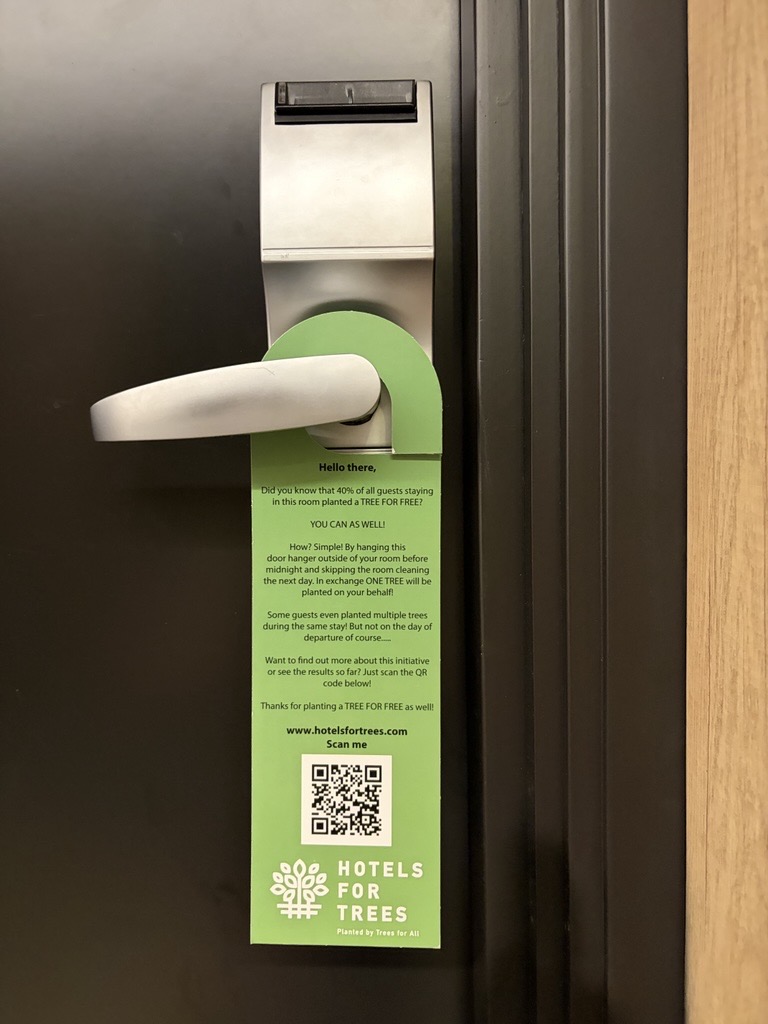
The mechanic is a green door hanger placed in each room. Guests hang it outside their door before midnight, housekeeping skips the clean, and one tree is entered into the Hotels for Trees online portal. Housekeeping notes the door hanger, skips cleaning the room, and enters one tree into the portal, with the total displayed on the website for each hotel and each day.
Hotels for Trees invoices hotels each month and ensures the corresponding number of trees are planted. Of each five-euro contribution per skipped clean, four euros are allocated to Trees for All for certified tree planting, with the remaining euro covering Hotels for Trees’ running costs.
During a five-night stay, I used the green hanger three times as I found the concept to be genuinely appealing. The environmental case is solid, the door hanger is well designed, and the idea of doing something tangible for the planet simply by leaving a card on a door handle is elegant.
But Crowne Plaza does fall down a bit by failing to close the loop. At the end of my stay, I would have appreciated a confirmation that three trees had been scheduled for planting in my name. That moment of recognition, validation and a sense of personal ownership over the contribution never arrived. The silence created some doubt; did the housekeeping team log each use? Was it entered into the portal? Will the trees actually be planted? Would the hotel notice if a few fell through the cracks?
Closing the loop with guests, whether through a checkout message, a follow-up email, or a receipt showing trees planted during the stay, would transform a good mechanic into a genuinely memorable one.
Radisson Red, Krakow: the surprise gift
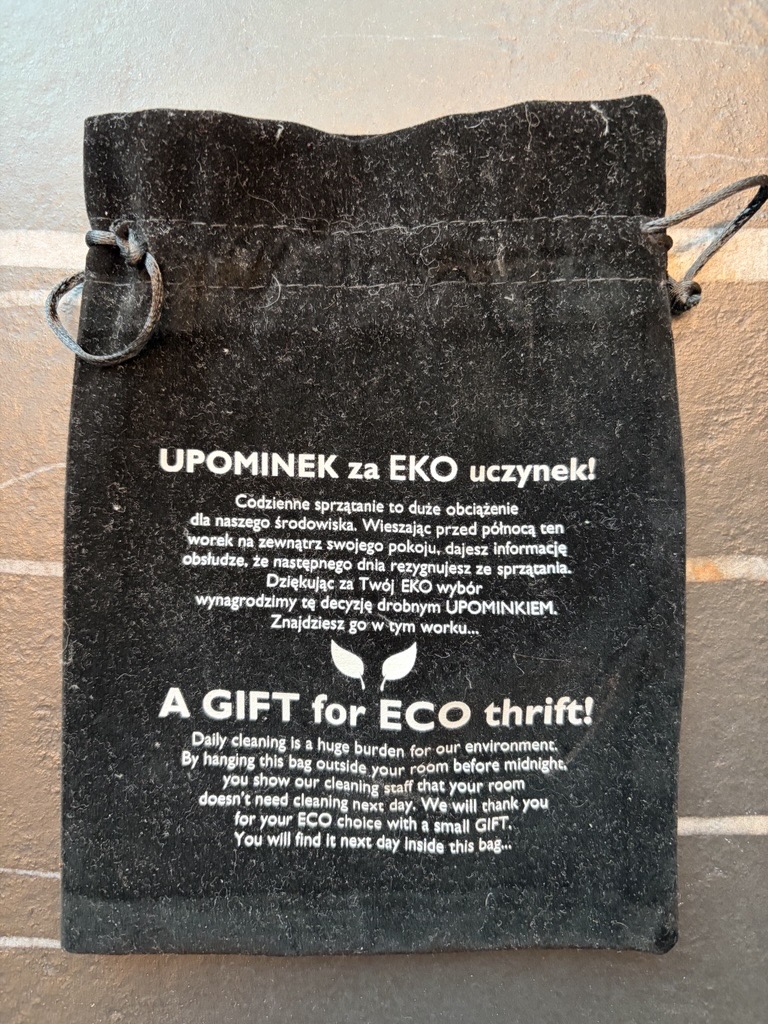
A parallel but different approach is taken by the Radisson Red in Krakow, Poland. Each room contains a black drawstring bag printed with two messages: in Polish, “UPOMINEK za EKO uczynek” (a gift for an eco deed), and in English, “A GIFT for ECO thrift.” Guests are invited to hang the bag on the door to skip cleaning, in exchange for a surprise gift that will appear inside it the following day.
The promise of a surprise reward is a smart piece of program design. Surprise and delight mechanics are well established in loyalty psychology as drivers of emotional engagement. The unknown nature of the reward creates anticipation and curiosity, which is genuinely more engaging than a fixed incentive.
The execution, however, is where the program stumbles.
The bag itself was made from a cheap polyester material and covered in lint. It felt dirty.
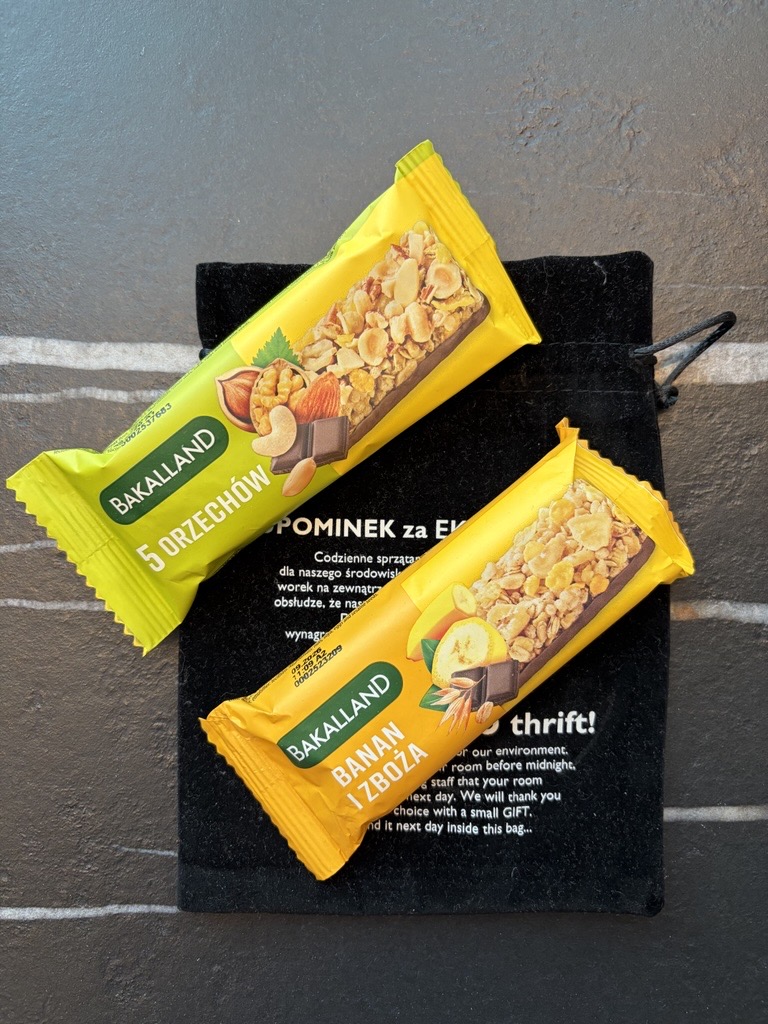
The first day’s gift was a nut bar worth less than one dollar. The second day I received . . . yet another nut bar. The promise of a surprise collapsed into low value return and repetition, and the emotional reward evaporated with it. After making the effort to skip cleaning, receiving a commodity snack bar two days in a row produced a sense of deflation rather than delight. I was not inspired to put the bag out for a third day, and found myself longing for trees to be planted in my name.
*
After dinner one evening, I mentioned the different hotel approaches to a colleague who told me he understood the policy is not particularly popular with the cleaning staff themselves. When rooms are skipped for multiple days, the eventual clean involves several days of accumulated mess rather than one night. The labour effort required per clean increases substantially for the staff as a result.
You definitely cannot please everyone in the services industry.
What the research says
The instinct behind these programs is sound. Reducing daily room cleaning does meaningfully lower a hotel’s environmental footprint, cutting water usage, chemical consumption, and energy drawn by washing machines and dryers. The challenge is how to persuade guests to voluntarily opt out of a service they have technically paid for.
Goldstein, Cialdini and Griskevicius (2008)1 provide a useful lens here. In a controlled field experiment, the researchers tested different message types for encouraging towel reuse among hotel guests. Standard environmental messaging produced a reuse rate of 35 per cent. Signs telling guests that the majority of other guests reused their towels produced a rate of 44 per cent. When the message was made local, telling guests that most guests in that specific room had reused their towels, participation rose to 49 per cent.
The mechanism is know as descriptive norms. People are significantly influenced by information about what others in a similar situation actually do. This is more persuasive than aspirational or values-based appeals because it provides social proof grounded in concrete behaviour rather than abstract principle.
The Hotels for Trees door hanger at Crowne Plaza Budapest applies this principle well. It states that 40 per cent of all guests staying in the room have planted a tree for free. That is a specific, localised norm claim, and it is more compelling than a generic sustainability message. A small program design refinement, adding post-stay confirmation of the trees actually planted, would reinforce the norm and close the psychological loop.
The Radisson Red program, by contrast, leans on the different motivator of an extrinsic reward. This can work, but to be effective the reward must be proportionate to the contribution asked of the guest, and it must feel genuinely surprising at each encounter. The repeated commodity reward undermines both conditions.
The loyalty program connection
These hotel programs are essentially micro-loyalty mechanics; guests are incentivised to exhibit a desired behaviour, they receive a reward for doing so, and are nudged toward repeat participation. The design principles that determine whether a loyalty program succeeds or fails apply directly here.
- Reward proportionality matters: The value of the reward should feel commensurate with the effort or sacrifice asked of the member. A one-dollar nut bar does not feel proportionate to the disruption of skipping a room clean.
- Closing the loop matters: Acknowledgement, confirmation and recognition are the mechanism through which a behavioural action becomes a positive emotional memory. Without them, the contribution feels unnoticed.
- Descriptive norms are underused in loyalty program communications: Most programs default to aspirational messaging, such as what you could earn, what rewards await you, and what status you could achieve. Goldstein et al’s research suggests that referencing what similar members actually do is significantly more persuasive. Framing communications around what members at your tier typically redeem for, or how frequently members who joined when you did typically engage, could meaningfully improve participation rates.
The incentivisation strategies I encountered are modest in scale, but they illustrate a principle that applies across the full spectrum of loyalty program design; the gap between a clever mechanic and a genuinely effective one is almost always in the execution details.