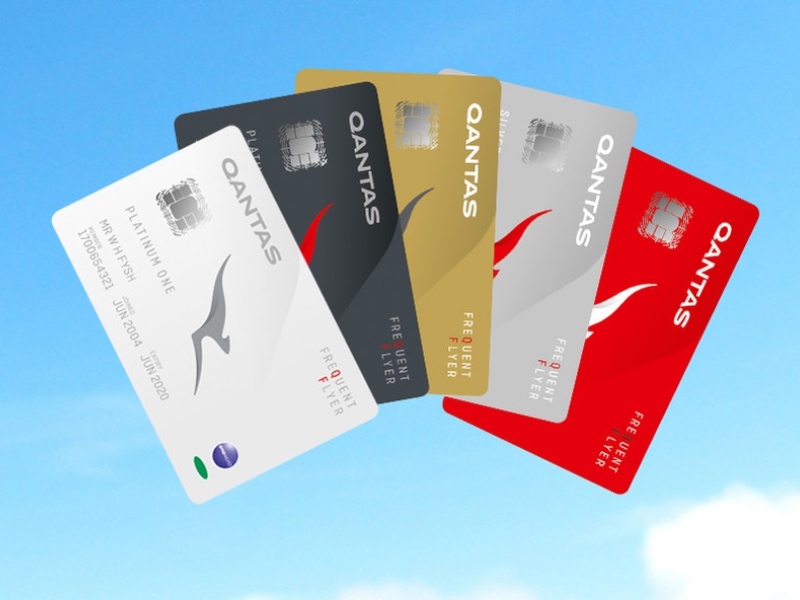
Status tiers are among the most powerful mechanics in loyalty program design; Bronze, Gold, Platinum, or Ruby, Sapphire, Emerald, plus many other variations. These labels do not just describe a benefits package. They activate a set of psychological forces that drive members to strive harder, stay longer, and fear losing what they have earned.
This article draws on peer-reviewed behavioural science research to explain the psychology behind tier progression and regression: why members pursue status, what happens when they achieve it, and how the threat of losing it becomes the most powerful retention mechanism in loyalty.
The motivation equation
Before a member will strive for a tier, three beliefs must align. Vroom’s (1964) expectancy theory explains the starting conditions.
- Expectancy: the member believes their effort will lead to qualification. “If I fly 10 more sectors, I’ll hit Gold status.”
- Instrumentality: the member believes qualification will unlock meaningful benefits. “Gold gives me lounge access and upgrades.”
- Valence: the member believes those benefits are personally valuable. “I travel weekly. Lounge access changes my life.”
The formula is multiplicative: Motivation = Expectancy x Instrumentality x Valence. If any variable is zero, motivation collapses entirely. A member who does not believe the benefits are worth having will not strive, regardless of how achievable the threshold is.
Research by Sharma and Verma (2014) confirmed that reward valence has the strongest positive effect on motivation, while perceived effort has the strongest negative effect. The practical implication is that if tier benefits are not meaningful and desirable, none of the other psychology in this article matters.
The head start hack
One of the most actionable findings in loyalty research concerns perceived progress. Nunes and Dreze (2006) showed that a 10-stamp loyalty card with 2 pre-filled stamps (requiring 8 purchases) achieved a 34% completion rate, compared with 19% for a plain 8-stamp card requiring the exact same 8 purchases.
Same effort. Different result.
The mechanism is called the endowed progress effect. Providing artificial advancement toward a goal shifts the member further along the goal gradient (see below), triggering earlier acceleration. The member perceives themselves as partially complete rather than at the starting line, even when the head start is arbitrary.
Applied to tier design, this means showing partial progress toward the next tier at qualification rollover, rather than resetting to zero, can prevent the motivation collapse that follows tier achievement. Loyaoty programs can apply this learning by awarding welcome status credits at enrollment or rolling over aportion of unused status credit as the end of the qualifying period. Never present a member with an empty progress bar.
The goal gradient
The goal gradient effect, demonstrated by Kivetz, Urminsky and Zheng (2006) in a landmark loyalty study, shows that members accelerate their effort as they approach a goal. Coffee shop loyalty card members reduced their inter-purchase time by approximately 20% from first stamp to last, across a field study of 948 real loyalty members.
In airlines, this is the phenomenon behind the “mileage run”: members take otherwise unnecessary flights purely to cross a status threshold. The gradient is not rational, but it is psychological. The closer the meaningful goal, the more intensely the member pursues it.
For tier design, this creates a clear opportunity. Make tier thresholds visible and communicate progress on every touchpoint. As members approach qualification, targeted bonus status credit offers (double status credits on a flight booked in the next seven days, for example) exploit the steepest part of the curve and stimulate incremental spend at the exact moment the member is most motivated.
Members who exhibit steeper purchase acceleration are also more likely to re-enroll in the next reward cycle. Tracking individual acceleration patterns is a CRM signal: steep accelerators are high-LTV members.
The small area rule
How should progress be communicated? Koo and Fishbach (2012) discovered the small area hypothesis: members are most motivated when you emphasise whichever is smaller, the distance covered or the distance remaining.
Early in the journey, emphasise what has been achieved: “You’ve earned 300 of your first 1,000 status credits.”
Late in the journey, emphasise what remains: “Just 150 status credits to go.”
The framing should flip at the midpoint. This is one of the most directly actionable findings for loyalty program communications. Segment progress messages by lifecycle position and apply the small area rule at every touchpoint.
Once a member achieves a tier, something deeper activates. Social identity theory, first proposed by Tajfel and Turner (1978), predicts that group membership provides self-esteem and belonging. People derive part of their self-concept from the groups they belong to. When a group is perceived as successful or distinctive, members experience elevated self-esteem.
This extends directly to loyalty tiers. Ivanic (2015) found that high-status tier members engage in status-reinforcing behaviours even when doing so offers no material benefit and even incurs personal costs. The behaviour is identity-driven, not utility-driven. Members are not just buying benefits. They are maintaining an identity.
Soderlund (2019) demonstrated that simply labelling customers as “member” rather than “customer” is sufficient to boost their sense of belonging and satisfaction. The label alone activates social identity processing.
Perhaps the most striking finding comes from Melnyk and Bijmolt (2015), who studied 9,783 consumers across 24 loyalty programs in 8 industries. They found that non-monetary discrimination between members and non-members (exclusive services, member-only events) is the single most effective loyalty program design element. It is the only element that both enhances loyalty at introduction and sustains that effect at termination. Savings percentages and discounts had no significant effect at either stage.
The implication is that tier design should emphasise identity and belonging, not just a benefits table. Status-laden names (Bronze, Silver, Gold, Platinum rather than Level 1, 2, 3), visible markers, and exclusive communities reinforce the identity effect.
Why status feels like “mine”
Once a member earns a tier, it shifts from “a status I have” to “part of who I am.” This is psychological ownership at work.
Pierce, Kostova and Dirks (2001) formalised three routes that trigger ownership feelings. All three operate independently, and their effects are additive when combined (Yoon, Peck and Shu, 2025):
- Control. Members who choose their benefits, select preferences, or customise their experience feel agency over the outcome. That agency creates ownership, and it costs nothing to offer.
- Investment of self. The effort, time, and money invested to qualify for the tier create ownership through the logic that “we own what we produce.” Every status credit earned deepens the sense that this status is genuinely mine.
- Intimate knowledge. Members who know the history of their membership feel deeper connection. “Your Platinum Card since 2019.” “Your table at the bar.” Knowledge-based language creates ownership through familiarity.
Peck and Luangrath (2023) added a critical nuance: members who fund their own qualifying spend feel stronger ownership of their status than those whose employer pays, and react more negatively to demotion. Corporate travel programs may generate weaker status ownership than personal spend programs.
The endowment effect, demonstrated in the famous coffee mug experiment by Kahneman, Knetsch and Thaler (1991), shows that ownership alone inflates perceived value by approximately 2.5 times. Sellers demanded $7.12 for a mug that buyers would pay only $2.87 for. Applied to tier status, this means members overvalue their Gold or Platinum membership far beyond its objective benefits value.
The 2x pain of losing status
Loss aversion, established by Kahneman and Tversky (1979) in prospect theory, predicts that the pain of losing something is approximately twice as powerful as the pleasure of gaining the same thing.
Applied to tiers, this means “You’re 2,000 points from retaining Gold” outperforms “You’re 2,000 points from reaching Gold.” The threat of losing status that has already been earned is more motivating than the prospect of gaining status that has not.
McCaughey and Behrens (2011) documented a 6% price premium attributable to frequent flyer program participation, as members accept higher prices to avoid losing accumulated benefits. This is calculative commitment in action (Mattila, 2006): the perceived economic cost of leaving, where members mentally account for the accumulated points, tier benefits, and partner network access they would forfeit by switching.
Combined with social identity and psychological ownership, losing tier status is experienced as a triple threat:
- financial loss (calculative commitment)
- identity loss (social identity), and
- ownership loss (psychological ownership)
This is why demotion triggers emotional reactions that far exceed the rational value of the lost benefits, and why members take mileage runs, accept higher prices, and make otherwise irrational decisions to protect their status.
However, overuse of loss framing can feel punitive and damage brand perception. The goal is to use it strategically, not relentlessly.
Demotion done right
If demotion is the retention engine, how it is executed determines whether it works. Rahman and Soesilo (2022) found that the communication approach determines the emotional response and subsequent behaviour.
- Demotion without advance warning triggers disappointment. Disappointment is firm-attributed: “They let me down.” Disappointed members disengage. They do not fight to recover their status. They leave.
- Demotion with advance warning triggers regret. Regret is self-attributed: “I should have done more.” Regretful members increase repurchase intention to recover their lost status.
The distinction is critical. Regret motivates action. Disappointment motivates withdrawal. The only variable is whether the member received advance warning.
Pre-demotion communications should frame the situation as the member’s opportunity to act: “You have 30 days to earn 500 more points to retain your Gold status.” This converts an unrecoverable emotional response (disappointment) into a recoverable one (regret). Soft landings, including grace periods, partial benefit retention, and targeted re-qualification offers, buy time for the recovery behaviour to activate.
Eight evidence-based rules for tier design
Drawing on the research above, here are eight practical design principles for tier psychology:
1. Make the destination worth the journey. If tier benefits are not meaningful and desirable, none of the other psychology matters. Reward valence is the strongest driver of motivation. At least one benefit per tier should be exclusive, visible, and genuinely coveted.
2. Award a head start at enrollment or rollover. Never reset a progress bar to zero. Perceived progress is as powerful as real progress.
3. Make progress visible everywhere. Progress bars, tier trackers, and “X status credits to go” messaging should appear on every member touchpoint: the app home screen, email headers, transaction receipts, in-store. Members cannot strive for what they cannot see.
4. Create opportunities to get there faster. Offer targeted accelerators (double status credits, bonus qualifying spend promotions) to members approaching a threshold. An airline offering double status credits on a flight booked within seven days to a member 5,000 credits from the next tier stimulates incremental spend and exploits the goal gradient at its steepest point.
5. Flip progress framing at the midpoint. Emphasise distance covered early, distance remaining late.
6. Design for identity, not just benefits. Exclusive access, visible status markers, status-laden tier names, and member communities reinforce that status is who you are, not just what you get.
7. Use “your” language and let members personalise. Psychological ownership makes status sticky. Control, self-investment, and intimate knowledge all deepen the sense that status is “mine.”
8. Always warn before demotion. Frame it as the member’s opportunity to act. Advance warning converts disappointment (firm-blamed, unrecoverable) into regret (self-attributed, drives recovery). Offer soft landings: grace periods, partial benefit retention, and targeted re-qualification offers.
Conclusion
Status tiers are psychology, not just benefits tables.
The research makes clear that tier structures activate a cascading set of psychological forces: the goal gradient pulls members toward qualification, the endowment effect makes earned status feel overvalued, social identity fuses that status with the self-concept, and loss aversion makes the threat of losing it twice as painful as the pleasure of gaining it. When designed well, these forces compound to create the most powerful retention mechanism in loyalty.
The programs that understand this do not just stack benefits at each tier level. They design the entire journey: the striving, the achievement, the identity, and the protection of what has been earned.
Sources
- Vroom, V.H. (1964). Work and Motivation. Wiley, New York.
- Sharma, D. & Verma, V. (2014). Psychological and Economic Considerations of Rewards Programs. Journal of Retailing and Consumer Services, 21(6), 924-932. https://doi.org/10.1016/j.jretconser.2014.08.010
- Nunes, J.C. & Dreze, X. (2006). The Endowed Progress Effect: How Artificial Advancement Increases Effort. Journal of Consumer Research, 32(4), 504-512. https://doi.org/10.1086/500480
- Kivetz, R., Urminsky, O. & Zheng, Y. (2006). The Goal-Gradient Hypothesis Resurrected: Purchase Acceleration, Illusionary Goal Progress, and Customer Retention. Journal of Marketing Research, 43(1), 39-58. https://doi.org/10.1509/jmkr.43.1.39
- Koo, M. & Fishbach, A. (2012). The Small-Area Hypothesis: Effects of Progress Monitoring on Goal Adherence. Journal of Consumer Research, 39(3), 493-509. https://doi.org/10.1086/663827
- Tajfel, H. & Turner, J.C. (1978). An Integrative Theory of Intergroup Conflict. In W.G. Austin & S. Worchel (Eds.), The Social Psychology of Intergroup Relations, pp. 33-47. Brooks/Cole.
- Ivanic, A. (2015). Status Has Its Privileges: The Psychological Benefit of Status-Reinforcing Behaviors. Psychology & Marketing, 32(7), 697-708. https://doi.org/10.1002/mar.20812
- Soderlund, M. (2019). Can the Label “Member” in a Loyalty Program Context Boost Customer Satisfaction? The International Review of Retail, Distribution and Consumer Research, 29(3), 340-357. https://doi.org/10.1080/09593969.2019.1598469
- Melnyk, V. & Bijmolt, T. (2015). The Effects of Introducing and Terminating Loyalty Programs. European Journal of Marketing, 49(3/4), 398-419. https://doi.org/10.1108/EJM-12-2012-0694
- Pierce, J.L., Kostova, T. & Dirks, K.T. (2001). Toward a Theory of Psychological Ownership in Organizations. Academy of Management Review, 26(2), 298-310. https://doi.org/10.5465/amr.2001.4378028
- Yoon, Y.R., Peck, J. & Shu, S.B. (2025). Increasing Hotel Loyalty Through Psychological Ownership. Cornell Hospitality Quarterly. https://doi.org/10.1177/19389655241309634
- Peck, J. & Luangrath, A.W. (2023). A Review and Future Avenues for Psychological Ownership in Consumer Research. Consumer Psychology Review. https://doi.org/10.1002/arcp.1084
- Kahneman, D., Knetsch, J.L. & Thaler, R.H. (1991). Anomalies: The Endowment Effect, Loss Aversion, and Status Quo Bias. Journal of Economic Perspectives, 5(1), 193-206. https://doi.org/10.1257/jep.5.1.193
- Kahneman, D. & Tversky, A. (1979). Prospect Theory: An Analysis of Decision Under Risk. Econometrica, 47(2), 263-291. https://doi.org/10.2307/1914185
- McCaughey, N. & Behrens, C. (2011). Paying for Status? The Effect of Frequent Flyer Program Member Status on Air Fares. Working Paper, Monash University.
- Mattila, A.S. (2006). How Affective Commitment Boosts Guest Loyalty (and Promotes Frequent-Guest Programs). Cornell Hotel and Restaurant Administration Quarterly, 47(2), 174-181. https://doi.org/10.1177/0010880405283943
- Rahman, F. & Soesilo, P.K.M. (2022). The Effect of Customer Demotion on Consumer Affective and Behavioral Response in Restaurant Loyalty Programs. Journal of Consumer Satisfaction, Dissatisfaction and Complaining Behavior, 35, 121-145. https://doi.org/10.55014/jcsdcb.v35i1.360