Transactional loyalty and emotional loyalty are not the same thing.
A customer might stay because the rewards are convenient. Because the friction of leaving feels mildly annoying. Because the points balance is too good to walk away from. But that is not exactly what one would call devotion. Devotion looks and feels different.
It looks like customers organising themselves on your behalf. Creating content voluntarily. Defending your brand publicly. Bringing other people in. Standing up for you in spaces you’re not. Returning daily, even when they are not actively buying anything.
Very few brands create that kind of loyalty. BTS did.
They did not achieve this through a traditional loyalty program, or discounts, or points mechanics but purely through relationship design.
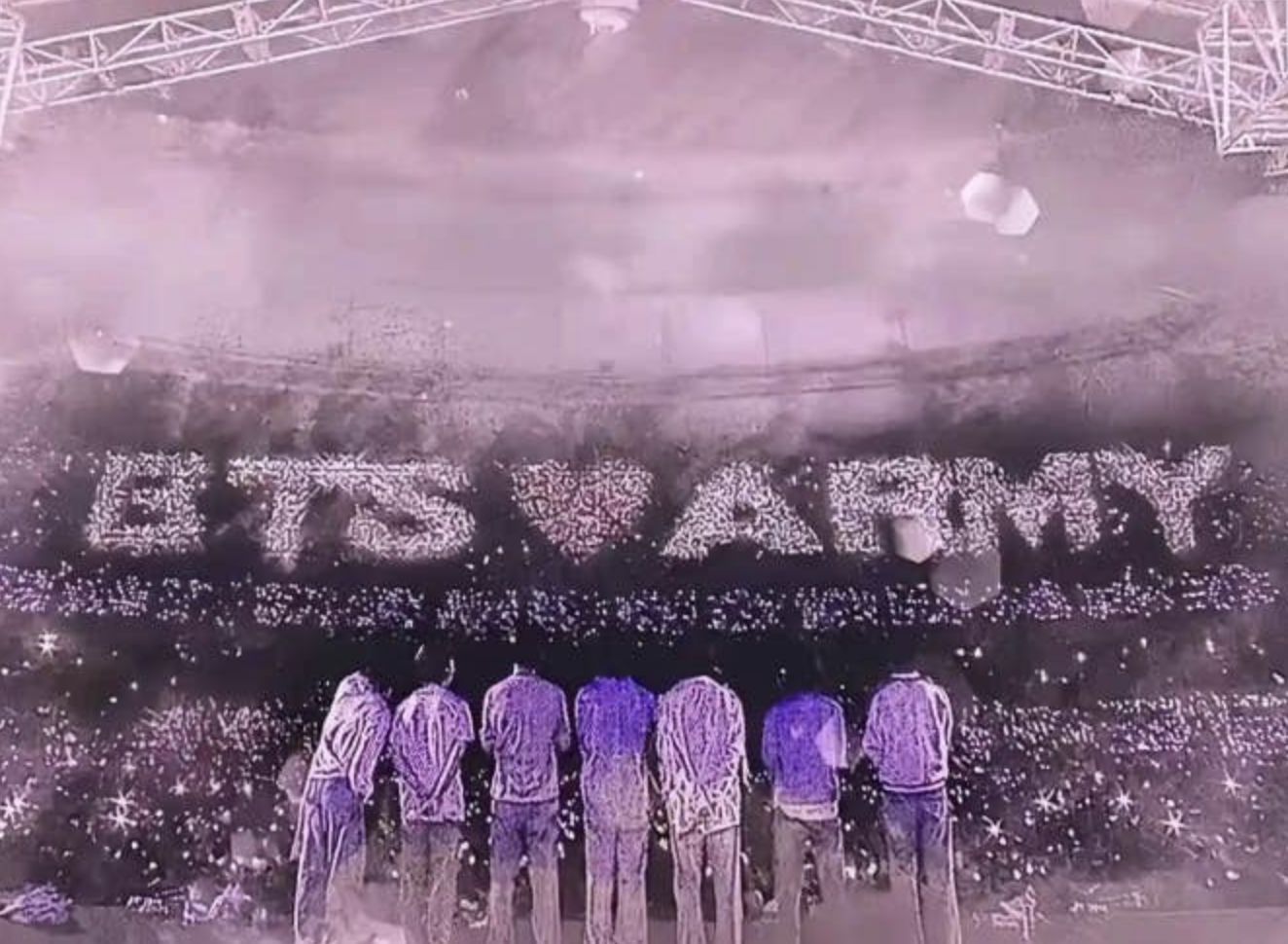
The South Korean group built one of the most emotionally invested communities in the world. Their fan base, ARMY, operates with a level of coordination, participation and sustained engagement that most global brands would struggle to replicate.
The important question for loyalty professionals is not whether BTS is relevant to your sector, but what they understood about people and what we can learn from them.
BTS reveals what happens when devotion goes way beyond entertainment and when loyalty is built around identity, belonging, participation and generous reciprocity rather than transactions alone.
People do not stay loyal to programs
Human-centric loyalty begins with a very simple premise: people do not stay loyal to programs.
They stay loyal when positive feelings are involved and when relationships make them feel recognized, emotionally connected and part of something meaningful. Traditional loyalty structures tend to optimize for habit. Earn points. Redeem rewards. Repeat the cycle. Those systems can drive frequency and retention, but emotional loyalty operates differently.
Emotional loyalty survives service failures. It survives competitor offers and periods where the customer is not actively purchasing. In the case of BTS, it survives a 4-year-long hiatus!
That kind of loyalty is harder to build because it requires more than incentives and tricks. It requires trust, recognition, consistency and shared values. BTS understood this very early.
Almost every part of their ecosystem prioritises the relationship before the transaction.
Direct communication. Continuous interaction. Shared language. Narrative storytelling. Participation. Community rituals. BTS create voluminous content just for the fans. They like, repost and comment on their fans’ posts regularly. It makes sense to be passionately devoted to a global megastar that interacted with your 300-follower account.
As a result, fans are not simply consuming content but are actively participating inside a living relationship system and the results are extraordinary.
ARMY members translate content into multiple languages voluntarily. They organise global streaming campaigns. They coordinate charitable fundraising. They recruit new fans constantly. Entire communities self-organise around sustaining momentum and engagement. The BTS brand has broken the barriers of traditional brand loyalty expectations and transcended into a powerful realm of emotional loyalty operating at scale.
Identity is one of the strongest forms of loyalty
One of the most powerful things BTS created was a shared identity. They have achieved that by consistently avoiding acting “big”. Perhaps one of the reasons the loyalty feels so unusually strong is because BTS never fully allowed themselves to become untouchable and appear perfect. Even at extraordinary levels of fame, they continue to communicate like people rather than institutions. They are deeply humble. They speak about exhaustion, pressure, insecurity, and the emotional cost of visibility itself. Fans are not just observing talented people singing and dancing; they are witnessing vulnerability, contradiction, growth and humanity in real time.
That changes the nature of loyalty completely. People do not emotionally attach themselves to alien perfection nearly as deeply as they attach themselves to authenticity and relatability. As a result, ARMY does not behave like a customer segment but like a collective identity with its own language, emotional codes, rituals and social norms. It behaves like a family.
Research around ARMY communities consistently shows highly organised forms of participation. Fans voluntarily take on roles. Some translate content. Some teach streaming strategies. Some coordinate voting campaigns. Some onboard new fans. Some create educational content and archives.
What is fascinating is that much of this behavior happens without direct instruction from the brand. People organise themselves because participation itself has meaning. This is where many loyalty programs still fall short. They treat membership as enrolment, when belonging is not the same as enrolment.
A tier name alone does not create identity because identity forms when people feel emotionally recognised within a collective experience. Loyalty shifts from transactional to emotional when customers begin to feel that participating in a brand says something about who they are.
The ritual effect
Most brands communicate in bursts. A campaign launches. A product drops. An email goes out. The brand disappears again. With BTS the relationship is continuous. Livestreams. Behind-the-scenes content. Messages. Updates. Conversations. Interactive moments. Fan participation. The volume becomes organic in a way, and matters less than the rhythm.
People return daily because engagement becomes habitual and, over time, those habits become rituals. Rituals are of paramount importance to any loyalty strategy because they create anticipation and a need for continuity. In other words, they create the perfect ecosystem for return behavior. The customer then does not return merely to transact, and transaction becomes a small and worthy part in a vast emotional landscape. One of the reasons why BTS retained extraordinary engagement even during long periods without group releases is because the relationship itself has become the destination.
The real test of loyalty is absence
The strongest test of any loyalty system is dormancy. What happens when the product disappears for a while? In 2022, BTS announced a group hiatus while members completed South Korea’s mandatory military service. For most brands, a four-year gap in collective activity would have devastated retention. Instead, anticipation intensified. Fans stayed engaged through solo projects, community interaction, membership experiences, narrative breadcrumbs and a carefully structured comeback narrative.
As a result, by the time BTS announced their return, the emotional investment had deepened. The comeback became a global event, and the subsequent World Tour is sold out globally. That proves the point that relationship-led ecosystems behave differently and are pretty much unbeatable when properly established. It’s almost like they have a life of their own, they become organic; people breathe and live not the product, but the meaning attached to it.
Beyond the traditional tier ladder
The BTS ecosystem does not operate through one single loyalty structure. Instead, it functions more like a layered membership ecosystem. There are different forms of participation serving different emotional motivations like access, status, utility, closeness, recognition and community.
Some memberships unlock presale access. Some unlock exclusive content. Some monetise intimacy through direct messaging. Some function as status markers for long-term participation.
It operates less like a linear ladder and more like a relationship stack. That model is increasingly relevant for brand as not every customer is motivated by the same thing. Some want convenience. Some want recognition. Some want exclusivity. Some want connection. Some simply want to feel part of something.
A single points-and-tier structure cannot always accommodate the emotional complexity of loyalty. The brands creating the strongest ecosystems are often the ones building multiple pathways into deeper participation. They look at the customer more as an individual and less as a metric.
Emotional loyalty depends on authenticity
One reason BTS resonates so deeply is because the emotional storytelling feels consistent. Their albums and content repeatedly return to themes around identity, imperfection, vulnerability, growth, mental health, pressure, connection and self-worth. Now, more than ever, fans identify with this narrative and see themselves inside it. Now, more than ever, people value and need emotional depth and authenticity.
As AI-generated content becomes increasingly widespread, authenticity becomes the competitive advantage. Customers can sense when communication has emotional truth behind it and when it has been engineered for engagement.
That, of course, does not mean every brand needs emotional storytelling on the scale of BTS. But it does mean that loyalty communication cannot feel empty, generic or purely extractive. People invest emotionally in brands when they believe there is a real point of view underneath the messaging.
Community-led amplification
One of the most remarkable aspects of ARMY is how much value creation happens voluntarily. Fans create edits, guides, translations, explainers, archives, onboarding threads and educational content continuously. Entire participation systems emerge organically. What is fascinating from a loyalty perspective is that people are not contributing because they are being paid. They contribute because contribution itself strengthens the feeling of belonging.
This is where many traditional loyalty models still underestimate human behavior. People want to participate. They want to belong. They want recognition. They want visibility. They want their involvement to matter. The strongest communities do not treat their people as passive recipients. Instead, they give them roles. This principle applies across industries, familial and societal structures alike.
In loyalty it can take the form of referral programs, community ambassadors, member-generated content, mentorship, reviews, events and co-creation.
The mechanics themselves matter less than the underlying psychological principle of belonging. Belonging deepens both contribution and commitment.
The ethical line
There is also an important ethical conversation inside all of this. Emotional loyalty is powerful but can also become manipulative very quickly. This is where human-centric loyalty requires responsibility. The goal should not be to engineer dependency and addictive traits but to create value and reward participation without exploiting emotional attachment.
That distinction matters increasingly as brands become more sophisticated in behavioral design, because customers are not engagement metrics. They are people.
What brands can learn from BTS
The real lesson from BTS is not that brands should imitate fandom culture but that loyalty becomes more resilient when people feel emotionally connected to something larger than the transaction and even the product itself.
That can look different across industries but the underlying principles are surprisingly transferable.
- Design for identity, not just incentives.
- Create ongoing engagement rather than episodic campaigns.
- Build rituals people anticipate.
- Give customers meaningful ways to participate.
- Recognise contribution visibly.
- Create emotional continuity between transactions.
- Develop ecosystems rather than isolated loyalty mechanics.
Most importantly: understand that relationships sustain loyalty.
The takeaway
BTS built an ecosystem where loyalty became the natural outcome of participation, belonging, emotional investment and reciprocity. They did not ask their fans to be loyal; they earned their long-term devotion.
It seems then that the future of loyalty will not belong exclusively to the brands with the richest rewards currency or the most complicated tier structures but to those that understand one fundamentally human truth: people stay where they feel emotionally fulfilled and recognized.
The most effective loyalty strategies are relationship systems and relationships require investment from both sides.
References
- Choi, S. et al. (2025). “Brand community identification and fan loyalty on Weverse: The case of BTS ARMY.” Social Media + Society, 11(1). https://journals.sagepub.com/doi/10.1177/20563051251326689
- Harvard Business School, Working Knowledge (2020). “Building an Army of Fans: Marketing Lessons from K-Pop Sensation BTS.” https://www.library.hbs.edu/working-knowledge/building-an-army-of-fans-marketing-lessons-from-kpop-sensation-bts
- Weverse (2024). Weverse Annual Trend Report: Fan engagement metrics including 370 million fan posts, 96.36 million fan DM messages, and 5,787 live broadcasts. https://en.weverse.co/news
- Weverse Shop. BTS ARMY Membership: Official product listing and membership benefits. https://shop.weverse.io/en/shop/USD/artists/2/sales/41599
- Weverse (2024). Digital Membership preliminary notice: Monthly subscription benefits including ad removal, offline downloads, premium playback, and exclusive badges. https://weverse.io/notice/23906
- Weverse. Weverse DM: User guide and service documentation for paid artist-to-fan messaging. https://weverse.io/notice/13188
- Reuters (2024). “What is Weverse, the super app joined by Ariana Grande?” https://www.reuters.com/technology/what-is-weverse-super-app-joined-by-ariana-grande-2024-06-14/
- UNICEF (2020). “BTS and Big Hit renew commitment to LOVE MYSELF campaign in support of UNICEF to end violence.” https://www.unicef.org/press-releases/bts-and-big-hit-renew-commitment-love-myself-campaign-support-unicef-ending-violence
- NPR (2025). “K-pop group BTS set to reunite as two more members complete military service.” https://www.npr.org/2025/06/10/nx-s1-5429075/bts-reunion-south-korea-military-service
- Billboard (2026). “BTS Earns 7th No. 1 Album on Billboard 200 With ‘ARIRANG.’” https://www.billboard.com/music/chart-beat/bts-arirang-no1-billboard-200-albums-chart-1236209566/
- NBC News (2026). “BTS reunites after military hiatus with historic Seoul comeback performance.” https://www.nbcnews.com/pop-culture/pop-culture-news/bts-reunites-seoul-comeback-performance-rcna264557
- Variety (2026). “BTS’ ‘Arirang’ Scores Biggest Sales Week for a Group in Over a Decade.” https://variety.com/2026/music/news/bts-arirang-biggest-sales-week-for-group-in-over-a-decade-1236702284/
- Time (2026). “What ‘BTS: The Return’ Reveals About the Biggest Boy Band’s New Era.” https://time.com/article/2026/03/27/bts-the-return-comeback-live-netflix/
- Park, S. and Lim, T. (2024). “Platform fandom: Corporate fan management and participatory culture on Weverse.” Telematics and Informatics, 93. https://www.sciencedirect.com/science/article/abs/pii/S0736585324000479
- Abdillah, R. et al. (2022). “The role of fan community in building brand loyalty: A study of BTS ARMY.” Atlantis Press. https://www.atlantis-press.com/article/125991973.pdf
- Reuters (2020). “BTS fans: Inside the world’s most powerful fandom.” https://www.reuters.com/graphics/GLOBAL-RACE/BTS-FANS/nmopajgmxva/
17. Wikipedia (2026). “Arirang World Tour.” 85 dates across 34 cities and 23 countries, April 2026 to March 2027. https://en.wikipedia.org/wiki/Arirang_World_Tour