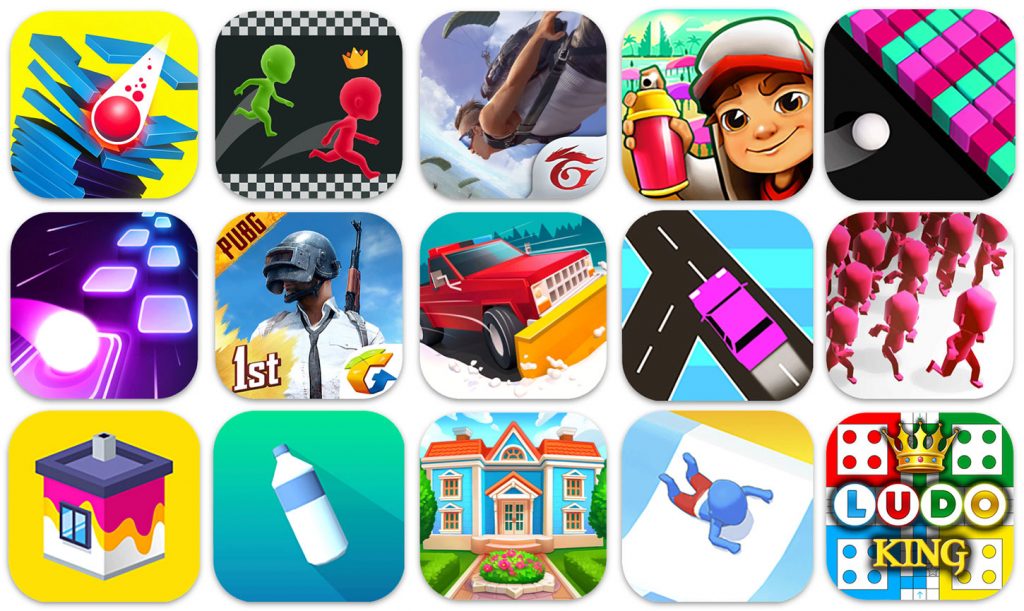
Games are defined as ‘an activity that one engages in for amusement or fun’, and ‘a complete episode or period of play, ending in a final result’.[1]
Gamification is the use of elements of gameplay in non-game contexts to stimulate specific behaviours.
These distinctions are important. Games and gamification are different approaches which deliver different outcomes within loyalty programs.
In modern loyalty programs, both games and gamification are being used to drive deeper member engagement. Applied intelligently, games and gamification can support the stimulation of a wide range of desirable member behaviours, including sharing of personal data (to support analytical modelling and hyper-personalised communications), advocacy and referrals (to grow the member base and promote tactical offers), and incremental visits and spend.
Approaches are becoming increasingly sophisticated and more prevalent. Momentum is building in both areas as companies are inspired by the effort of their competitors and other loyalty program operators, while technological advances (smart phone market penetration and better software platforms) has allowed gaming and gamification to become more low cost and mainstream.
While much has been written about the potential of gamification within loyalty programs, it is games which are booming, and rapidly developing into one of the loyalty industry’s mega-trends.
Gaming penetration is massive
According to the Entertainment Software Association (ESA), in 2019, ‘164 million adults in the United States play video games and three-quarters of all Americans have at least one gamer in their household’.[2] The ESA also identified that smartphones are the most common device for playing games (60 per cent) compared to personal computers (52 per cent and dedicated game consoles (49 per cent)). There is only minimal gender imbalance, with 46 per cent of gamers being female.
Assuming similar statistics in other modern or modernising countries, this represents a sizeable population of consumers who are likely to be open to engaging with quality games provided through a loyalty program.
Games can be both entertainment in themselves and a pathway towards a reward, making them a useful tool. Members can be invited to play a physical or digital game, enjoy the experience and unlock a prize, reinforcing the positive experience.
Game design research
Lazzaro (2004)[3] conducted a comprehensive study of the role of emotions in video games. She identified four key emotion-based reasons why people play games:
- Hard fun: players like the opportunities for challenge, strategy, and problem solving.
- Easy fun: players enjoy intrigue and curiosity. Players become immersed in games when it absorbs their complete attention, or when it takes them on an exciting adventure.
- Altered states: players treasure the enjoyment from their internal experiences in reaction to the visceral, behaviour, cognitive, and social properties.
- The people factor: players use games as mechanisms for social experiences.
Lazzaro reported being surprised by the ‘dramatic contrast in emotional displays between one vs. several people playing together. Players in groups emote more frequently and with more intensity than those who play on their own. Group play adds new behaviours, rituals, and emotions that make games more exciting.’ This insight should be of particular interest to loyalty program operators that are contemplating games, as campaigns which stimulate group and social discussion may tap into this greater intensity to the benefit of the brand and the program.
Brands can enjoy some valuable benefits from providing members with access to compelling games.
Benefit 1: Acquisition & engagement
Firstly, games can be used to drive new member acquisition and deeper engagement with existing members. If a consumer is required to join the program to play the game, they are provided with an additional motivation to join. If an existing member needs to download an app to play, they are provided with an incentive to download the app.
Benefit 2: Attention on your brand
Secondly, members playing a game will focus their attention for an extended period of time on a field or game board which will likely contain overt branding, as well as subtle brand associations. This can tap into a psychological bias known as the mere-exposure effect. Zajonc (1968)[4] found that mere repeated exposure of individuals to a stimulus object enhances their attitude toward it. His study focused on exposure to images such as foreign words, Chinese characters and faces of strangers. Later research has replicated the effect across paintings, colours, flavours, geometric shapes and people.[5] Baker (1999) [6] found the effect also works for brands, and recommended that advertisers should place a higher priority on maximising the prominence of the brand name and package in advertisements to capitalise on the effect.
Games provide an engaging medium for intense, repeated exposure. Examples of luxury brands which have embraced games as promotional channels include Louis Vuitton, Guerlain, Dior, Hermes, Burberry, Gucci and Chanel.[7]
| Dior Discounting is never a strategy used by Dior to generate engagement with their luxury fashion lines. Instead, to drive hype around a new store opening in Shanghai, they created a playful, competitive, interactive game on their WeChat account. Dior invited users to collect six Dior branded in-game tokens via an interactive treasure hunt, allowing them to launch a virtual hot air balloon into the sky upon successful completion. Launching a balloon gained shoppers the opportunity to win tickets to the stores grand opening. Dior give repeated exposure to their logo within the game and effectively use it across online to offline engagement experiences. |
Benefit 3: Tie the member to the brand’s values
Thirdly, according to Tulleken,[8] games provide a unique opportunity for brands to represent their values and involve their customers in their mission. He cites the examples of Chipotle (who used a game called Scarecrow to allow customers to save produce and animals from industrial food corporations) and Burger King (who created their Sneak King game to incorporate their promise to ‘feed your hunger’ by having players feed hungry people). Loyalty programs can further utilise this approach by better educating members on how to extract more value from the program.
| Porsche Porsche consolidated their brand values and commitment for fast cars with the launch of their racing game Need For Speed: Porsche Unleashed. The game let users race with different Porsche sports car models, bringing to life the history of the Porsche designs and how they have been refined and evolved over time with each model. With speed and style always at the core, the game is a classic portrait of the brand and its values, with the game itself now a collector’s item. Boost Juice Boost Juice launched two games in two years for their Vibe Club loyalty program members to play within their app. The games educate members on the healthy fruit contained within Boost drinks and incorporate elements of their brand story and founder. It also allowed members to win prizes, which were typically discounts off their next purchase. Boost Juice said in a statement that their first ‘Free the Fruit’ app saw over 329,889 downloads and 225,970 prizes given away, while reaching number one on the Apple App Store and remaining in this position for four weeks.[9] During this time, Boost customers spent close to 56 million minutes of gameplay at an average 173 minutes per user. This level of app engagement which rewarded customers with vouchers drove high traffic into their bricks and mortar stores, resulted in significant sales uplifts. It was quickly followed by their second game ‘Find the Fruit’. |
Benefit 4: Word of mouth
Fourthly, games are effective in generating word of mouth promotion. In 2009, The NDP Group revealed that 41 per cent of all gamers report that they rely on word of mouth to obtain information on video games[10].
Further research from Poretski et al (2019)[11] found that word of mouth increases game consumption, particularly for online games. Loyalty programs which develop games that have that ‘talkability’ factor can benefit from generating a buzz amongst social groups.
| KFC China KFC China identified that the country’s 564 million gamers were a core target market which was key to achieving their goals of connecting with the youth population. They strategically partnered with the most popular esports gaming franchise in China, League Of Legends, to create an AI commentator (which they called Colonel KI) that predicts outcomes of League of Legends tournaments in real time. Fans could log into the KFC app to track predictions throughout the match. During the most exciting moments in the match, the Colonel would virtually distribute QR coupons to fans inviting them to order KFC online and enjoy fried chicken during the game. Results generated impactful metrics in regard to both social buzz and sales. There were 203 million viewers on League of Legends live streams, 35 million topic views on Weibo, 1.9 million on screen comments, 100 per cent of coupons accepted and 25 per cent of coupons redeemed (2,500 per cent above the benchmark).[12] To increase talkability further, KFC also themed some of their restaurants with League of Legends branding and saw a 35 per cent uplift in sales in themed stores.[13] |
Benefit 5: Social sharing
Fifthly, gamers are increasingly sharing their experiences and successes on social media. According to Minguez,[14] this commenced with interactive browser-based Facebook games like Zynga Poker, Mafia Wars and FarmVille, where it was observed that ‘players not only loved to play against one another, but also liked the bragging rights that came with getting high scores or passing a particularly tough level’. Loyalty programs which develop more comprehensive, challenging games have the opportunity to tap into social sharing, and even harness it by making it easy to share (via strategically positioned buttons) and rewarding the behaviour (by providing incremental rewards).
| Candy Crush Candy Crush was designed in a way by which it can be played and completed for free (70 per cent of users on the last level have never paid to play) but with limitations, like limits on the amount of lives and moves players can access for free each day. Players can get more lives by either buying them or asking their friends on Facebook to accept their request for free lives. Using Facebook as a platform to expand the program throughout social friend networks was the primary source of new Candy Crush players in the initial stages. The ability to compete against friends was another social element which motivated users to want to progress faster, compelling them to pay for more lives to win against their friends. Players also like to show off their scores to people they know, feeling a sense of pride in their level of achievements. Tapping into social sharing helped the Candy Crush series bring in more than $1.5 billion (USD) in revenue from microtransactions in 2018 across iOS and Android.[15] For loyalty program designers, it demonstrated what is possible when a hot game goes viral. |
Benefit 6: Habit formation
Sixthly, games can be used to generate more sustained and habitual behaviour. A program operator may apply simple, low skill and randomness elements to turn their delivery of offers into a game. This provides the opportunity for a member to reveal a new offer everyday by playing, exposing them to the brand on a frequent basis and entering their consideration set frequently and consistently.
| Maccas Mini Games ‘Maccas Mini Games’ gave players one opportunity per day to unlock a prize by playing an in-app game. Players could choose to dunk a chicken nugget, play mini-golf or run through a maze, where everyone won a prize. On successful completion of the game, an offer was presented to the player which they could either immediately add to an app order or save to their rewards tab to be used within approximately 16 hours before it expired. The player could revisit the app and play again the next day, helping to develop habitual behaviours. |
Benefit 7: The endowment effect
Finally, games may tap into the Endowment Effect. As detailed in Chapter 6, Thaler, (1980)[16] identified that consumers place a greater value on things once they have established ownership. This effect can be harnessed by loyalty programs when distributing offers as prizes. While not proven, it can be hypothesised that a member who earns an offer after successfully completing a challenging game is likely to value the offer more than a member who has just been provided with it. As a result, they are potentially more likely to use the offer.
What makes a great game?
With all these benefits, it is important to acknowledge that developing a compelling, engaging, likeable and shareable game within a reasonable budget can be challenging. Phan et al (2016)[17] developed a Game User Experience Satisfaction Scale (GUESS) to comprehensively measure video game satisfaction based on nine key factors; usability/playability, narratives, play engrossment, enjoyment, creative freedom, audio aesthetics, personal gratification, social connectivity and visual aesthetics. Developing a game which measures highly across most or all factors would be challenging, although it should be recognised that games developed for short-term loyalty program promotional campaigns are likely not going to be judged in the same light as a major label release.
To support loyalty programs interested in experimenting with games, platform providers have evolved offering white-label game solutions specialising in rapid, low-cost development, deployment and analytics. This includes companies such as 3radical and Trunk, and gaming design engines including Unity, Phaser and Panda3D.
Depending on your company’s loyalty program design, investing in games may deliver the edge needed to turb-charge member engagement.
[1] Oxford dictionary.
[2] Entertainment Software Industry, 2019, ‘2019 Essential Facts about the Computer and Video Game Industry’, https://www.theesa.com/wp-content/uploads/2019/05/ESA_Essential_facts_2019_final.pdf, accessed 15 June 2020.
[3] Lazzaro, Nicole., 2004, ‘Why we Play Games: Four Keys to More Emotion without Story’, Game Dev Conf, http://twvideo01.ubm-us.net/o1/vault/gdc04/slides/why_we_play_games.pdf, accessed 2 June 2020.
[4] Zajonc, R. B., 1968, ‘Attitudinal effects of mere exposure’, Journal of Personality and Social Psychology, Vol 9, Iss 2 Pt.2, pp1-27.
[5] Moreland, R. L., & Beach, S. R., 1992, ‘Exposure effects in the classroom: The development of affinity among students. Journal of Experimental Social Psychology, Vol 28, Iss 3, pp255–276.
[6] William E. Baker, 1999, ‘When Can Affective Conditioning and Mere Exposure Directly Influence Brand Choice?’, Journal of Advertising, Vol 28, Iss 4, pp31-46.
[7] Page, R. 2020, ‘Game on: 7 brands getting into gaming,’ CMO, https://www.cmo.com.au/article/670396/game-7-brands-getting-into-gaming/, accessed 4 April 2020.
[8] Tulleken, H., 2019, ‘5 ways games increase brand awareness,’ Pling, https://www.plinq.co/blog/5-ways-games-increase-brand-awareness, accessed 4 April 2020.
[9] McGilloway, Christian, 2018, cited in ‘Boost Juice launches new ‘Find the Fruit’ game app’, Inside FMCG Magazine, https://insidefmcg.com.au/2018/04/19/boost-juice-launches-new-find-the-fruit-game-app/, accessed 16th May 2019
[10] The NPD Group, 2009, ‘Gaming Device Profiles’.
[11] Poretski, Lev & Zalmanson, Lior & Arazy, Ofer, 2019, ‘The Effects of Co-Creation and Word-of- Mouth on Content Consumption – Findings from the Video Game Industry’, Fortieth International Conference on Information Systems Munich 2019, https://aisel.aisnet.org/cgi/viewcontent.cgi?article=1639&context=icis2019, accessed 15 June 2020.
[12] The Esports Ads, Colonel KI campaign, https://theesportsads.com/campaigns/colonelki, accessed 27 May 2020.
[13] Thomas, Paula, 2019, Digital Driving Growth in KFC China, Global Convenience Store Focus, https://www.globalconveniencestorefocus.co.uk/features/digital-driving-growth-in-kfc-china/, accessed 14 January 2020.
[14] Minguez, K., 2014, ‘The Merging of Social Media and Gaming’, Social Media Today, https://www.socialmediatoday.com/content/merging-social-media-and-gaming, accessed 14 January 2020.
[15] Makuch, E., 2019, Gamespot, ‘Here’s How Much Money Candy Crush Makes Compared To Fortnite And Pokemon Go On Mobile’, https://www.gamespot.com/articles/heres-how-much-money-candy-crush-makes-compared-to/1100-6464305/, accessed 28 May 2020.
[16] Thaler, Richard,1980, ‘Toward a Positive Theory of Consumer Choice,’ Journal of Economic Behavior and Organization, Vol 1, pp39-60.
[17] Phan, Mikki & Keebler, Joseph & Chaparro, Barbara,2016, ‘The Development and Validation of the Game User Experience Satisfaction Scale (GUESS)’, Human Factors: The Journal of the Human Factors and Ergonomics Society, Vol 58, Iss 8.