

Inside Australia’s loyalty industry: what the ACCC report revealed

17 October 2023
Eli Maynard

Southeast Asia is a diverse region with over 650 million people, and its loyalty program landscape is just as varied. From traditional standard point-based loyalty programs to innovative new loyalty models and features of loyalty programs , there is something for all consumers in Southeast Asia.

Southeast Asia, geographically situated south of mainland China, east of the Indian subcontinent, and north-west of Australia, encompasses thirteen distinct countries: Brunei, Cambodia, East Timor, Indonesia, Laos, Malaysia, Myanmar, the Philippines, Singapore, Thailand, and Vietnam. Each country has its own culture and characteristics that vary.

Southeast Asia’s loyalty landscape

For businesses seeking to establish loyalty programs in Southeast Asia, it is crucial to comprehend the market’s unique characteristics. The profound influence of religion, culture, and history on this region shapes consumer behaviours and expectations.

Southeast Asia boasts a dynamic consumer base, with a staggering 75% of its population under the age of 45. This youthful demographic, characterised by tech-savviness and a growing appetite for personalised experiences, presents a prime opportunity for businesses to tap into the region’s vibrant market through effective loyalty programs. Loyalty programs in Southeast Asia are becoming increasingly popular due to greater adoption of the internet, social media usage and e-commerce shopping.

To design a suitable loyalty program and fully comprehend the loyalty landscape in Southeast Asia, businesses must understand consumers in the region, grasp successful loyalty programs in the area, and identify the overarching themes across programs in the region.

The savvy Southeast Asian consumer

To gain a profound understanding of how loyalty programs operate in Southeast Asia, it is essential to delve into the intricate nuances of the Southeast Asian consumer that significantly influence their choices and actions.

Online shoppers galore

Southeast Asia is undeniably becoming a hub of digital commerce. The Southeast Asian online shopping community has been experiencing explosive growth, with numbers climbing from less than 300 million just a few years ago – to now over 350 million users, and predicted to hit 380 million by 2026. This represents 85% of the region’s internet population now making online purchases.  

Since becoming one of the world’s most connected regions, consumers have embraced new habits around online discovery, product assessment, and making purchases. Retail ecommerce sales in Southeast Asia are projected to grow by another 18.6% by the end of 2023 (contrasted to 2022).

Loyalty programs must address this by ensuring the program operates both in-person and online, and fully captures the mass of online shoppers to join and engage in the loyalty program.

Tech, Tech and Fintech!

Southeast Asia’s digital transformation is not confined to e-commerce alone. Fintech, online learning, and healthcare industries have witnessed substantial growth as Southeast Asian consumers embrace digital channels.

Furthermore, Southeast Asia has seen comparatively higher adoption of digital wallets, cryptocurrency and non-fungible tokens than the likes of China, USA, Europe and Japan. Research by Meta and Bain & Company also found that seven out of ten respondents in Southeast Asia have tried metaverse-related tech in the past year.

This massive tech growth market calls for loyalty programs that resonate with these digitally immersed consumers. Growing industries such as fintech need loyalty programs to maintain this growth and keep up with consumer trends, whilst the growth of crypto in the region highlights the opportunity for brands to experiment with cryptocurrency and web3 concepts with their loyalty programs.

Social media discovery

Social media is now accounting for almost half of online discovery, with social media videos being the fastest-growing source for online discovery in this region. Social media videos in particular – with the emergence of Tik-Toks and Reels – have grown significantly as a source of discovery for brands and their loyalty programs alike.

Social media is a powerful tool that can help businesses of all sizes reach and engage with their target audience. Because social media usage is high, businesses need to ensure that their loyalty program is prominent on social channels. Loyalty programs in the region need to be socially integrated, and incorporate social and fun elements to keep consumers in this region engaged.

Experimentation and value-consciousness are top consumer behaviours

According to the Global Survey of Corporate Social Responsibility and Sustainability, 53% of Southeast Asian shoppers are switching to new brands constantly. Additionally, online shoppers are expanding their horizons by exploring multiple online platforms in pursuit of better value and product options. This shift towards value-consciousness might be influenced by increasing prices driven by macroeconomic challenges.

Whilst loyalty programs are favoured in this region, it’s clear that consumers are difficult to actually keep loyal, highlighting the ultra-importance of an effective loyalty program.

Loyalty programs must target value-conscious consumers and these consumers who are trying new brands constantly and provide programs with sufficient value that will keep them brand loyal and less inclined to try new brands.

Sustainability – the Southeast Asian way

Southeast Asian consumers value sustainability and social responsibility, with 92% expressing a willingness to pay more for products that align with these principles. Furthermore, global surveys report 80% of Southeast Asians prefer to buy from companies that invest in lessening their negative social and environmental impact.

To cater to the conscious consumer, businesses need to ensure that the design of the loyalty program reinforces sustainable practices.

For example, IKEA has transformed its Bang Yai store into a circular shop, allowing customers to sell pre-owned home furnishings, purchase discounted second-hand IKEA furniture, and exchange recyclable waste for IKEA Family Points. This initiative encourages the extension of material and product lifespan through sharing, reusing, refurbishing, and recycling.

Personalisation is important

Each Southeast Asian country has its own culture, with various sub-cultures within.

Given the diverse nature of cultures, and sub-cultures, businesses need to place particular importance on ensuring that they can personalise the experience to the individual. Through data collection and usage, loyalty programs can segment their consumer base and personalise each diverse individual accordingly.

Examples of Loyalty Programs in Southeast Asia

GrabRewards by Grab

GrabRewards is the largest loyalty programme in Southeast Asia which is provided by Grab – a self-described ‘all-in-one’ platform that provides services such as food delivery, ride services, and financial services. Members earn points across Grab services, including transport, delivery (food, parcel and grocery) and digital wallet payments across thousands of participating merchants. There are also tiers, where members unlock more exclusive rewards and benefits – such as priority allocation for Grab rides and monthly GrabRewards deals.

GrabRewards plays directly into the tech savvy and online-shopper based Southeast Asian consumers, with an online GrabRewards catalogue for members to redeem their rewards.

‘The 1’ by Central Group

The Central Group is a conglomerate based in Thailand, with interests in multiple industries such as retail, real estate, hospitality, and food.

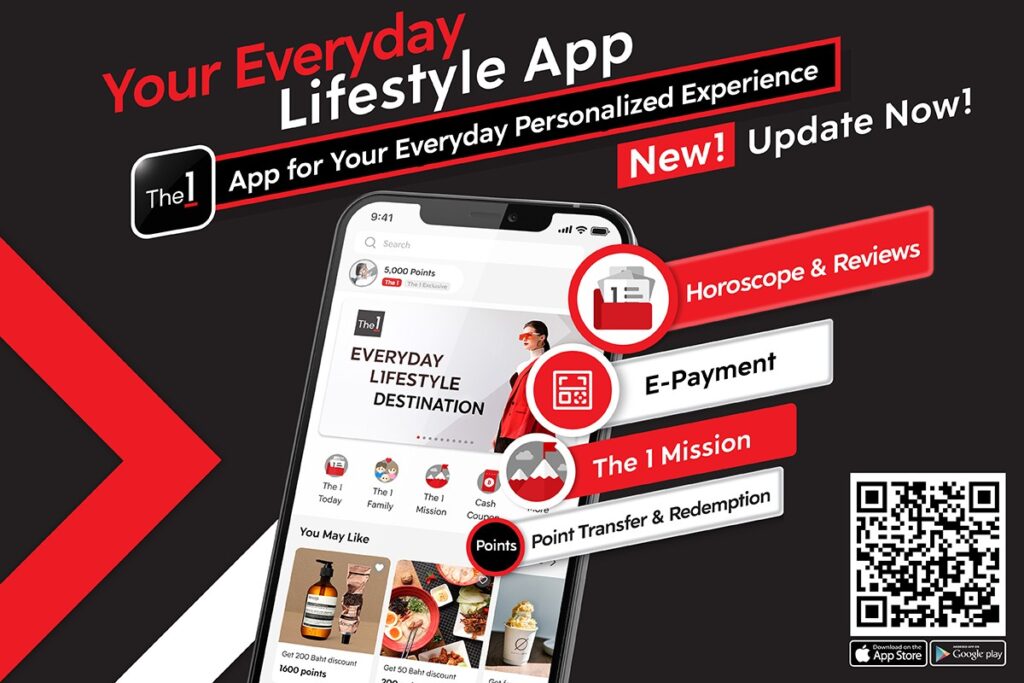
‘The 1’ was first established in 2006 as a membership program but has evolved into a digital lifestyle platform that leverages big data, technology, and customer relationship management to connect customers with business units and partners.  ‘The 1’ allows members to convert their points into e-cash coupons and incorporates makes the mundane fun by implementing gamification features via the ‘The 1 Mission’ feature – where members can participate in addictive and interactive challenges refreshed on a weekly basis that unlock a digital badge and points when complete.

Central Group’s loyalty program, ‘The 1’ is a great example of how businesses can adapt their loyalty programs to meet the needs of Southeast Asian consumers. The program is tailored to the region’s tech-savvy, value-conscious, and online shopping population by  providing value, catering to online shoppers and incorporating gamification to make the program more engaging and fun.
AirAsia Rewards

AirAsia is a Malaysian multinational low-cost airline which operates across more than 165 destinations.

AirAsia rewards regular flyers through its AirAsia rewards program (formerly AirAsia BIG) which is a hybrid of a points program and status tiers program.

In 2023, AirAsia have tapped heavily into expanding their social media presence, digitally transforming their AirAsia airline content on Instagram and Tik-Tok to provide the latest travel tips, deals (such as free seats), new destinations to explore, and travel content. This promotes the loyalty program to appeal directly to wanderlust seekers on the one space, whilst utilising social media to grow both the brand and the awareness of the program.

The Coffee Club Thailand

The Coffee Club Thailand is a digital wallet and loyalty app created by Minor International PCL, one of the largest hospitality, restaurant, and lifestyle companies in the Asia Pacific region.

The app offers a point-based loyalty reward system and a digital wallet that allows users to pay instantly at Coffee Club outlets using digital cash or earned loyalty points. Members also receive exclusive custom offers, birthday privileges, and premium gifts. The Coffee Club heavily focuses on personalising the user experience for every Coffee Club Rewards member to suit their Southeast Asian consumers. For example, the Coffee Club personalise offers to specific segments based on their custom attributes and purchase events. Loyalty members receive messaging specific to wherever they happen to be in their journey with the program.

Overarching themes of Southeast Asia Loyalty Programs

Use of technology and gamification

Many loyalty programs in the region are embracing digital technologies, including mobile apps and online platforms, to engage tech-savvy consumers. Meanwhile, gamification is a prominent element across various loyalty programs in the region.

Personalisation

Southeast Asian consumers value personalisation, and this is reflected as an overarching theme in successful loyalty programs in the region.

Value for money

Value for money is another significant theme in Southeast Asian loyalty programs, as they strive to appeal to money-conscious and value-driven consumers.

Social media integration

Social media integration is becoming more and more prevalent in how loyalty programs are communicated and how loyalty program awareness is grown in the region. Many brands like AirAsia, have their own social media accounts which are central to communicating the program and bringing it into the 21st century.

Convenience

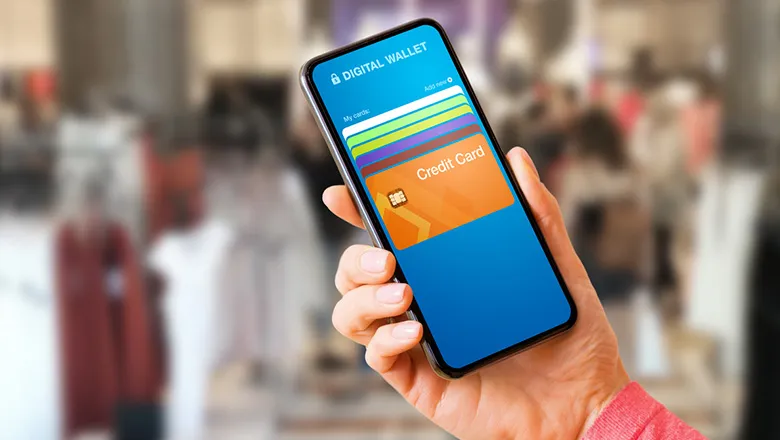
Lastly, convenience is reflected across many Southeast Asian loyalty programs. Their members are increasingly using smartphones and other digital devices to shop, as well as digital wallets and new payment platforms to pay.
Unlocking Loyalty in Southeast Asia: A Tapestry of Tech and Tradition

In conclusion, the success of loyalty programs in Southeast Asia can be attributed to a blend of traditional values rooted in the region’s rich culture and history, as well as its rapid modernisation driven by technology. Southeast Asian consumers are proud of their culture and history, but they are also tech-savvy and forward-looking. The key lies in a deep understanding of Southeast Asian consumers and the ability to effectively cater to their desires and requirements. To succeed in the loyalty market of Southeast Asia, businesses must present unique loyalty offerings that set them apart from established competitors and align with the expectations of their consumers.

See more:
Caribbean Loyalty Programs

Nordic Loyalty Programs

ACCC logo

Drawn from the report Loyalty & Reward Co produced for the Australian Competition and Consumer Commission, June 2019.

Almost 80 per cent of Australians belong to at least one loyalty program. That figure, from Mastercard research,1 shows how deeply loyalty programs are woven into Australian consumer life. It does not tell you how much value members actually receive, how the largest programs earn their profits, or what the design choices behind the points mean for competition. Those questions are harder to answer, and until 2019 no one had answered them in public.

In 2019, the Australian Competition and Consumer Commission (ACCC) commissioned Loyalty & Reward Co to produce the first comprehensive, publicly available report on the Australian loyalty industry. The report examined the major programs with more than one million active members, most of them coalition programs, and set out how they are designed, how they are monetised, how they use member data, and what effect they have on competition and on consumers. You can read the full report on the ACCC website. The findings remain a useful reference for anyone designing or operating a program today.

This article summarises what the report found, and what each finding means for program operators.

A market that reaches into almost every industry

Loyalty programs have operated in Australia for several decades and now appear across almost every consumer industry. Estimates of how many programs the average Australian belongs to range from four (Adam Posner, For Love or Money 2018)2 to 6.1 (Mastercard).1 The report concentrated on the four largest coalition programs, Qantas Frequent Flyer, Woolworths Rewards, Velocity Frequent Flyer, and flybuys, because their scale and partner networks give them influence over a large share of Australian spending. A coalition program is one run by a central operator, where a network of partners rewards members with a common currency such as points.

The modern coalition program traces back to 1980, when American Airlines launched AAdvantage, the first frequent flyer program built on a reward currency of miles. Qantas Frequent Flyer followed in 1987 using points. Over the following decades, hotels, banks, supermarkets, and retailers built or joined coalition networks of their own.

Much of the recent history is a contest between two competing partnerships. In 2009, Woolworths partnered with Qantas Frequent Flyer, which grew the supermarket’s member base and gave Qantas a large population of members who rarely flew. Coles took full control of flybuys in 2011 and relaunched it, using cheaper points and supplier-funded bonus offers to compete. When Woolworths relaunched as Woolworths Rewards in October 2015 and replaced Qantas Points with a new currency earned only on selected products, members responded with sustained criticism, and the supermarket reversed much of the change within a year. By 2016, the industry had settled into two camps, Woolworths Rewards with Qantas Frequent Flyer, and flybuys with Velocity.

For operators: a currency change removes something members already value, and members tend to feel that loss more sharply than the gain meant to replace it. The Woolworths experience shows how quickly members react when a redesign reduces perceived value.

The psychology built into program design

The report set out the behavioural research that underpins program design. Several findings are worth knowing.

Operant conditioning (Skinner, 1948)3 holds that behaviour which is reinforced tends to be repeated. Bonus points for a specific action encourage members to repeat it. A related insight is that not all points are equal: the large airline, bank, supermarket, and hotel currencies are desirable enough to change where members choose to shop.

Social identity theory (Tajfel, 1978;4 Bhattacharya and Sen, 2003)5 holds that people fold the brands they identify with into their sense of self. Status tiers apply this directly. A Platinum frequent flyer receives lounge access, priority boarding, and upgrades, and that recognition can build an emotional connection to the airline. Status also raises switching costs, which can keep a member spending even when a competitor charges less for the same product.

The endowed progress effect (Nunes and Drèze, 2006)6 was demonstrated in a car wash study. Members given a card with two of ten stamps already filled redeemed at 34 per cent, against 19 per cent for members given a blank eight-stamp card, even though both groups needed eight stamps. Artificial early progress increased persistence toward the goal.

The goal-gradient effect (Hull, 1934;7 Kivetz, Urminsky, and Zheng, 2006)8 holds that effort increases as a goal comes closer. Members have been observed to accelerate their spending as they approach a status threshold.

Size heuristics describe how one hundred points can feel more rewarding than the one dollar of value it represents. Points let a program present value at a low cost to itself.

Surprise and delight can lift satisfaction well beyond what met expectations achieve. Berman (2005)9 reported that a delighted Mercedes-Benz customer had an 86 per cent likelihood of buying again, against 29 per cent for a merely satisfied one.

For operators: these mechanics work, and that is why they carry a duty of care. Design that manufactures progress or leans heavily on status can drive engagement, and it can also erode trust if members later feel the value was overstated.

How the largest programs earn their profit

A small number of coalition programs are highly profitable. Qantas Loyalty reported revenue of $1,546 million and earnings before interest and tax of $372 million in 2018.10

The report set out the standard coalition model with a worked example. A member spends $1,000 and earns 1,000 points. The program invoices the retailer at around 1.5 cents per point, so the retailer pays $15. When the member later redeems, the program values each point closer to one cent, or $10 for the 1,000 points. The program keeps the difference, roughly $5, a margin of about 33 per cent on that transaction. Across the hundreds of billions of points a large program can sell each year, those half-cents accumulate.

Two further mechanics matter. The first is breakage, the industry term for points that expire unused. Programs set expiry rules, for example 18 months of inactivity for Qantas Frequent Flyer, 24 months for Velocity, and 12 months for flybuys, and higher breakage translates directly into higher profitability. This is why some programs employ actuaries to model it. The second is deferred revenue. A program sets aside enough to cover future redemptions, and a holding of several billion dollars is not unusual for a large Australian coalition program, earning interest in the meantime.

Redemption value also varies by reward. A point redeemed on a flight might be worth one cent, on a gift card half a cent, and on a toaster around 0.25 to 0.35 cents. Pricing steers members toward redemptions that keep cash inside the business.

For operators: breakage and value-steering improve margins, and they sit in tension with member value. A program that optimises breakage too aggressively risks the disengagement that produces breakage in the first place.

The data behind the points

A loyalty program is one of the most effective ways to build a marketing database, because it links transactions to an identified individual over time. The report traced how far that data capability now extends.

Woolworths bought a half-share in analytics firm Quantium in 2013, gaining the ability to turn data from around 8 million loyalty cards into personalised offers. Data exchanges such as Data Republic, backed by Qantas Loyalty, Westpac, NAB, and ANZ, connect a broad network of organisations for secure data sharing. Data brokers can match a single member against tens or hundreds of external datasets, and one broker cited in the report, Rokt, described using billions of user records to personalise offers in real time.

For operators: members increasingly expect transparency and control over their data, a point the report emphasised. A program that collects widely without explaining clearly risks the trust that makes personalisation acceptable in the first place.

The competition question

The report examined whether loyalty programs affect competition, and the evidence points in more than one direction.

Consumer behaviour shows the effect is real. A 2018 Canstar Blue survey found that 21 per cent of shoppers who switched supermarkets did so to earn reward points, and 54 per cent of those who did all their shopping at one supermarket did so because of points.11 International research reaches similar conclusions. Lederman (2003)12 linked frequent flyer enhancements to gains in airline market share, with larger effects at hub airports. Cairns and Galbraith (1990)13 argued that programs raise switching costs and act as a sunk cost that a new entrant must match to compete. McCaughey and Behrens (2011)14 found frequent flyer members in the Netherlands willing to pay a premium of up to 6 per cent. Reichheld (1996)15 found that programs can reduce a member’s sensitivity to competing prices.

The concern is sharpest for smaller companies and new entrants. In a market of dominant duopolies, when the leading players both run large, engaged programs, the competitive tension between them can be neutralised while the barrier facing a new entrant without a comparable program rises. Norway took this seriously enough to ban the earning of points on domestic routes for a period, lifting the ban only in 2013 once domestic competition was judged robust.16

The evidence is not one-sided. Caminal and Claici argued that loyalty pricing can enhance competition by steering business between firms and lowering average transaction prices.17 Aldi, meanwhile, has campaigned directly against points-based programs, arguing that members who chase points routinely spend more, which suggests competitors view those programs as effective.

For operators: a program is a genuine competitive asset, and that same strength invites scrutiny where it raises switching costs or dampens price competition. Designing for real member value, rather than lock-in alone, is the more durable position.

Are members getting what they are promised?

The report closed on the question that matters most to members: the value they actually receive.

Value varies widely. Members of some programs receive as little as half a cent for every dollar spent, while others return 10 per cent or more. Some programs have also reduced value quietly over time. A $100 Barbeques Galore gift card that cost 13,500 points on the Velocity store in 2009 later cost 18,000 points, a 33 per cent increase. A $100 Myer gift card on the Qantas Store rose from 13,500 to 17,770 points, a 31 per cent increase, for a product whose value had not changed. Those increases outpaced the roughly 9.5 per cent inflation over the same five years, and members were not notified.

Some advertising also risks over-promising. The report noted a Qantas credit card campaign using the line “Latte, Latte, Latte, London”. Taken literally, a member would need to buy 20,000 to 40,000 cups of coffee to earn a flight to London, which at one or two cups a day could take up to 55 years. No reasonable consumer would read it literally, and that is the point: broad promotional claims can imply that value is more accessible than it is.

For operators: transparency around expiry, devaluation, and realistic earn rates protects the trust a program depends on. Members forgive a modest return far more readily than a value promise that does not hold up.

What the report means today

Australia’s loyalty industry is sophisticated, profitable, and built on well-understood behavioural science. The ACCC report showed that the same features which make programs effective, the psychology, the data, the coalition scale, and the points economics, are also the features that deserve the most care. A program earns durable loyalty when its design, its data practices, and its promises all hold up to a member reading them closely.

Loyalty & Reward Co produced this report as the loyalty consulting experts, and have since delivered more than 160 loyalty projects for leading brands worldwide. For the full detail, figures, and sources, read the complete report on the ACCC website.

References

Primary source: Shelper, P., Lyons, S., & Savransky, M. (2019). Australian Loyalty Schemes: A Loyalty & Reward Co report for the ACCC. Loyalty & Reward Co. Available at: accc.gov.au

The numbered sources below are cited in the article above. Full footnotes for every industry, media, and program source referenced throughout the report are provided in the ACCC report itself.

  1. Mastercard (2018). Achieving Advocacy and Influence in a Changing Loyalty Landscape.
  2. Posner, A. (2018). For Love or Money 2018, edition 6.
  3. Skinner, B. F. (1948). “Superstition in the pigeon”, Journal of Experimental Psychology, Vol. 38, pp. 168-172.
  4. Tajfel, H., & Turner, J. C. (1978). “An integrative theory of intergroup conflict”, in The Social Psychology of Intergroup Relations, pp. 33-47.
  5. Bhattacharya, C. B., & Sen, S. (2003). “Consumer-company identification: a framework for understanding consumers’ relationships with companies”, Journal of Marketing, Vol. 67, pp. 76-88.
  6. Nunes, J., & Drèze, X. (2006). “The endowed progress effect: how artificial advancement increases effort”, Journal of Consumer Research, Vol. 32, No. 4, pp. 504-512.
  7. Hull, C. L. (1934). “The rat’s speed of locomotion gradient in the approach to food”, Journal of Comparative Psychology, Vol. 17, pp. 393-422.
  8. Kivetz, R., Urminsky, O., & Zheng, Y. (2006). “The goal-gradient hypothesis resurrected: purchase acceleration, illusionary goal progress, and customer retention”, Journal of Marketing Research, Vol. 43, pp. 39-58.
  9. Berman, B. (2005). “How to delight your customers”, California Management Review, Vol. 61, No. 1, pp. 129-151.
  10. Qantas (2018). Qantas Annual Report 2018.
  11. Canstar Blue (2018). Consumer survey on supermarket switching and reward points, as cited in the ACCC report.
  12. Lederman, M. (2003). Do enhancements to loyalty programs affect demand? The impact of international frequent flyer partnerships on domestic airline demand, mimeo, MIT.
  13. Cairns, R., & Galbraith, J. (1990). “Artificial compatibility, barriers to entry, and frequent-flyer programs”, Canadian Journal of Economics, Vol. 23, pp. 807-816.
  14. McCaughey, N., & Behrens, C. (2011). Paying for status? The effect of frequent flyer program member status on airfare choice, Monash University Department of Economics.
  15. Reichheld, F. (1996). The Loyalty Effect: The Hidden Force Behind Growth, Profits and Lasting Value, Harvard Business School Press.
  16. OECD (2014). Airline competition: note by Norway, Directorate for Financial and Enterprise Affairs, Competition Committee.
  17. Caminal, R., & Claici, A. (2007). “Are loyalty-rewarding pricing schemes anti-competitive?”, International Journal of Industrial Organization, Vol. 25, pp. 657-674.
<a href="https://loyaltyrewardco.com/author/eli/" target="_self">Eli Maynard</a>

Eli Maynard

Eli is a Strategy Consultant at Loyalty & Reward Co, the leading loyalty consulting firm. Loyalty & Reward Co design, implement, and operate the world’s best loyalty programs for the world’s best brands. Eli has previously worked in business development, customer service and marketing roles across various industries including technology, retail and sports. Eli applies his skills across all aspects of the business, including market research, loyalty program design, member engagement and lifecycle strategy.

Read our latest expert insights

The Ultimate Guide to adidas adiClub

Since rebranding from the Creators Club in early 2022, adidas' adiClub has grown into one of the most recognised and awarded loyalty programs in global sportswear....

HeyMax First “fly now, earn later” review

Most loyalty programs are built on deferred gratification. Members spend over a period of time, watch a balance accumulate, and aim for a desired, future reward....

Let's talk

Need to level up your loyalty program? Want to tap into our expertise? Let's talk!